

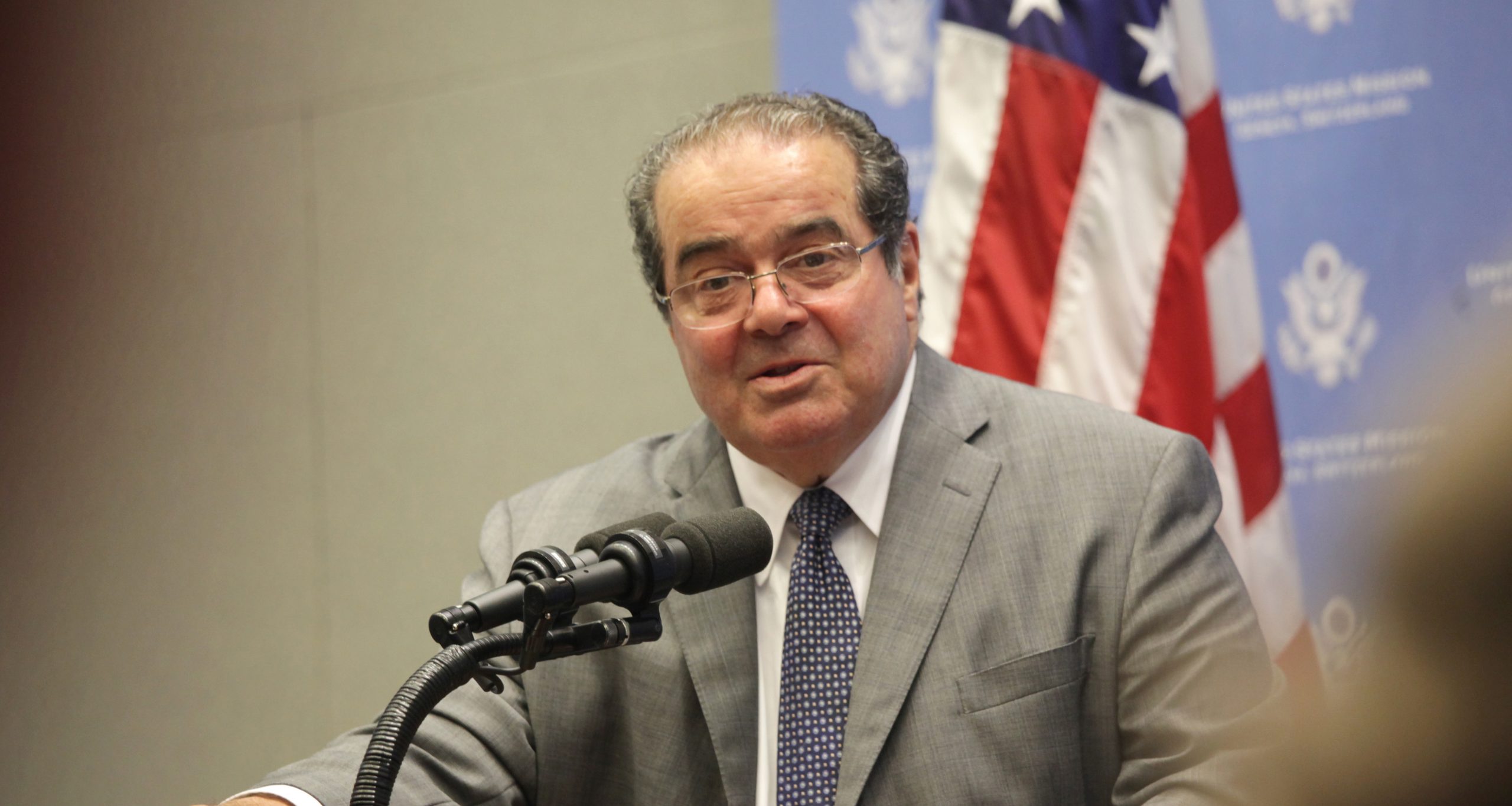
Reviews of Justice Antonin Scalia’s career tend to focus on legal philosophy and political outcomes. But generations from now, Scalia’s writings will still be studied for his political philosophy: his practical understanding of how and why American government works, and doesn’t. And the battle over his replacement will ironically illustrate those same themes.
Scalia often said that separation of powers and federalism were the most important parts of the Constitution: Without those checks on accumulated government power, individual rights would never be safe. He was fond of noting that plenty of countries (even the Soviet Union) had fine-sounding Bills of Rights that were dead letters because no power could make the government respect them. He shared James Madison’s cynical (or is it realistic) view that sooner or later every branch of government would expand its powers as far as the others would let it. But he added his own counterpoint: Elected officials would gladly trade away power to avoid accountability.
Stay informed.Stay ahead.
Join Washington Examiner for unlimited access to the news, analysis, and commentary that matter most.
Already a member? Log in
