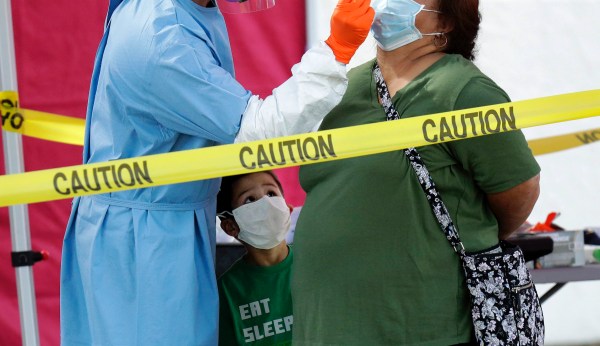
Australian researchers found that the coronavirus can survive on phone screens, handrails, currency, and other surfaces for about 28 days.
“Our results show that SARS-CoV-2 can remain infectious on surfaces for long periods of time, reinforcing the need for good practices such as regular hand washing and cleaning surfaces,” Debbie Eagles, deputy director of the Australian Centre for Disease Preparedness and co-author of the findings, told Bloomberg Monday.
Recommended Stories
Researchers at the center described the COVID-19 virus as “extremely robust” in the report published in Virology Journal. The virus can survive for 28 days on smooth surfaces such as glass screens on mobile phones and currency made of a type of plastic such as the type used in Australia at room temperature, or 68 degrees Fahrenheit. The virus survived less than a day in temperatures exceeding 100 degrees Fahrenheit.
In comparison, the seasonal flu virus typically survives on smooth surfaces for about 17 days.
Scientists have warned that the coronavirus will survive longer in colder temperatures, making it harder to control in the fall and winter months than in the summer. The convergence of the COVID-19 pandemic and seasonal flu has worried public health experts, including those in President Trump’s administration. Dr. Robert Redfield, director of the Centers for Disease Control and Prevention, warned in August that the colder months “could be one of the most complicated public health times we have, with the two coming at the same time.”
Still, social distancing measures to slow the spread of the coronavirus have already limited influenza outbreaks. Flu season has not hit full-force in the Northern Hemisphere yet, but infectious disease experts have seen from reporting in Australia and South America that flu season has proven less severe so far than in previous years.