

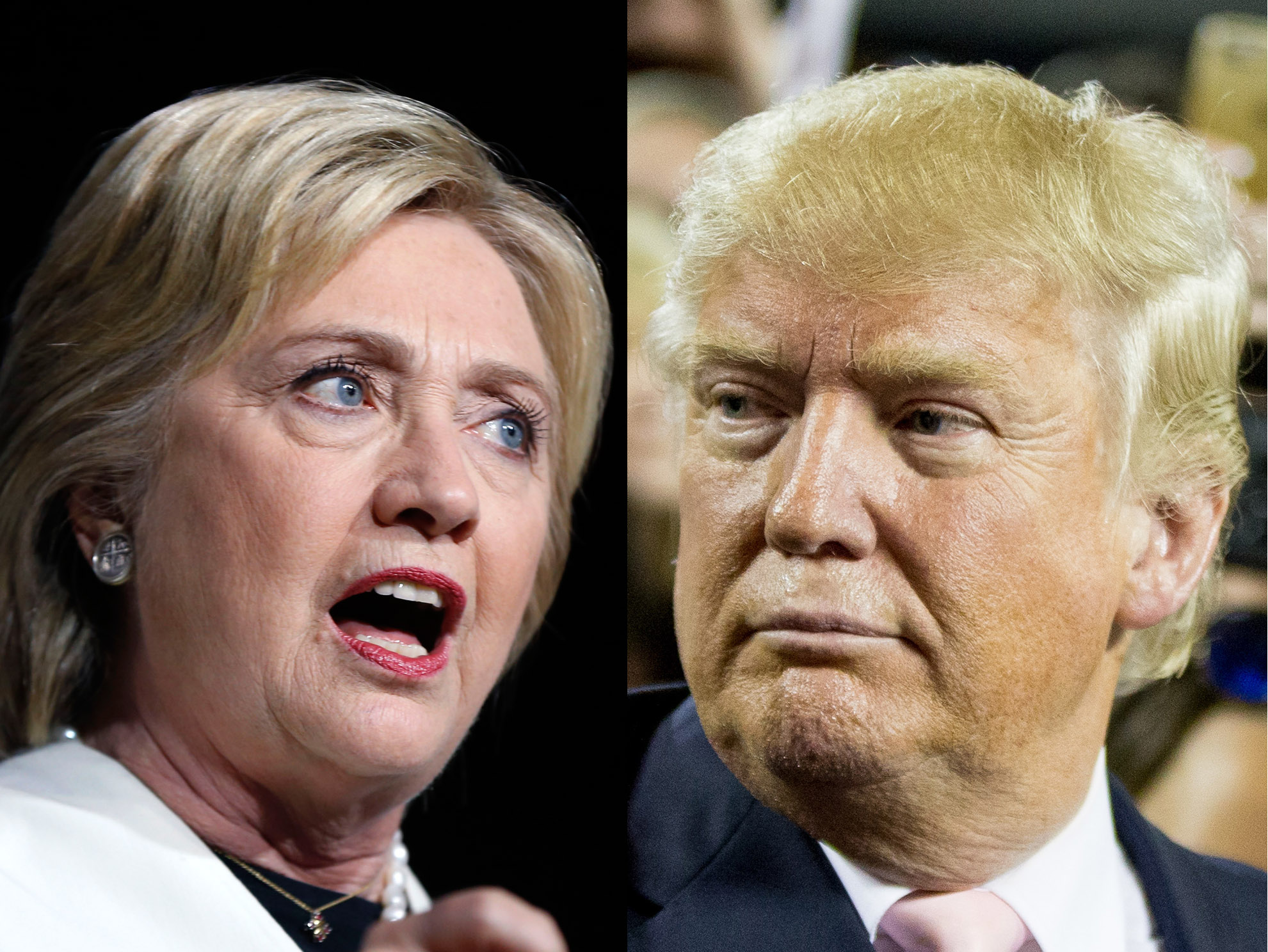
Hillary Clinton’s presidential campaign is gearing up for Republican presidential front-runner Donald Trump’s first major speech on foreign policy by reminding voters of the “reckless” proposals he’s put forth so far.
Recommended Stories


“Despite his frequent contradictions and displays of ignorance, Trump has a long record of recklessness and has espoused a worldview that goes against everything that makes America great,” the Democratic front-runner’s campaign said in a press release hours before Trump was scheduled to deliver his remarks in Washington, D.C.
“A Trump presidency risks leaving both our country and the world dramatically less safe,” they claimed.
The campaign cited a number of Trump’s most controversial statements on issues such as his proposal to arm South Korea, Japan and Saudi Arabia with nuclear weapons and rule out the use of tactical nuclear weapons against the Islamic State.
“Trump has insisted that he would intentionally kill terrorists’ family members and has repeatedly called for returning to Bush-era torture, which has been widely denounced as ineffective, unethical and dangerous for American servicemembers around the world,” the Clinton camp argued.
Clinton’s team also hit Trump for proposing a temporary ban on non-American Muslims seeking to enter the U.S. Such a plan, they claimed, stems from the billionaire’s “damaging Islamaphobia.”
“Trump has repeatedly peddled lies to demonize Muslims, including refugees and Muslim-Americans, further undermining our fight against terrorism,” read the press release.
Trump, meanwhile, has described Clinton as incompetent and railed against the Iranian nuclear deal she helped usher into place.
“Incompetent Hillary doesn’t know what she’s talking about,” he told Fox News in late March. “She doesn’t have a clue. She’s made such bad decisions.”
Trump will deliver his foreign policy address at the Mayflower Hotel in Washington at noon ET. He is expected to address the United States’ relationships with our allies, the rising threat of radical Islam and a shift away from nation-building, according to sources familiar with his speech.
