

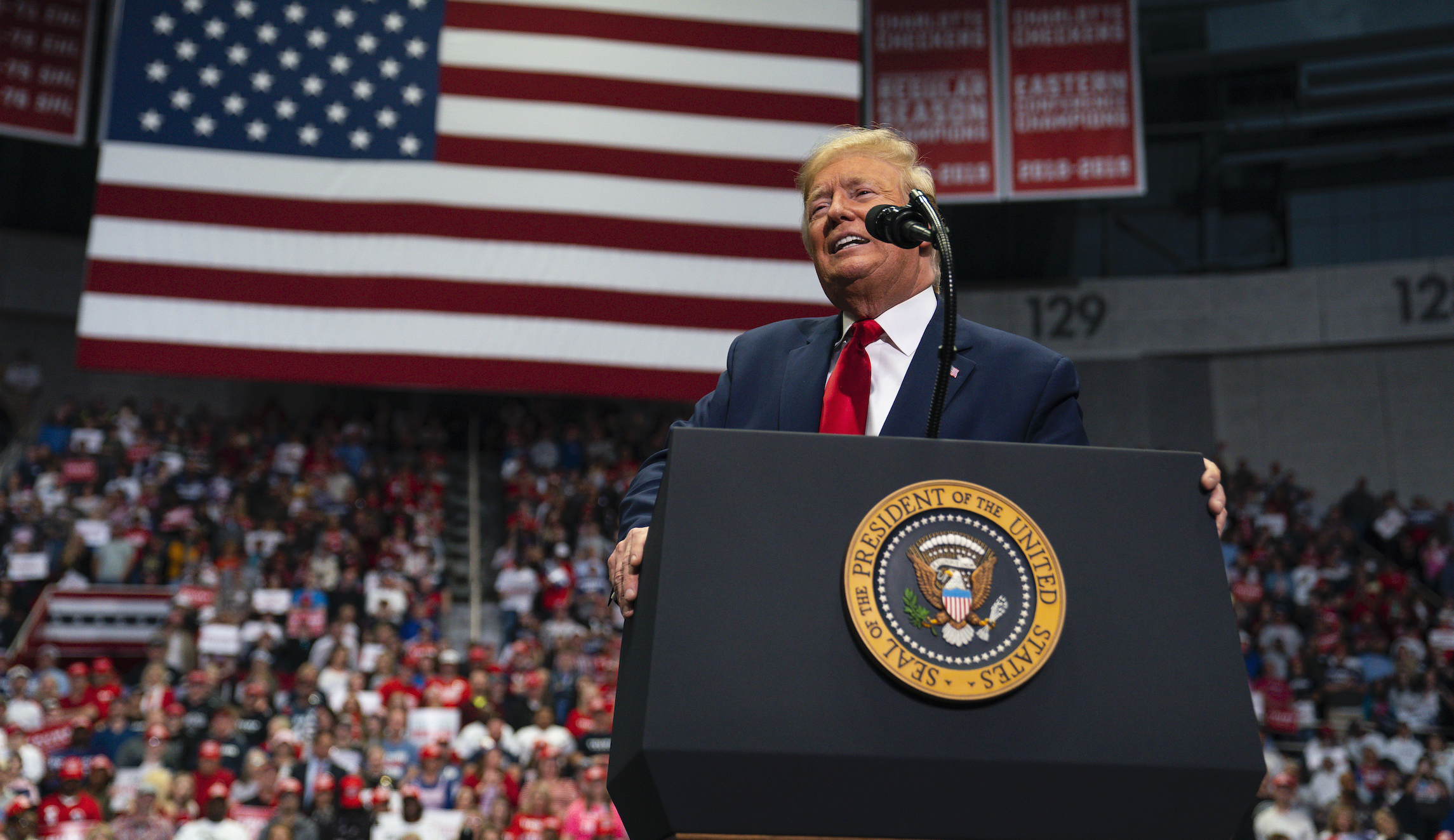
The coronavirus has brought normal life to a standstill, preventing candidates from conducting normal campaign activities and directing attention away from the usual hot-button issues. In 2020, legal battles could play a much more prominent role in the election fight between President Trump and Joe Biden.
The legal swipes, coming mostly from Trump and Republicans, revolve around voting requirements, advertising, and campaign finance.
Recommended Stories


At the forefront of the legal fights during the coronavirus pandemic are battles over voting laws, particularly vote-by-mail. Some states are moving to an entirely vote-by-mail system for primaries taking place in the next few months, and Republicans are hoping to keep the loosening of voting requirements in check.
The New Mexico Republican Party filed a lawsuit this week to block efforts to make the June primary contest entirely vote-by-mail. In Pennsylvania and Georgia, Trump and his team worked to make stricter rules than what Democrats proposed on obtaining absentee and mail-in ballots.
“It is beyond disgusting that the Democrats are using this crisis to try to dismantle the integrity of our voting system,” Justin Clark, senior counsel for the Trump campaign, told Politico. “The American people won’t stand for this, and the campaign and the party intend to fight with them for a free, fair, and open vote in November.”
The coronavirus-prompted primary ballot changes are only a portion of the legal battles taking place in 2020.
The Trump campaign and the Republican National Committee in February announced it would spend $10 million on lawsuits challenging voting laws and changes Democrats want to make.
In Michigan, for instance, the RNC and the state Republican Party are trying to block challenges by liberal super PAC Priorities USA to laws that prevent “ballot harvesting” (volunteers compiling absentee ballots) and that prevent arranged transportation to bring groups of voters to the polls.
Trump and his allies are also working to gain an edge through legal maneuvering in the news media.
After Priorities USA created an ad that spliced together statements from Trump around the coronavirus crisis, including him appearing to call the coronavirus a “hoax,” the Trump campaign threatened lawsuits against television stations that aired the ad. Fact-checkers have found that Trump did not call the virus itself a hoax; instead, he called Democrats “politicizing” the crisis “their new hoax.”
In recent months, the Trump campaign filed a series of lawsuits against major media outlets relating to coverage of special counsel Robert Mueller’s investigation into Russian interference in the 2016 election. It sued CNN for libel over an opinion article the network ran on its website and similarly filed other lawsuits against the New York Times and the Washington Post for publishing “false and defamatory statements.”
Allies of Trump are also wading into legal fights to prevent Democrats from exploiting a loophole in campaign finance rules.
The pro-Trump Great America super PAC filed a complaint with the Federal Election Commission against Michael Bloomberg transferring $18 million from his defunct presidential committee to the Democratic National Committee. Because the money to the committee all came from Bloomberg himself, the transfer is an illegal violation of campaign finance limits on donations, the group says.
