

The White House is not joining calls from allies to back a ceasefire to the Israeli-Palestinian conflict and is instead conducting “quiet diplomacy” with allies in the region in an attempt to defuse the crisis.
As the conflict escalated over the weekend, 25 Democratic senators in Congress urged a stronger response from President Joe Biden and his administration, who upon taking office argued for reorienting Washington’s foreign policy away from Middle East conflicts and toward Asia.
Recommended Stories


Biden officials have said that they are proceeding largely behind the scenes in an attempt to wrest control of the situation as casualties on both sides mount and outrage builds over asymmetries between the parties, both domestically and overseas.
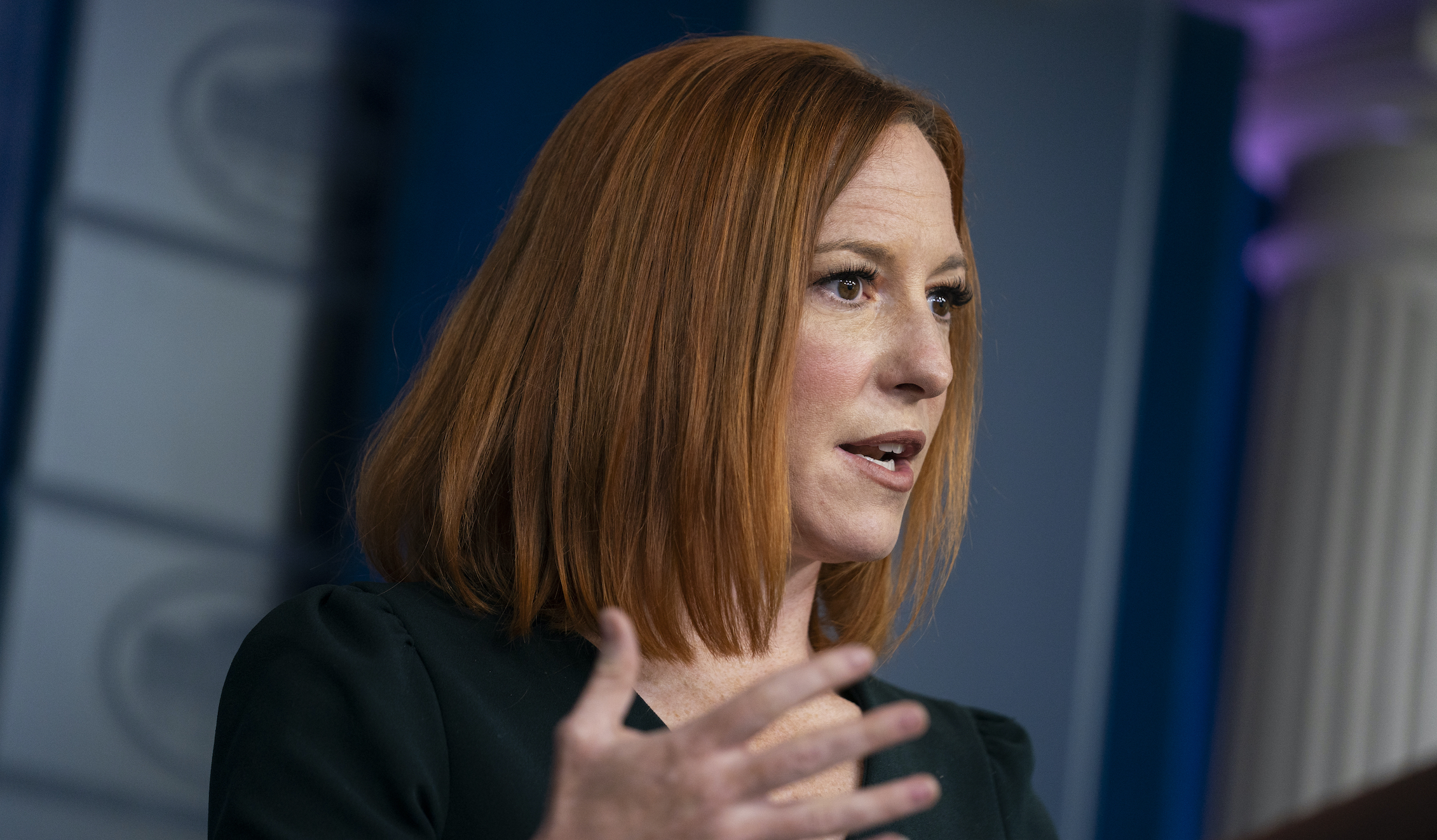
“There are times in diplomacy where we’ll need to keep those conversations quieter, where we won’t read out every component of it,” White House press secretary Jen Psaki said on Monday, outlining instead the administration’s strategy, which has refrained from calling for an end to fighting.
ISRAEL’S SECTARIAN VIOLENCE DRIVES NETANYAHU RIVAL TO ABANDON BEST CHANCE TO OUST HIM
“Our calculation at this point is that having those conversations behind the scenes,” engaging in “quiet intensive diplomacy … that’s where we feel we can be most effective,” Psaki said.
She pointed to the U.S. relationship with Israel, Washington’s most important in the region, and conversations with other regional partners, stating that the White House believes this is “the most constructive approach.”
“We’re not going to give it day by day evaluation,” she added.
The White House has stepped up its outreach to the region but has stopped short of openly calling for the sides to cease fighting.
Asked whether Biden views a role for himself in attempting to broker a peace agreement between the two parties, Psaki did not say.
She told reporters that Biden backs a negotiated two-state solution to the conflict but that effecting this “would require both parties having that desire.”
The White House last week dispatched the deputy assistant secretary of state for Israel and Palestinian affairs to meet with Israeli and Palestinian leaders in an attempt to defuse the situation, but there are calls for Biden to task a higher-level appointee with urging calm.
Over the weekend, Biden held phone calls with Palestinian Authority President Mahmoud Abbas, his first since taking office, and with Israeli Prime Minister Benjamin Netanyahu, reiterating Israel’s right to defend itself and urging calm.
Speaking to Abbas on Saturday evening, Biden demanded Hamas militants in Gaza “cease firing rockets into Israel.” Abbas is the head of the Palestinian Authority in the West Bank.
On Monday, Biden’s top national security adviser weighed in publicly, tweeting that he had spoken to his Israeli counterpart and with Egypt, a regional partner that has called for a ceasefire in the conflict.
The 2014 war lasted 50 days. “It has been seven days,” Psaki said.
“Of course we want to de-escalate as quickly as possible, but yes, it would require actions from Israel. It would require actions from Hamas to end the violence on the ground,” she added.
CLICK HERE TO READ MORE FROM THE WASHINGTON EXAMINER
In 2014, Hamas fired about 4,000 rockets during the seven-week war. The group has fired 3,000 rockets at Israel in the last week, according to reports.
Over the weekend, Israel drew outcry from Democratic Senators, including longtime supporters on Capitol Hill, after bombing a building housing international media outlets.
