
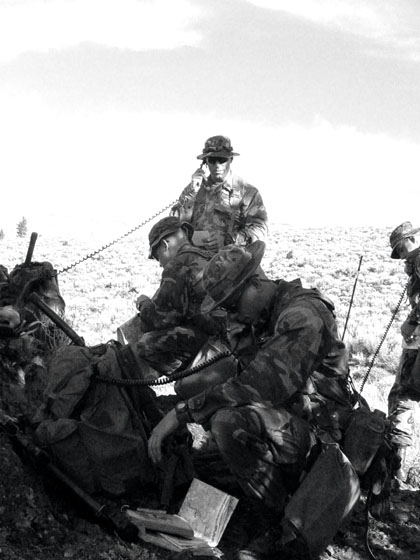
[img_assist|nid=323|title=|desc=Marines from the 3rd Air Naval Gunfire Liaison Company call in close air support from AH-1 Cobra helicopter gunships during an exercise at the Mountain Warfare Training Center in Bridgeport, Calif. (Photo by Christian Lowe)|link=none|align=right|width=420|height=560]THE WAR IN AFGHANISTAN proved a watershed in the application of strategic air power–one that saw small teams of highly-trained special operations troops directing air strikes with enough precision and power to topple a 100,000-man Taliban force in weeks. The use of human “sensors” to direct air strikes on the battlefield has been expanded in Iraq and could prove one of the most decisive instruments of military power in Operation Iraqi Freedom.
In the first Gulf War in 1991, the vast majority of air strikes were directed against strategic targets–bridges, power plants, intelligence headquarters and military compounds. Because the ground war was so short, few of the war’s air strikes were directed against Iraqi troops in support of ground maneuvers. Most of the air targets in Operation Desert Storm were determined from satellite imagery and intelligence information. A “package” of aircraft would be put together to strike that pre-planned target and most often the “smart” bombs would be guided to the target by the aircraft in the strike package.
Real journalism.Trusted by millions.
Unlimited access to in-depth reporting, expert analysis, and the stories that shape our country.
Already a member? Log in