

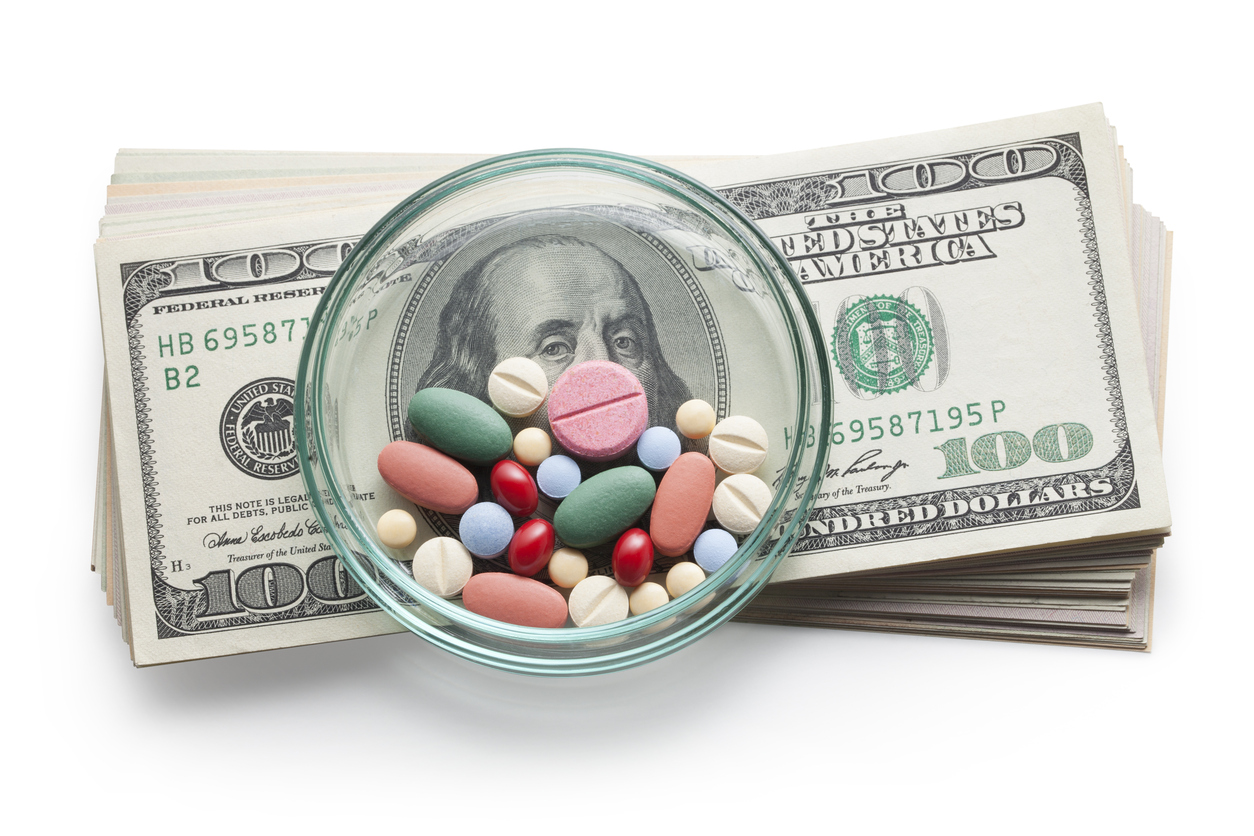
The Food and Drug Administration isn’t standing on the sidelines anymore on fighting rising drug prices.
Recommended Stories


In a major shift, new Commissioner Scott Gottlieb is creating an action plan to spur more competition and lower prices. The plan comes as the Republican-controlled Congress is looking to make changes at the FDA to address high prices by getting cheaper generics to the market faster.
The decision by the GOP to focus on FDA changes is the latest rebuke to Democratic-proposed reforms, such as giving Medicare the power to negotiate lower drug prices and allowing people to buy cheap drugs from Canada.
The FDA will play the most pivotal part in the GOP’s regulatory-focused effort on high prices.
Gottlieb told Congress recently that the agency is creating a drug competition action plan intended to lower prices. The move represents a major shift from the FDA’s longtime philosophy on drug pricing. The agency does not take into account price when evaluating products, instead focusing on ensuring that they are safe and effective.
One of the moves Congress and the FDA are looking at is a loophole that major pharmaceutical companies use to stop generic makers from creating a cheaper copy.
Typically, a generic drugmaker asks a brand-name manufacturer for a sample of the drug it wants to make a generic of, so it can make its version. The request is usually done in anticipation of the brand-name drug’s patent protection expiring. But some brand-name companies have used a safety regulation as justification for not sending the generic maker a sample.
That safety regulation comes when the FDA approves a high-risk drug that has a major benefit. The agency sometimes requires the drugmaker to adopt a Risk Evaluation and Mitigation Strategy to curtail who gets the drug to prevent abuse. For example, the opioid addiction treatment buprenorphine has such a strategy that limits prescriptions. The reason is that buprenorphine is an opioid itself but is designed to help with withdrawal.
Other examples are cancer medications that have significant side effects.
Some drugmakers have used the regulation to deny the sample to generic manufacturers. But the intent of the system isn’t to limit development access, said Chuck Shih, senior officer for Pew Charitable Trusts.
“Brand developers have been accused of doing this,” he told the Washington Examiner.
To fight the block, the generic company could sue the brand name developer, or the Federal Trade Commission could take action, but both are long and complicated processes.
So legislation has been filed in the House and Senate to close the loophole.
The Fast Generics Act of 2017 from Rep. David McKinley, R-W.Va., would make it easier for generic companies to sue over not getting access to samples, while the Creates Act from Sen. Patrick Leahy, D-Vt., would make it easier for generic or biosimilar companies to get samples. Neither bill has advanced.
Other action on high drug prices could come in the reauthorization of the FDA’s user fee program, which has to be renewed by July.
A House subcommittee passed the reauthorization legislation on May 18 with an amendment that would speed up approval times for generic drugs.
The amendment offered by Rep. Kurt Schrader, D-Ore., aims to speed approval of generic drugs that seek to compete with an older generic.
A major issue that has led to price spikes is companies acquiring old generics that have no competition and then jacking up the price. Other companies don’t want to make a competing generic because the product often has a small patient population, and they are wary of the long approval process.
An extreme example of the issue was the drug Daraprim, which the small biotech firm Turing Pharmaceuticals acquired in 2015. The anti-malarial generic was on the market for decades and had a patient population of fewer than 20,000 patients.
Turing, under the helm of controversial CEO Martin Shkreli, raised the price of the drug from $13.50 per pill to $700, prompting outrage nationwide.
The Senate Health, Education, Labor and Pensions Committee passed its own version of the user fee reauthorization earlier this month. It also included an amendment from Sens. Susan Collins, R-Maine, and Al Franken, D-Minn., that would speed up approval of generics to compete with older generics.
It appears that those amendments will be the only drug price-related items added to the reauthorization legislation, which typically acts as a vehicle for FDA legislation.
Democrats had hoped that longtime liberal ideas such as giving Medicare drug negotiating power would advance in the GOP-controlled Congress after President Trump railed against the pharmaceutical industry during the presidential campaign.
But for now the only action on Capitol Hill appears to be through new FDA regulations.
While such regulatory changes have some bipartisan support, some Democrats are concerned that safety checks could be rolled back in favor of speed.
“You’ve got some products that are on the market now that are putting the public’s health and safety at risk,” said Rep. Rosa DeLauro, D-Conn., during the hearing with Gottlieb at a subcommittee of the House Appropriations Committee.
Gottlieb responded that he isn’t in favor of scaling back safety regulations, but wants to make the approval process more efficient.
“What we need to think about is not speeding up the review process or speeding up review times,” he said. “The question we need to be asking is the overall efficiency of the development process itself.”
