

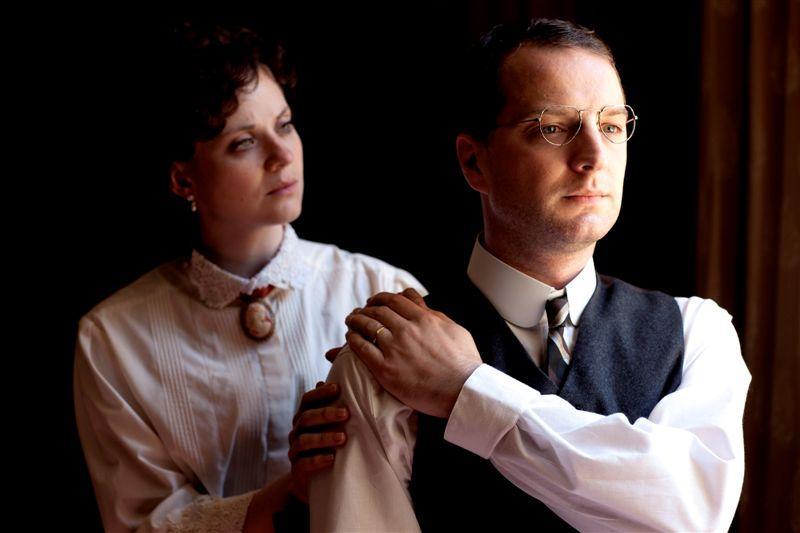
There’s something sweet and simple and wonderful about Jason Robert Brown’s music written for “Parade,” a kind of melodic honesty that hearkens back to early Gershwin or the efficacious elegance of Lerner and Loewe. And when you consider that it’s written for such hefty subject matter as the tragic story of Lucille and Leo Frank and its bitter mark on American history, the cotton-candy lightness of Brown’s score suddenly lands with a dark, reverberating thud. You can imagine that a musical set in 1913 Georgia isn’t going to be a lively romp in the sun for a New York Jew transplanted to Hotlanta. But history shows that Leo Frank was falsely accused of murdering 13-year-old Mary Phagan, one of the young workers in the same pencil factory where Frank was superintendent. From the absurd spectacle and sensationalist drama of the courtroom to Lucille Frank’s desperate attempts to prove her husband innocent, “Parade” serves as an ugly reminder of the power wielded by public opinion alone.
It’s a long evening at Ford’s Theatre, and in their co-production with Theater J, director Stephen Rayne milks every opportunity to showcase his strong ensemble cast.
Stay informed.Stay ahead.
Join Washington Examiner for unlimited access to the news, analysis, and commentary that matter most.
Already a member? Log in
