

Tensions in Ukraine show no signs of easing as President Barack Obama leaves for a 3-day Europe trip. A former U.S. intelligence officer says the inability of NATO to stop Russian President Putin is compounding fears near Russia’s borders. (Sept. 2)
Recommended Stories


SHOTLIST:
AP TELEVISION – AP CLIENTS ONLY
Washington, DC – 2 September 2014
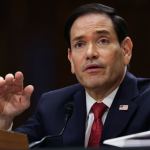
1. SOUNDBITE: (English) Eugene Rumer, Director of the Russian and Eurasian Program, Carnegie Endowment for International Peace (Transcript below)
AP TELEVISION – AP CLIENTS ONLY
Novokaterynivka village, Ukraine – 2 September 2014
2. Low angle of three tanks destroyed by rebel ambush in the early hours of Sunday as pro Ukrainian fighters tried to escape from the besieged city of Ilovaysk after weeks of heavy fighting
AP TELEVISION – AP CLIENTS ONLY
Washington, DC – 18 August 2014
3. Various, President Barack Obama in Oval Office meeting
AP TELEVISION – AP CLIENTS ONLY
Novokaterynivka village, Ukraine – 2 September 2014
4. Crucifix made of sticks marking the shallow grave of a Ukrainian solider killed in a rebel ambush
AP TELEVISION – AP CLIENTS ONLY
Moscow, Russia – 4 September 2013
5. Close-up Russian President Vladimir Putin
AP TELEVISION – AP CLIENTS ONLY
Moscow, Russia – 11 August 2014
6. T-shirts with Putin on them being sold
AP TELEVISION – AP CLIENTS ONLY
Krasnodon, Ukraine – 17 August 2014
7. Various, pro-Russian troops driving military vehicles
AP TELEVISION – AP CLIENTS ONLY
Novoazvosk, Ukraine – 26 August 2014
8. Pan of columns of black smoke rising from shelling near Novoazvosk near border with Russia, field of dead sunflowers in foreground
9. Mid, smoke from shelling on horizon
VOICE-OVER SCRIPT:
(SOT: Eugene Rumer, Director of the Russian and Eurasian Program, Carnegie Endowment for International Peace)
“Well, right now, for Europe, the biggest issue clearly is Ukraine. The crisis in Ukraine, the annexation of Crimea and what NATO, Europe’s and the United States shared alliance is going to do to shore up the security and the well being of countries that have now become the front line states. The President is really facing an impossible task of reassuring allies that inherently cannot be reassured to the degree that they want to be reassured, simply because of their geography, because of their history, because of their very difficult relationship they now have with Russia.
(SOT: Eugene Rumer, Director of the Russian and Eurasian Program, Carnegie Endowment for International Peace)
“I think there is only a slight chance for a diplomatic solution at this point, in part because there is not really a meaningful conversation as far as I am aware, between the United States and Russia about a diplomatic solution to this crisis. Putin, in a sense, is cornered at this point because domestically he cannot accept a defeat in Ukraine. So, the only solution I see it is diplomatic, however faint the hope for it is and it is for the United States and Russia to begin a serious dialogue about what Russia wants. ”
(SOT: Eugene Rumer, Director of the Russian and Eurasian Program, Carnegie Endowment for International Peace)
“It is wise not to set any red lines at this point simply because the stakes are so much greater here. We are dealing with a country that, as Mr Putin reminded us, has a nuclear arsenal that is second to none and so far Putin has exceeded our expectations every step of the way, every stage of this crisis and I’m not saying he is prepared to wage a nuclear war, but he is certainly not prepared to back down in the face of our threats and ultimatums.”
