

President Trump’s priority in his first 100 days will be to incinerate many of the energy and environmental regulations imposed by former President Barack Obama in the past eight years.
The administration also will look for new opportunities for coal and to strike a balance between reducing energy imports from the Mideast while nevertheless cooperating with big energy-producing nations in the Persian Gulf.
Trump issued his broad America First energy plan on Inauguration Day, highlighting key priorities but without details on how the goals would be reached.
The plan is ambitious, from making the nation energy-independent, to developing clean coal technology and devising an energy-and-terrorism security strategy with the Saudi Arabians.
The new president foresees a $30 billion boost to the economy from repealing strict climate and green regulations, such as the Waters of the U.S. rule, which puts ranchers, energy developers and many others under the thumb of the Environmental Protection Agency.
And then there is the Clean Power Plan, the centerpiece of Obama’s climate agenda, criticized for extending EPA authority over the power grid. The Supreme Court stalled the plan a year ago.
Beyond that, Trump wants to boost oil and natural gas production and to exploit vast fossil fuel deposits in America’s shale rock. Hydraulic fracturing, or fracking, has made the U.S. the world’s biggest energy producer. Trump wants to extend that lead to the point where imports are not needed.
“We must take advantage of the estimated $50 trillion in untapped shale, oil and natural gas reserves, especially those on federal lands that the American people own,” the plan says, adding, “We will use the revenues from energy production to rebuild our roads, schools, bridges and public infrastructure.”
The plan lists developing clean coal and scuttling ties with the OPEC oil cartel, while working with “Gulf allies to develop a positive energy relationship as part of our anti-terrorism strategy.” It is not certain what that would look like.
Environmental protection is another priority, but that will be restricted to existing EPA authorities to ensure air and water are clean. Tackling carbon dioxide and other greenhouse gas emissions blamed by many scientists for heating the Earth’s atmosphere is conspicuously absent. So too is renewable energy.
Some of the energy development mentioned is being started by directives and executive orders that Trump issued last month on pipeline development, including expediting the contentious Keystone XL and Dakota Access oil pipeline projects. Keystone XL was scuttled by Obama after seven years of planning and review, even after it was found to pose scant environmental danger.
Obama denied its cross-border permit in November 2015 because of climate talks about to take place in Paris. He feared it would suggest to foreign leaders that Washington wasn’t serious on tackling global warming. Dakota Access, which would deliver shale-produced oil from North Dakota, was also stalled by the Obama administration. That decision is making its way through the courts.
Officials in close touch with the transition team said Trump’s focus early has been on “what” and not so much on “how.” It’s the “how” that policymakers are looking for in the early days of the administration.
That will come primarily with the budget Trump will issue in April, officials say. The plan will be fleshed out in the budgets for the Energy Department and the Environmental Protection Agency.
Trump’s priorities also will have a lot to do with approving his nominees to lead the agencies that carry out the energy plan.
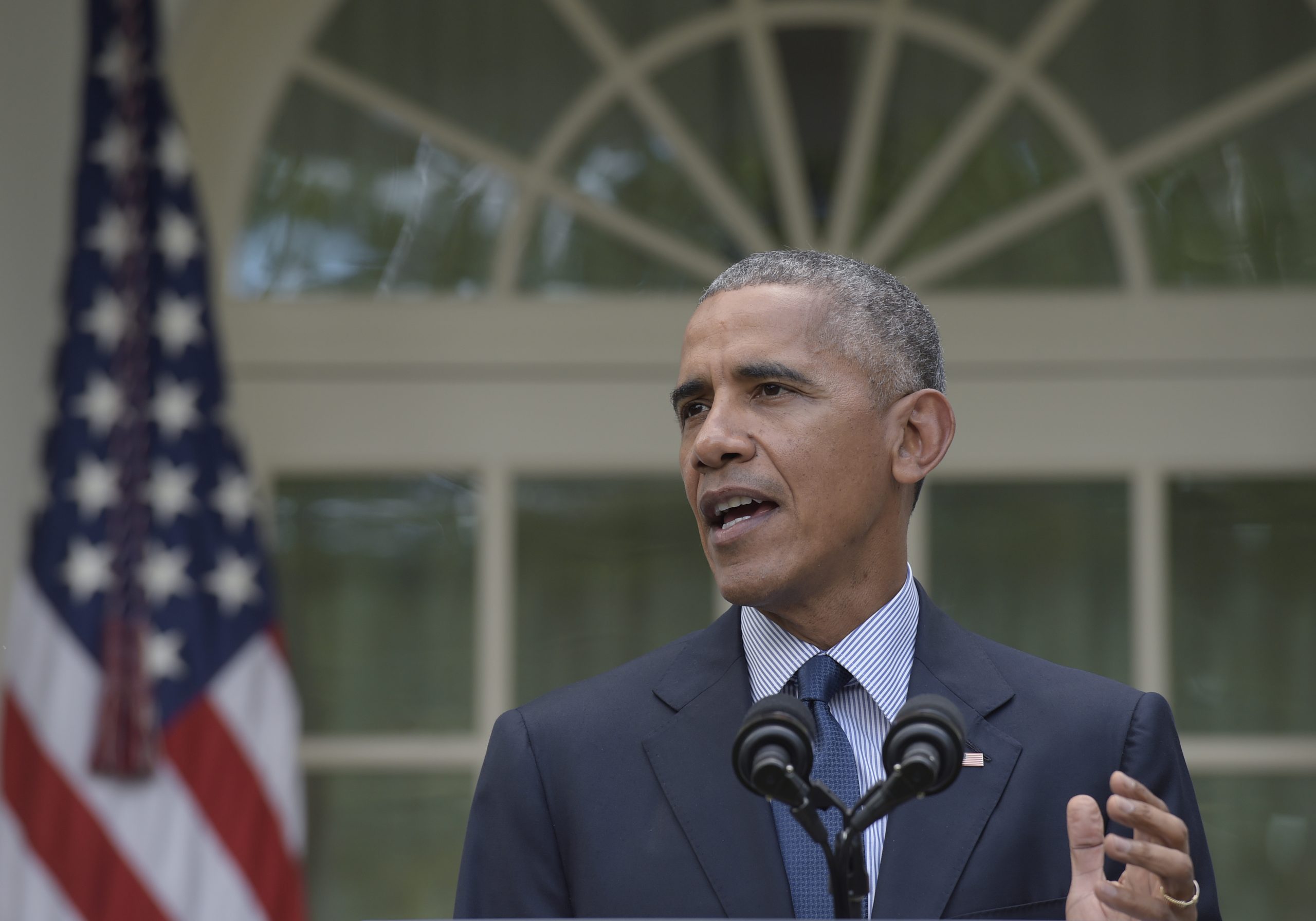
The Clean Power Plan, the centerpiece of President Obama’s climate agenda, was criticized for extending EPA authority over the power grid. (AP Photos)
Kill climate and the rest will follow
One thing is becoming clearer with each passing day: Climate change priorities, and the regulations and metrics that Obama’s administration used, are finished.
It’s not that Trump is considering his own clean energy agenda, a less strict emissions-reduction strategy. He is not replacing climate priorities, but eliminating them.
“Look, the Climate Action Plan is dead, period,” said Tom Pyle, Trump’s former transition chief for the Energy Department. “That means whatever aspects of the Climate Action Plan at DOE are going to phase out and disappear.”
The Climate Action Plan was rolled out by Obama in 2013 and done through executive authority rather than waiting for Congress. It ordered agencies to issue regulations to cut greenhouse gas emissions and reduce reliance on fossil fuels.
It’s “a good thing” that the climate action agenda is removed “because it overlaid the entire mission of the agency,” Pyle said. “When I was reviewing the transition documents that we got, almost every single department, or whatever you call them, had to ‘implement the objectives of the president’s Climate Action Plan.'”
It was “everywhere,” Pyle said, “even the labs had a piece of it because that’s where the president’s priority was and that’s where the money flowed.”
Mission Innovation, a key program to implement goals of the 2015 Paris climate agreement, is “problematic” too, Pyle said. “First of all, they don’t even really know what that is, and all it is is a hodgepodge of a bunch of programs that already exist that they put into one area, so they can go back and say, ‘See, look at all this great stuff we are doing on climate.’ To me it’s a big show, and an expensive one.”
The major “plus ups” that the Office of Energy Efficiency and Renewable Energy received in Obama’s fiscal 2017 budget are also likely to be dumped, Pyle said.
The Climate Action Plan is also a guide for major regulations at other agencies, including the State Department, EPA and the Department of Interior.
Based on the strategy Pyle describes, stripping several agencies of their climate agendas would shrink budgets and lay off thousands of staff.

Myron Ebell, who led President Trump’s transition at the EPA, recently said Trump intends to gut the agency by axing half the 15,000-person staff.
EPA goes pop
Myron Ebell, who led Trump’s transition at the EPA, recently said Trump intends to gut the agency by axing half the 15,000-person staff.
En route to the United Kingdom last week, Ebell said in an email to the Washington Examiner that Trump’s priorities at the agency will switch from climate change to the EPA’s grant programs for water and other infrastructure. That strategy likely will need an agency only about half the size.
“He promised to undo all of Obama’s climate agenda, including the greenhouse gas emissions rules for power plants,” the Waters of the U.S. rule “and other job-killing rules,” Ebell wrote.
“On the other hand, he supports the pass-through grants to the states for water and other environmental infrastructure projects. These constitute roughly half of EPA’s $8 billion budget. So, I expect this funding to survive or even increase as significant budget cuts are made at the federal level.”
Clean coal
Former officials on the transition team aren’t sure what will happen with Trump’s clean coal plans. Some say scrapping the Obama-era climate rules, as Trump promised, will be enough to spur development of new, “cleaner” coal technologies without increasing funding for clean coal in the Energy Department’s budget.
Eliminating the EPA’s New Source rule, which the coal industry calls a de facto ban on new coal plants, would allow plants to be built once again using commercially available technologies.
Officials close to Trump say the EPA rule imposed a ban because the technology required to lower carbon pollution at coal plants was cost-prohibitive.
Clean coal technologies that burn coal at higher temperatures than conventional technologies, called critical or supercritical power plants, aren’t allowed to be built without carbon capture and storage (CCS) technology. But the industry argues that CCS technology is not commercially available. Plants that use the technology are experiencing cost overruns or are small test facilities.
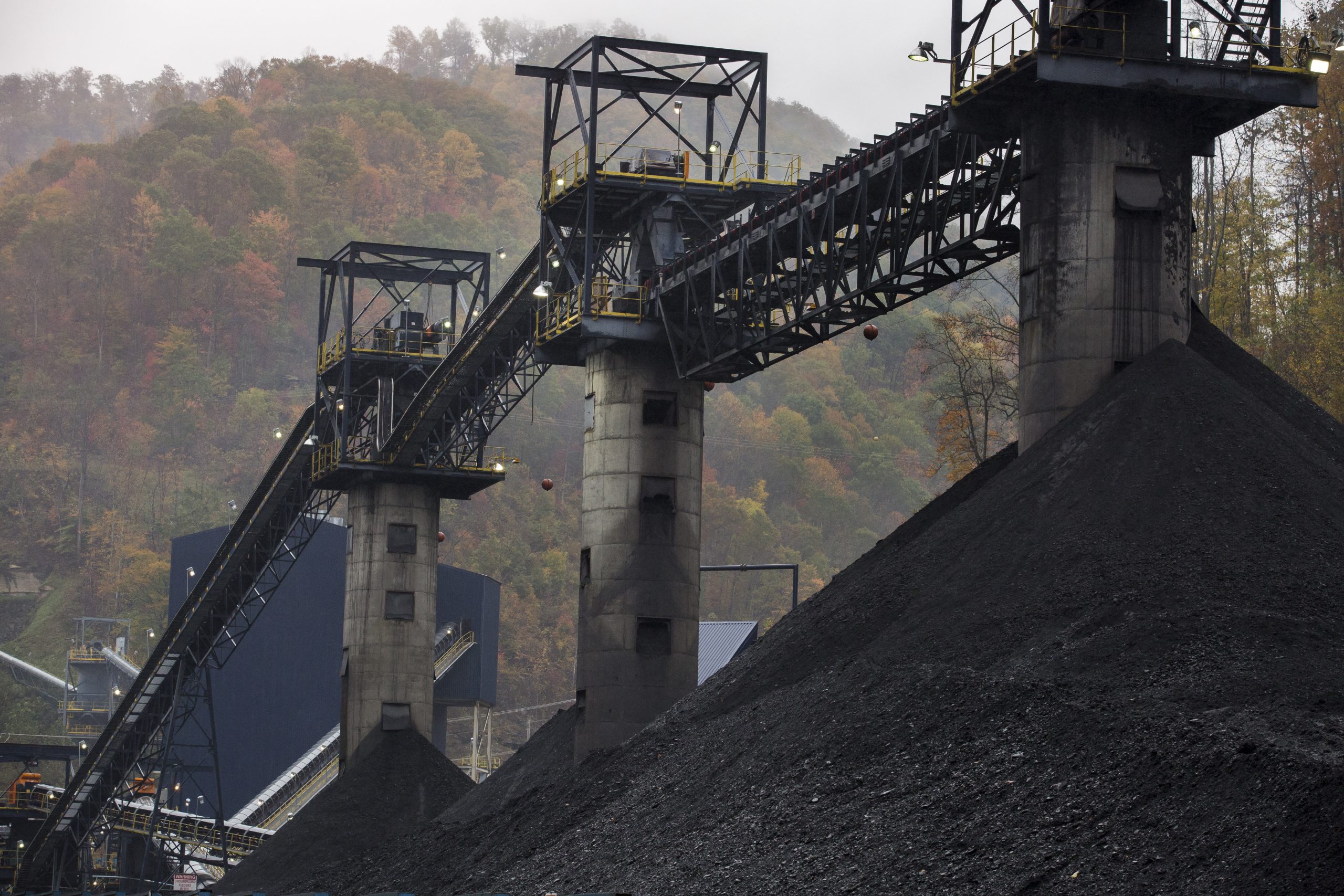
Clean coal technologies that burn coal at higher temperatures than conventional technologies aren’t allowed to be built without carbon capture and storage (CCS) technology.
Trump transition sources aren’t fans of CCS and want a market-based approach applied to energy technology, instead of funding a pilot project.
A source close to the Energy Department transition discussion says it would be better to reform the agency than just to switch its funding priorities from Obama’s renewables to Trump’s coal.
“It’s a reform agenda,” the source said. “To me, the answer is not plus up the stuff that we like. The answer is reform the agency so that they’re getting back to the measurable goals for the different offices … and get out of the business of favoring one source over another.”
The source acknowledged that it would take time to push these reforms and that the “sausage-making” over what technology gets funded will be done on Capitol Hill once Trump issues his budget.
The best approach to energy research is to support “basic research” that the private sector can apply widely, the source said.
Bringing back coal power plants would require dismantling the EPA’s Clean Power Plan, the carbon pollution rules for existing power plants. The rule is much broader in its scope than the New Source rule and has become synonymous with EPA overreach.
It picked renewable energy as the government-favored winner, rather than letting energy resources compete in an open market. Nearly 30 states and dozens of industry groups are challenging the rule in court.
Coal industry representatives will fan out in Washington this month to discuss clean coal options with policymakers.
Benjamin Sporton, head of the World Coal Association, based in London, is coming to Washington in February. “The WCA represents the global coal industry and welcomes Mr. Trump’s position on reinvigorating the coal industry in the U.S.,” said a representative for the group. “We have, however, also been calling for serious investment in clean coal technology worldwide.”
Sporton will be meeting lawmakers on Capitol Hill. He supports CCS development in line with the Paris climate agreement. If transition sources are right, Trump may not be as keen a supporter of CCS. He has vowed to pull America out of the Paris accord.
The National Mining Association has been talking to Team Trump about quickly rescinding Obama’s midnight coal regulations, primarily the Stream Protection Rule, which would make it nearly impossible to mine coal in states such as West Virginia and Kentucky. Congress voted last week to kill the rule.
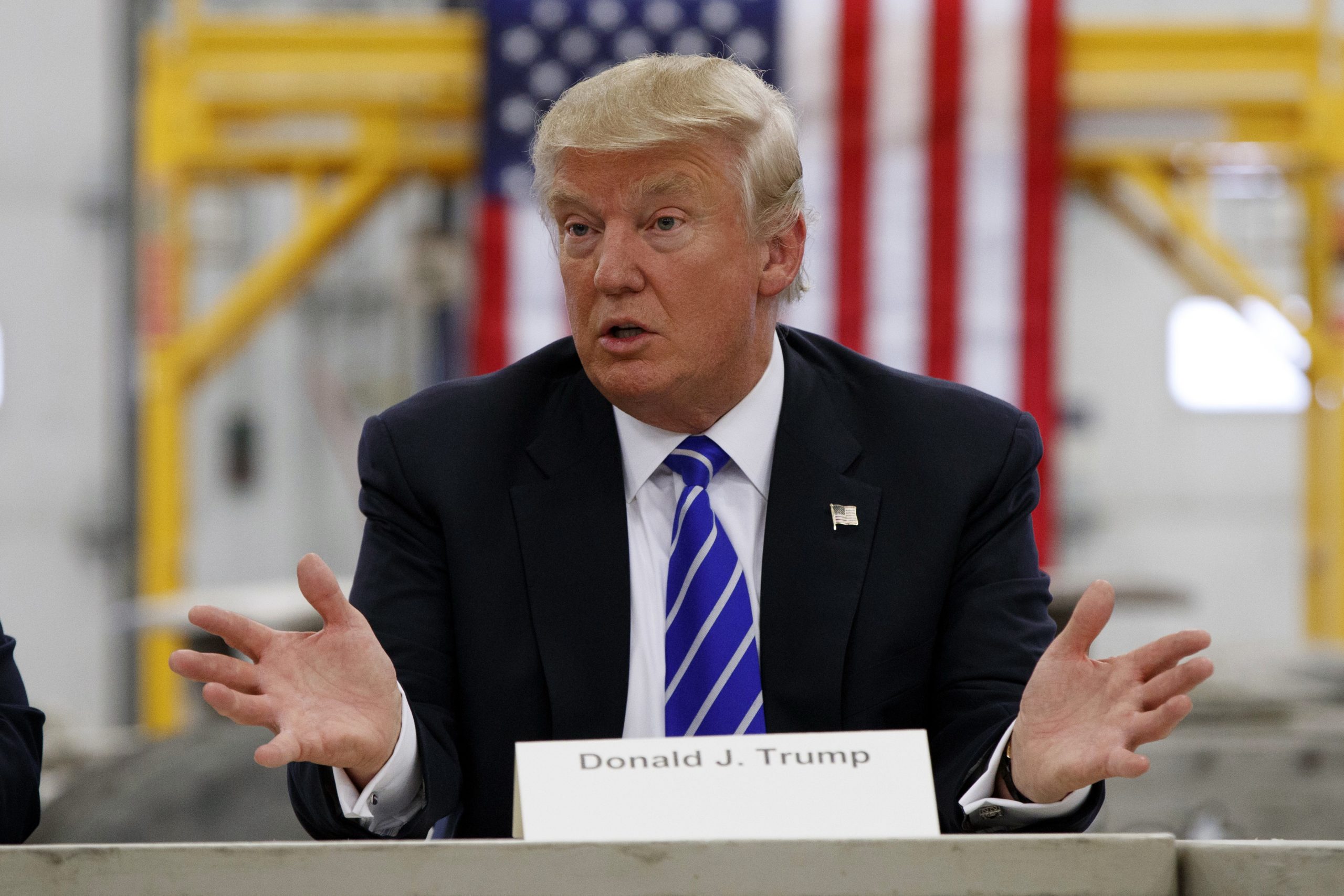
President Trump’s energy plan calls for a two-pronged approach to oil.
Oil security and Gulf cooperation
Trump’s energy plan calls for a two-pronged approach to oil. It wants to turn the nation away from importing oil from countries aligned with OPEC, by boosting domestic energy production as a matter of “national security.”
At the same time, the administration “will work with our Gulf allies,” some of which are principal members of OPEC, “to develop a positive energy relationship as part of our anti-terrorism strategy,” the American First energy plan states.
This may be less contradictory than it sounds. The State Department under Obama made economic outreach to Gulf countries a priority in its waning days. A summary of an Oct. 25 meeting of the Advisory Committee on International Economic Policy may shed light on what energy cooperation with the Gulf could look like under Trump.
The meeting was meant to get feedback on a trip Charles Rivkin, the former assistant secretary of state for economic and business affairs, planned to take in December to visit officials in Saudi Arabia and members of the Gulf Cooperation Council, according to an official summary of the meeting obtained by the Washington Examiner.
Rivkin “highlighted the recent U.S.-Kuwait Strategic Dialogue, as well as the upcoming U.S.-Qatar Economic and Investment Dialogue as further engagement opportunities,” read the minutes of the meeting. “He asked ACIEP members for ways in which the U.S. government could support and partner with [Gulf Cooperation Council] governments during these economic changes.”
The advisory group includes big manufacturers, banks and oil companies, such as Shell, which serves on its sanctions subcommittee. In previous years, Exxon Mobil had been a member.
Trump’s plan signals his desire to turn from issues discussed under Obama with the Gulf states, taking a harder line to focus cooperation on energy and combating terrorism, rather than on refugees and tourism. The economic dialogues that Rivkin mentioned are no longer searchable on the State Department website, indicating that the old agenda is already on its way to the scrap heap.
The American Petroleum Institute’s president and CEO, Jack Gerard, told the Senate Commerce, Science and Transportation Committee last week that the U.S. is now a global leader in oil and gas production. The federal government needs to support regulations and domestic policy that support the nation’s global energy leadership, not reverse it as the previous administration had attempted, he said.
“We’ve transitioned from an era of energy scarcity and dependence to one of energy abundance and security,” Gerard said. “The developments of the past decade have brought cost savings for American consumers, good-paying jobs, renewed opportunities for U.S. manufacturing, a stronger economy and greater national security.”
Gerard stressed the need for repealing many of the Obama-era regulations that are unnecessary and only look to make oil and gas production more expensive, including duplicative methane rules from two federal agencies that would add tremendous cost.
“It’s no wonder that from 2010-15, U.S. federal onshore natural gas production decreased 18 percent while production on state and private lands increased 55 percent,” Gerard said.
“Federal regulatory policy can either strengthen or weaken the U.S. energy renaissance, with impacts that extend far beyond our industry,” he added. “Regulatory actions should be rooted in sound science and data, with a consideration of the costs and benefits. With these goals in mind, we stand ready to work with Congress and the administration to find reasonable solutions to the challenges before us.”
