

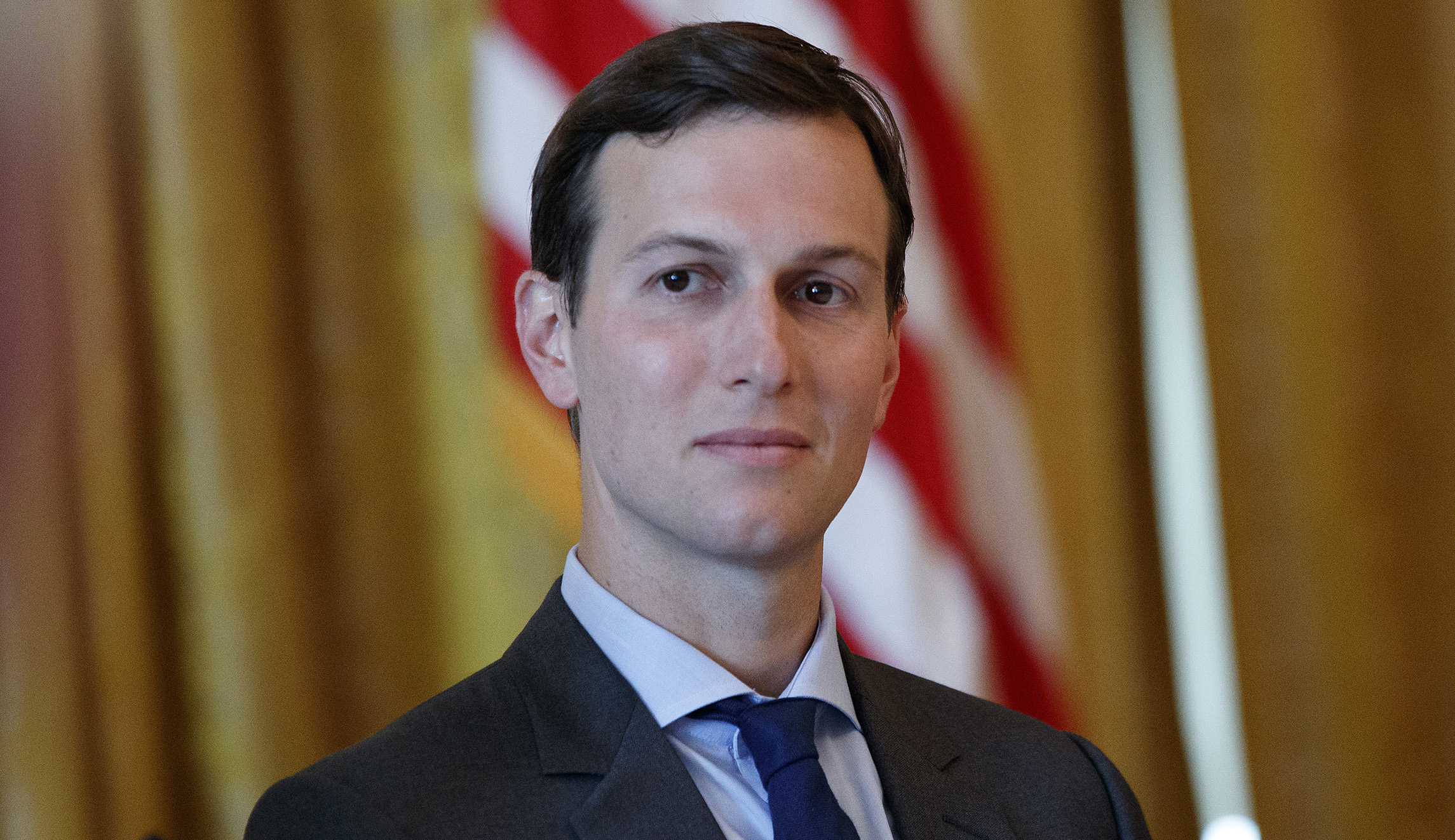
Senior White House adviser Jared Kushner released a statement to Congress on Monday that said he had just four meetings with Russian officials during and after the 2016 campaign, but said he was never close to the Russians, and insisted there was no improper collusion with Russia in these contacts as Democrats have charged.
“I did not collude, nor know of anyone else in the campaign who colluded, with any foreign government,” Kushner said. “I had no improper contacts.”
Recommended Stories


Kushner released an 11-page statement just before he’s set to meet with the House and Senate Intelligence committees this week. The press has treated Kushner as a mysterious senior aide to President Trump, Kushner’s father-in-law, but Kushner said he has preferred to operate behind the scenes, and never “sought the spotlight.”
But he said his statement said he was working to clarify his meetings as much as he could.
“As I indicated, I know there has been a great deal of speculation and conjecture about my contacts with any officials or people from Russia,” he said. “I have disclosed these contacts and described them as fully as I can recall.”
Kushner listed four meetings, two before the election and two after. He said the first was at the Mayflower Hotel in Washington in April 2016, when he met Russian Ambassador Sergei Kislyak just briefly.
“With all the ambassadors, including Mr. Kislyak, we shook hands, exchanged brief pleasantries and I thanked them for attending the event and said I hoped they would like candidate Trump’s speech and his ideas for a fresh approach to America’s foreign policy,” he said. “The ambassadors also expressed interest in creating a positive relationship should we win the election.”
“Each exchange lasted less than a minute; some gave me their business cards and invited me to lunch at their embassies,” he said. “I never took them up on any of these invitations and that was the extent of the interactions.”
He said Reuters has reported he had two calls with Kislyak, but said he has no memory of those conversations.
“While I participated in thousands of calls during this period, I do not recall any such calls with the Russian ambassador,” he said. “We have reviewed the phone records available to us and have not been able to identify any calls to any number we know to be associated with Ambassador Kislyak and I am highly skeptical these calls took place.”
He also said he didn’t remember Kislyak’s name in November when he wanted to verify an email came from Russia.
“To do so I thought the best way would be to ask the only contact I recalled meeting from the Russian government, which was the Ambassador I had met months earlier, so I sent an email asking Mr. Simes, ‘What is the name of the Russian ambassador?'” he said.
The second meeting before the election was the meeting Donald Trump Jr. had with a Russian lawyer. But Kushner said he was barely aware of what the meeting was about, and quickly looked to leave it.
“I arrived at the meeting a little late,” he said. “When I got there, the person who has since been identified as a Russian attorney was talking about the issue of a ban on U.S. adoptions of Russian children. I had no idea why that topic was being raised and quickly determined that my time was not well-spent at this meeting.”
“To the best of my recollection, these were the full extent of contacts I had during the campaign with persons who were or appeared to potentially be representatives of the Russian government,” Kushner wrote.
After the election, he met with Kislyak again, and said they talked about Syria, but not about sanctions. Kushner also rejected some of the claims made about that meeting in the press.
“I did not suggest a ‘secret back channel.’ I did not suggest an on-going secret form of communication for then or for when the administration took office,” Kushner wrote. “I did not raise the possibility of using the embassy or any other Russian facility for any purpose other than this one possible conversation in the transition period. We did not discuss sanctions.”
Kushner said he declined to meet with Kislyak twice after that, but that Kislyak met with one of Kushner’s aides. In that meeting, Kislyak suggested that he meet with Sergei Gorkov, and banker with direct ties to Putin.
Kushner and Gorkov did meet and talked generally about the need to improve U.S.-Russia relations.
“At no time was there any discussion about my companies, business transactions, real estate projects, loans, banking arrangements or any private business of any kind,” Kushner said. “At the end of the short meeting, we thanked each other and I went on to other meetings. I did not know or have any contact with Mr. Gorkov before that meeting, and I have had no reason to connect with him since.”
Kushner has been criticized for failing to disclose his meetings with Russian officials on his initial disclosure form. But Kushner said that information was left off unintentionally due to a “miscommunication” that prevented information on any of his foreign meetings from being listed, not just those meetings with Russia.
“It has been reported that my submission omitted only contacts with Russians. That is not the case,” he said. “In the accidental early submission of the form, all foreign contacts were omitted. The supplemental information later disclosed over one hundred contacts from more than twenty countries that might be responsive to the questions on the form.”
