

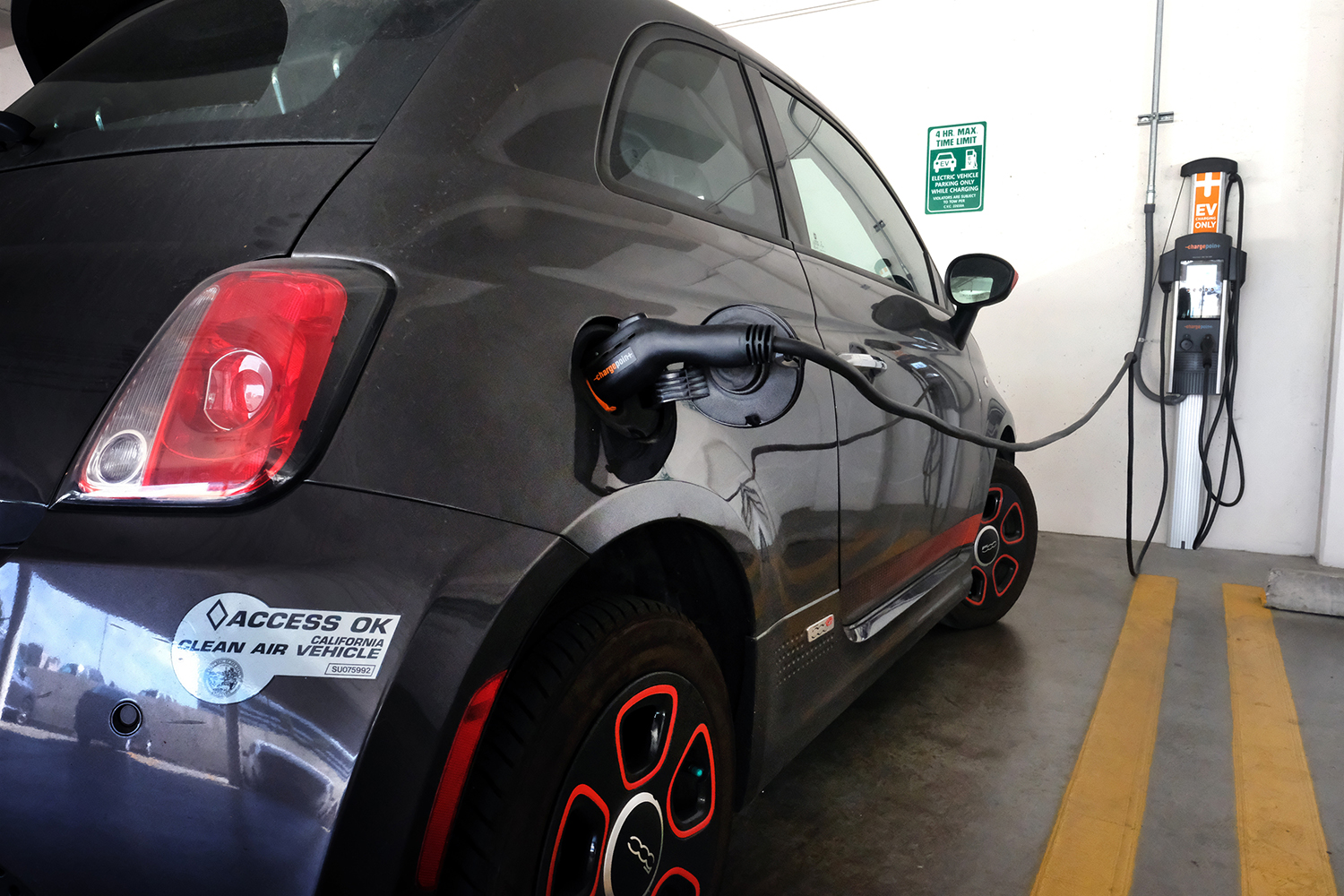
Millennials appear to be key to President Obama’s goal of putting more electric cars on the road to reduce carbon pollution and dependence on fossil fuels, according to new polling data released Monday.
The Consumer Federation of America issued the polling results amid a surge in electric car sales that began in July, after a year-long drag in sales numbers blamed on low gasoline prices and a resurgence in purchases of gas-guzzling sport utility vehicles and trucks.
Recommended Stories


According to the new polling data, the recent surge in sales is caused by increased interest from ages 18 to 34. Automakers are manufacturing a growing number of the battery-powered cars, with 13 companies offering electric models this year and prices becoming increasingly competitive with conventional gasoline-powered cars.
The sales are outpacing that of hybrid-electric cars, such as the Toyota Prius, which took a decade to reach the sales numbers that electric vehicles have achieved in about four years, said Jack Gillis, the consumer group’s spokesman.
“Consumer interest in buying electric vehicles is growing at the same time these vehicles are becoming more available and more attractive,” Gillis said. “It does not surprise us that electric vehicle sales have grown more rapidly in their first four years than did those of hybrid vehicles.”
Sales of electric cars since 2008 hit 500,000 vehicles as of August. Obama had hoped to have 1 million cars on the road by the end of last year, a goal he set in his first term.
Millennials’ interest in the vehicles has increased from 31 percent to 36 percent over the last year, Monday’s poll data showed. “Among different age groups, young adults (18-34) are most interested, with a full 50 percent saying they would consider buying an electric vehicle,” the group said.
The polling data showed a correlation between consumers’ knowledge of electric cars and their interest in buying one. Fifty-five percent of survey respondents who considered themselves “very knowledgeable” about battery-powered cars said they are interested in buying one.
“Among those who say they have no knowledge of [electric cars], only 22 percent are interested in buying one,” the group said.
The group also points out that big reductions in the cost of an electric vehicle is attracting more consumer interest. Chevrolet plans to roll out its Bolt electric car next year, with an average cost of about $30,000. Electric carmaker Tesla also plans to offer its Model 3 in 2017, with an average cost of about $27,500.
Improvements in electric vehicles’ range to more than 200 miles per charge is also attracting more interest. The cars do not require the same maintenance costs as conventional gasoline vehicles.
Mark Cooper, the Consumer Federation of America’s director of research, said consumers “understand that low gas prices will not last forever” and that the signals are there for “significant future growth” in the market for electric cars. “We doubt that automakers would be spending billions of dollars on [electric vehicles] if they did not think they could sell them to consumers.”
The poll surveyed 1,007 U.S. adults, who were contacted by cell phone and landline in the later part of August. The survey’s margin of error is plus or minus 3 percentage points, the group said.
