

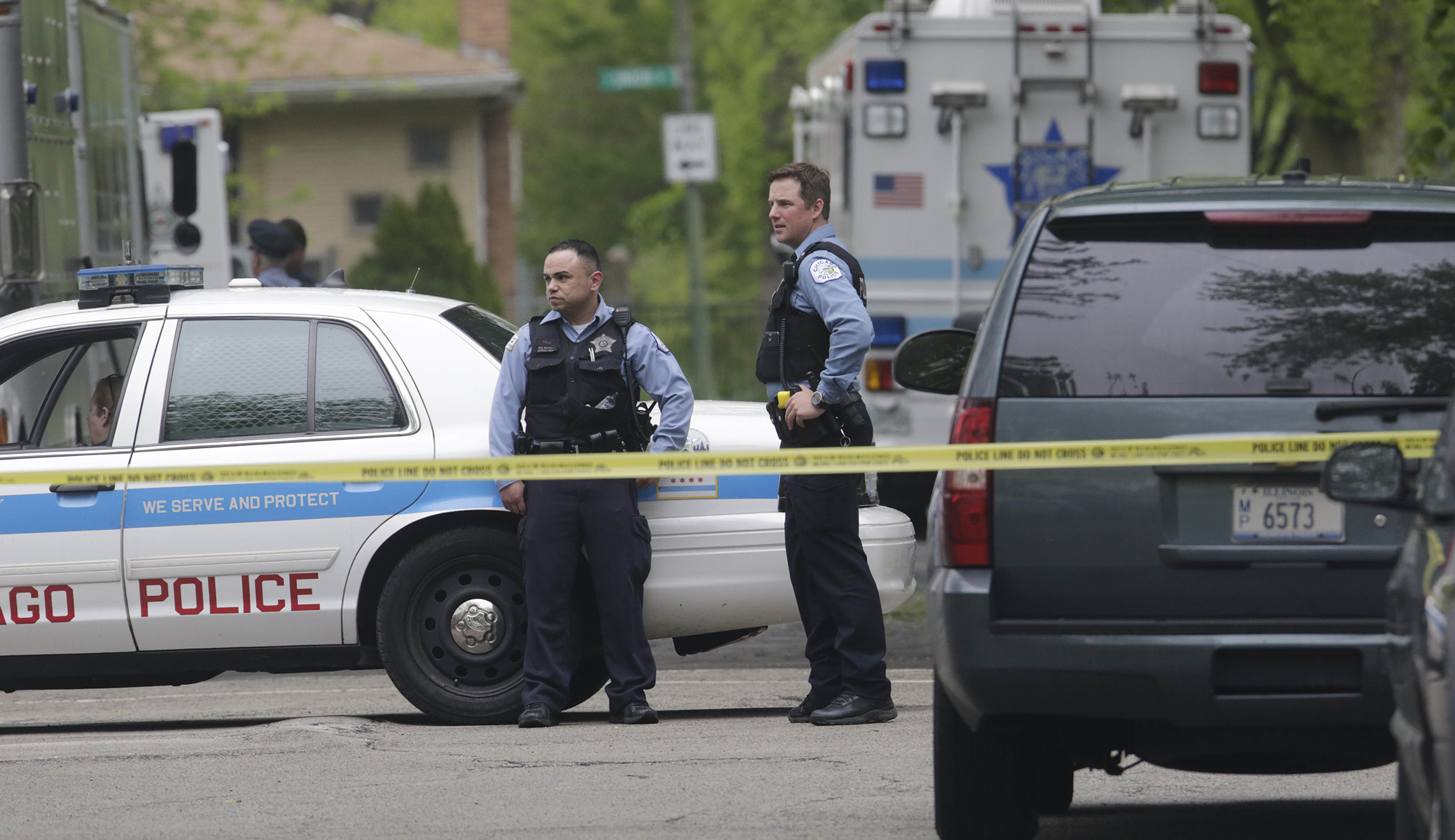
The number of violent crimes in the U.S. rose to the highest level in a decade, thanks mostly to a jump in murder and other violence in large cities like Chicago, according to the FBI Uniform Crime report released Monday.
That report said the number of violent crimes rose 4.1 percent nationwide in 2016 compared to 2015, and the number of murders rose by 8.6 percent nationally. There were 17,250 murders and incidents of “non-negligent manslaughter” in 2016, the most the nation has seen since 2006, but still far below the levels seen in the late 1980s and early 1990s.
Recommended Stories


That surge was driven by murder increases in large cities such as Chicago and Baltimore. In the nation’s 11 largest cities, which are those with populations above 1 million, the number of murders rose by 20 percent and violent crimes jumped by 7.2 percent.
According to the Brennan Center’s Justice Program, violence in Chicago was a main driver of the nationwide increase.
“Despite comprising less than 1 percent of the total population, Chicago alone accounted for more than 20 percent of the nationwide murder increase,” the Brennan Center said.
Attorney General Jeff Sessions said Monday that the report justifies his prior speeches in which he has said the jump in violent crime is not a “blip” to be ignored.
“For the sake of all Americans, we must confront and turn back the rising tide of violent crime. And we must do it together,” Sessions said Monday. “The Department of Justice is committed to working with our state, local, and tribal partners across the country to deter violent crime, dismantle criminal organizations and gangs, stop the scourge of drug trafficking, and send a strong message to criminals that we will not surrender our communities to lawlessness and violence.”
The 2016 data shows there were an estimated 1.2 million violent crimes in the U.S. last year, of which more than half (64 percent) were aggravated assault. The FBI considers murder and non-negligent manslaughter, rape, robbery, and aggravated assault to be violent crimes.
But Inimai Chettiar, director of the Brennan Center’s Justice Program, says the data still debunk the Trump administration’s claims that “crime is out of control” around the country.
“Chicago, for example, has had serious issues that need to be addressed. But by painting the entire country with too broad a brush, the President Trump and Attorney General Sessions are peddling fear and distracting from the frank and honest conversations needed to find solutions to these real problems,” she said.
The five-year and 10-year trends in violent crime show an increase from 2012 (up 2.6 percent), but a decrease from 2007 (down 12.3 percent).
Mark Holden, general counsel and senior vice president at Koch Industries, also said the latest data “undercut claims of a national crime wave.”
“But they make clear that work needs to be done to stop these troubling local spikes in violence, and persistently high rates of violent crime in a few major cities. State and local leaders from across the country have evidence-driven solutions, and we should learn from the dozens of cities and states that have successfully reduced crime, incarceration, and recidivism together,” Holden, who has already worked with the Trump administration on criminal justice reform, said.
The data is compiled as part of the FBI’s annual Crime in the United States report, which collects the information reported voluntarily by law enforcement agencies.
