

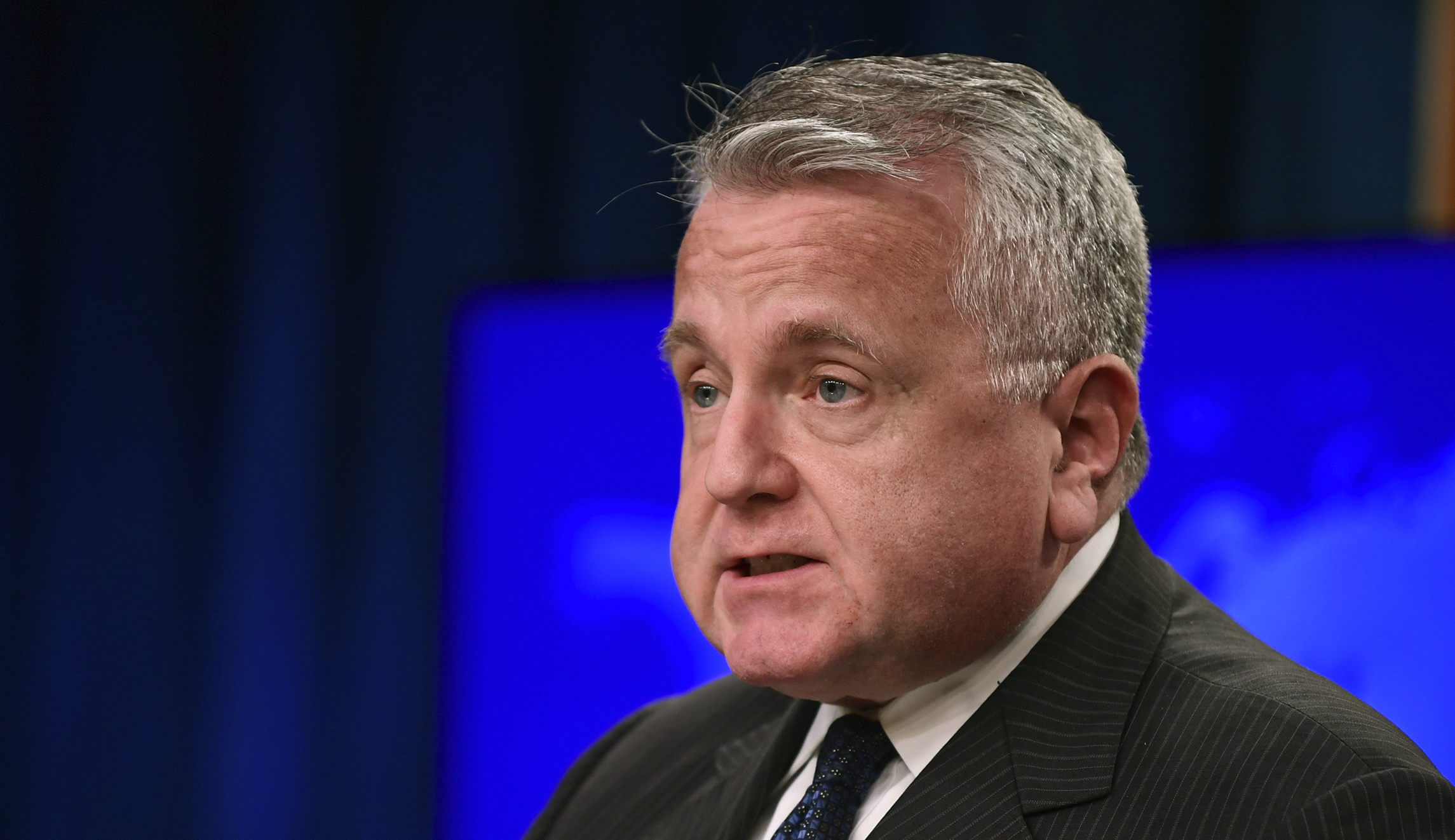
A Russian man has been taken into custody after “breach[ing] the perimeter” of the U.S. Ambassador John Sullivan’s residence in Moscow.
“He was intercepted by Embassy personnel and turned over to local authorities,” the U.S. Embassy announced Friday. “Ambassador Sullivan was not home at the time, and no one was injured in this incident.”
Recommended Stories


Embassy spokeswoman Rebecca Ross gave a sparse account of the incident, which took place at 4:20 p.m. local time, although in a follow-up tweet said that the individual had been taken into custody.
Details from Russian law enforcement suggest an unusual drunk driving case involving a 44-year-old man.
The Russian national who breached the perimeter at Spaso House today is in the custody of local authorities, and an investigation is underway. The U.S. Embassy appreciates all expressions of concern. We refer you to the investigating authorities for any further information.
— Rebecca Ross (@USEmbRuPress) September 18, 2020
“A man was driving an off-road vehicle and drove into the gates of the building,” Moscow police explained, per Russian state media. “Police officers are probing the incidents to study all its details.”
That suggests a benign conclusion to the incident despite Russia’s history of harassing American diplomats stationed in Moscow.
“It was part of a way to put pressure on government officials who were trying to do their reporting jobs,” former Ambassador Michael McFaul said after concluding his tour in Russia at the end of Barack Obama’s presidency. “We were feeling embattled out there in the embassy.”
Such activity has continued during President Trump’s tenure, including a medical incident last year in which the Russian government delayed the emergency medical evacuation of an American military attache for several hours.
“They want officials and their families to be under duress,” former CIA station chief Daniel Hoffman told the New York Times when the medical incident was revealed. “The idea that they would interfere with medical care or put someone’s life or well-being at risk is taking the harassment for which Russia has been known since the days of the KGB to a new and dangerous level.”
Sullivan, who relinquished his role as deputy secretary of state in order to take over as the top U.S. diplomat in Russia, has made a high-profile effort to secure the release of an imprisoned American, Paul Whelan, who was sentenced last month to 16 years in a Soviet-era labor camp based on specious espionage charges.
