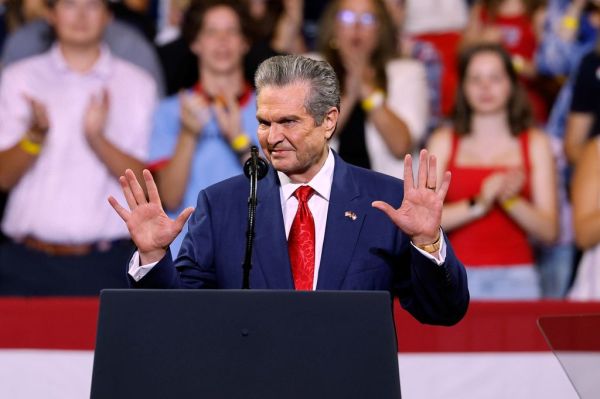
Mike Gillespie, the food resources director for the Capital Area Food Bank, has been with the nonprofit for nine years.
What does the food bank do?
The Capital Area Food Bank is the largest, public nonprofit hunger and nutrition education resource in the D.C. area. Each year the CAFB distributes 20 million pounds of food, including 6 million pounds of fresh produce, to over 700 partner agencies.
How is the economy affecting the food bank?
The biggest thing we see happening is the explosion of the need for food. The number of calls has almost tripled compared to last year. The past year, very high fuel costs drove our transportation expenses up. While the price of gasoline has recently dropped, the price of diesel has remained very high. We have seen a consistent price increase of from 5 percent to 12 percent for many of the basic staple products.
How vulnerable is D.C.?
The metropolitan area has been quite vulnerable to hunger for some time. Our nation’s capital is consistently one of the areas of very high poverty rates. In D.C., one of two children are at risk of hunger and one in three senior citizens at risk.
Our region is not a “food rich” area. There are relatively few food production, transportation or storage facilities and resources. There are limited opportunities for local donations of large quantities of usable food products.
How can people help?
Volunteer your time and talent. Donate food. If you know of food that can be donated, call me at 202-526-5344, Ext. 289.
Donate money. Raise awareness about hunger. Many people don’t think about the unseen effects of hunger on all of us. A child that is hungry cannot learn and cannot grow up to their full potential.
Anything else readers should know?
Your readers should know that it is not hard to be a positive force working against hunger. I have found that much can be done with some small contributions.