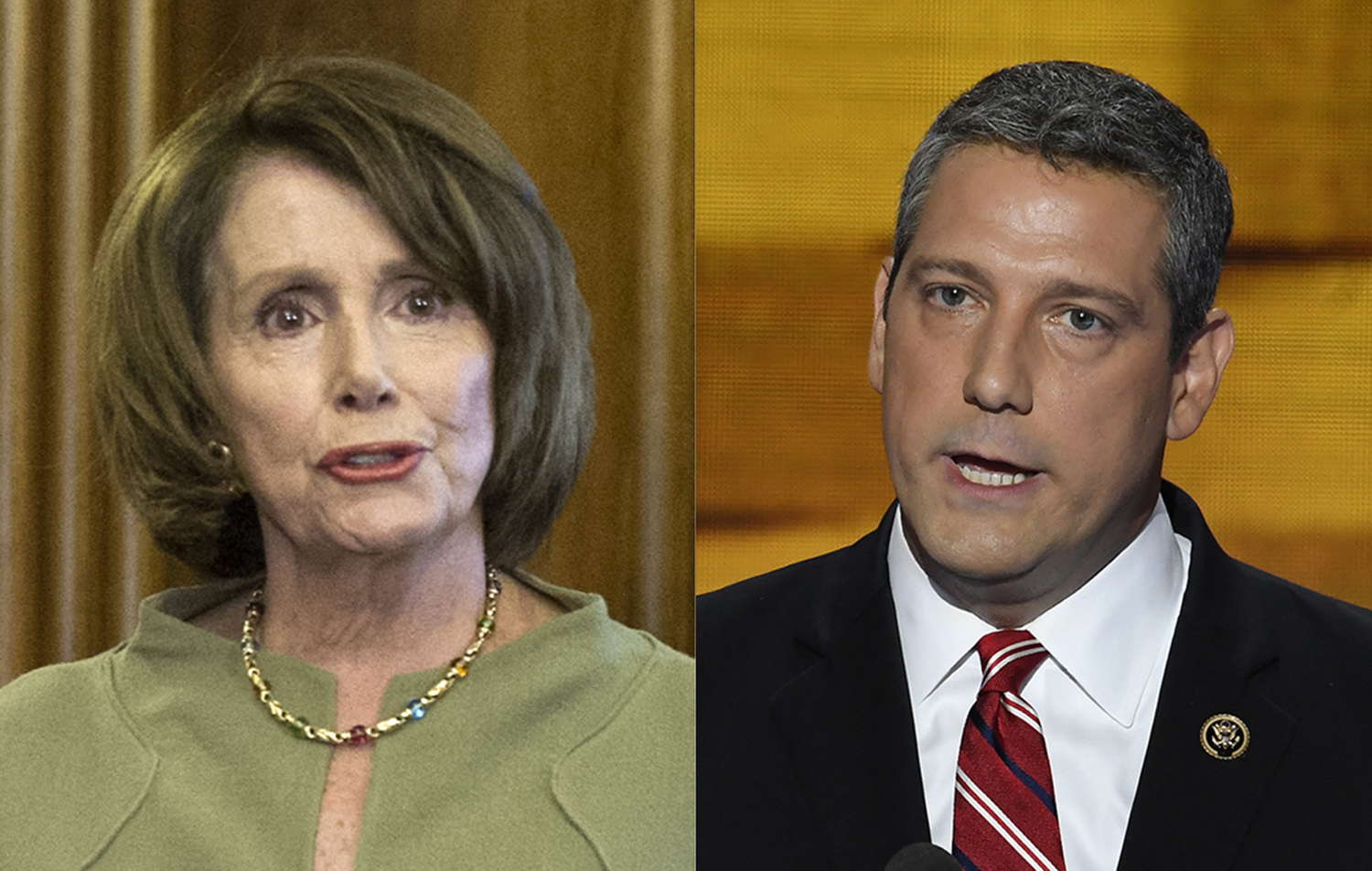
Pelosi’s job on the line in leadership vote

Published November 30, 2016 5:01am ET


House Democrats will decide Wednesday whether to re-elect longtime House Democratic Leader Nancy Pelosi, who faces a formidable challenge from a much younger and more disgruntled member of her caucus.

Rep. Tim Ryan, of Ohio, believes the party’s November election debacle calls for a leadership shakeup in the House Democratic Caucus, which has ceded more than 60 seats to the GOP since 2010 and has been marginalized in the minority for three election cycles.

Some Democrats agree with Ryan, although the discontent is probably not deep enough to topple Pelosi, one of the most powerful and trailblazing Democrats in history.

Ryan will face off against Pelosi Wednesday morning in a House office building, behind closed doors. Democrats will pick between the two lawmakers via secret ballot, a format some believe may make it easier for lawmakers to vote against Pelosi.

Pelosi earlier this month claimed to have the backing of two-thirds of the House Democratic caucus, and longtime Democratic strategists predict Ryan will not win anywhere near enough votes to topple her.

But neither candidate has revealed an official whip count and the election challenge poses the biggest threat to Pelosi’s leadership since she first ran for Democratic leader in 2002.

In a nod to the threat from Ryan, Pelosi expanded the Democratic leadership team by adding a few more positions, including a spot for a freshman lawmaker. Ryan criticized the move and said it would “only serve to further consolidate her power over the caucus.”

Pelosi responded in a Huffington Post interview by calling Ryan’s criticism of her reform “almost pathetic.”

Two House Democratic lawmakers threw their support behind Ryan this week. Rep. Seth Moulton, D-Mass., and Rep. Ruben Gallego, D-Ariz., called Ryan an advocate for working families and a representative of a new generation of leaders the party desperately needs to begin winning elections again.

Ryan, 43, is considerably younger than Pelosi, 76, and his candidacy has underscored Democratic concerns that they need to allow a younger generation to rise to the top of the party. Pelosi has been the number one House Democrat since 2002.

Ryan’s candidacy is primarily fueled by the Nov. 8 election, which was disastrous for Democrats. Not only did they lose the White House, they failed to retake the majority in the Senate despite a very favorable election map. While Pelosi had predicted double-digit pickups for Democrats in the House, the party has reclaimed only six seats and remains a shrunken and largely sidelined minority.

The party now appears to be looking around for a new direction and Ryan believes he can help lead it.

“At this time of fear and disillusionment, we owe it to our constituencies to listen and bring a new voice into leadership,” he told fellow Democrats when he announced his candidacy.

Pelosi has good reason to feel confident in her re-election, however. Pelosi became the first female speaker in 2006 after she helped Democrats reclaim the majority and she steered some of President Obama’s agenda, including the Affordable Care Act, through Congress.

Pelosi has also been a prolific fundraiser for her caucus and for Democratic candidates.

But Ryan, who is serving his seventh term, hails from the rust-belt region of the country that helped President-elect Donald Trump beat Hillary Clinton on Nov. 8. He said the party leaders have been delivering the wrong message to voters and losing elections as a consequence.

“We need a brand as a party that says we’re the party that are going to help working-class people, white people, black people, brown people, gay people, straight people, improve opportunity for them to grow their wages, to have security, economic security,” Ryan said earlier this month on CNN. “And we got off that message. And when we don’t talk about economics, we lose elections.”
