

Mounting federal debt is not new, but the speed at which it’s climbed since the enactment of the $2.2 trillion coronavirus stimulus relief spending measure has lawmakers increasingly concerned.
Treasury Secretary Steven Mnuchin announced earlier in the week the treasury will borrow nearly $3 trillion in the second quarter to cover the federal government’s response to the COVID-19 virus crisis, in addition to the $677 billion third-quarter loans, bringing the full fiscal year debt to almost $4.5 trillion.
Recommended Stories


The Treasury Department, in its announcement, said the U.S. economy experienced an “exogenous shock from the 2019 novel coronavirus (COVID-19) pandemic and the extraordinary measures taken to respond to it. These policies, which include social distancing requirements and mandated business closures, have reduced the spread of the virus but have also triggered a sudden, sharp decline in economic activity.”
Real gross domestic product declined by 4.8% at an annual rate in the first quarter, after three consecutive quarters of growth in the range of 2.0% to 2.1%, the Treasury Department stated.
Lawmakers on Wednesday sought to differentiate between pre-coronavirus spending and the federal largesse that’s followed since the pandemic began.
Sen. Marco Rubio, a Florida Republican, told the Washington Examiner, “There’s a difference. I’m not happy about it, just like I’m not happy about this virus, but there’s a difference between structural debt, which is money you’re going to spend forever built-in, like some of the programs that we have are permanent, and short-term emergency spending to try to rescue your economy. Because without an economy, you’re not going to have a recovery.”
Sen. Chris Coons, a Delaware Democrat, agreed, telling the Washington Examiner, “The reason we’ve got a federal government in no small part is that unlike states, cities, and counties, we can provide emergency assistance in the midst of a natural disaster or a federal emergency. I am concerned about the speed at which we are increasing our debt. Bluntly, I’m more concerned about getting desperately needed assistance to our communities and states.”
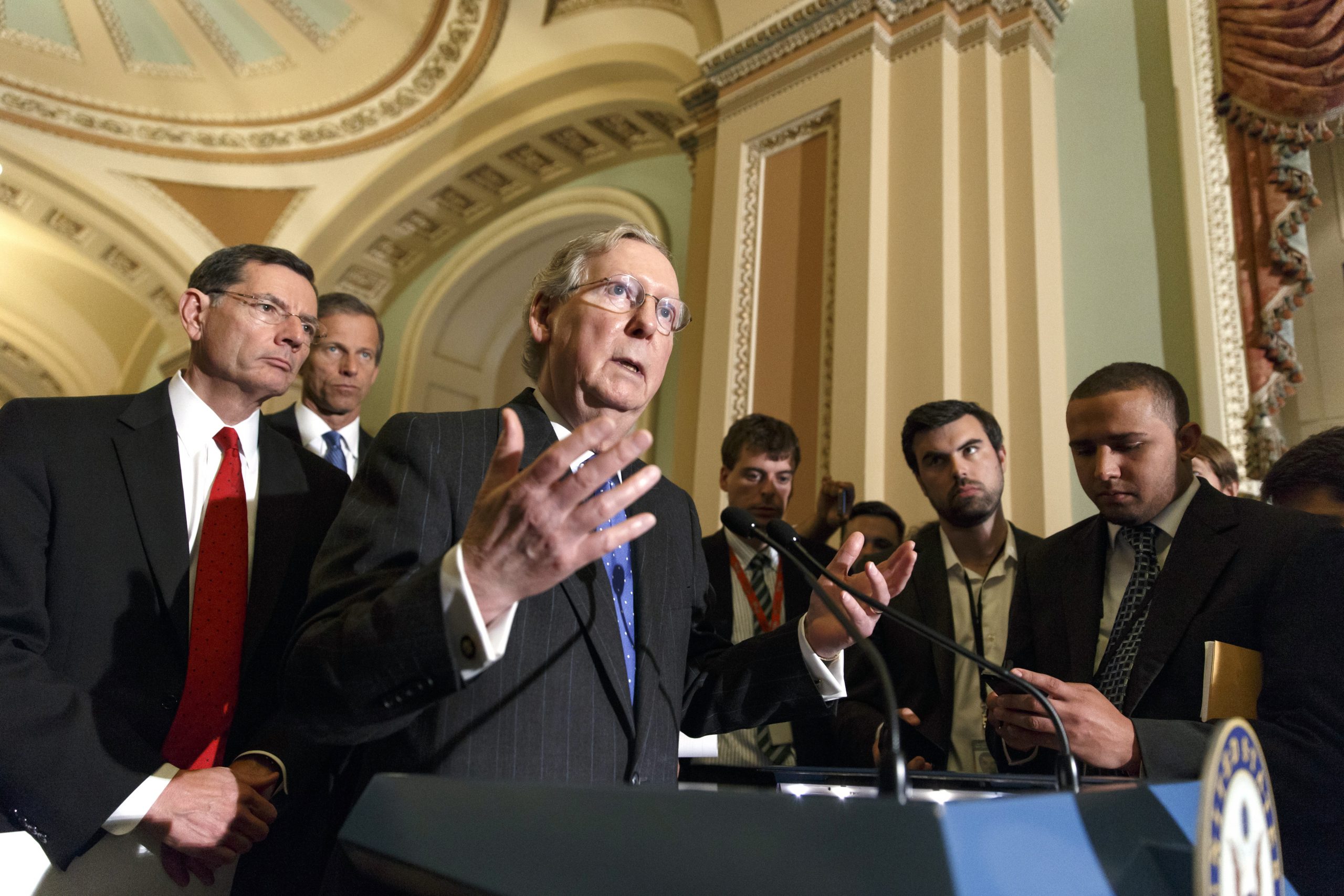
Democrats, however, are seeking more assistance in future stimulus bills that Republicans are not willing to support to add to the debt. Senate Majority Leader Mitch McConnell has resisted calls from Democrats for a federal bailout of states to help replenish underfunded pension funds, saying the GOP has no desire to borrow “money from future generations.”
“We’ve had a mounting debt issue for a long time. This only exacerbated it, obviously, but I don’t think many people argue with the need to spend the money. But, hopefully, it forces us to address the larger debt issue,” Sen. Kevin Cramer, a North Dakota Republican, told the Washington Examiner. “And it’s not too soon to start talking about it. And by that, I mean, talking about the drivers of the debt, being willing to have the political will to talk openly with everything on the table not having ‘nonstarters.’”
