

With everyone focused on the Republicans’ struggle to choose a worthy nominee, it’s worth looking back at this summer’s by-elections, but not because they give us a clear idea of what’s going to happen in 2012.
If you lay them all end to end, you probably won’t reach any emerging trends for next November.
In Wisconsin, Democrats used the recall process to oust (narrowly) one scandal-plagued Republican state senator, and a Republican state senator in a heavily Democratic district. But they failed to retake the state senate, which had they succeeded in doing would have enabled them to undermine Gov. Scott Walker’s conservative reforms.
In New York’s 9th Congressional District, formerly home to Anthony Weiner, Republicans scored a very unlikely victory. But it was decided mostly by Orthodox Jewish voters whose discontent with President Obama had boiled over for a number of reasons. As elections go, this was really one of a kind.
Nevada’s 2nd District is really a Republican seat anyway. Democrats were playing with the house’s money when they made a play to win it. The fact that they were crushed as badly as they were (22 points) is noteworthy but not earth-shattering.
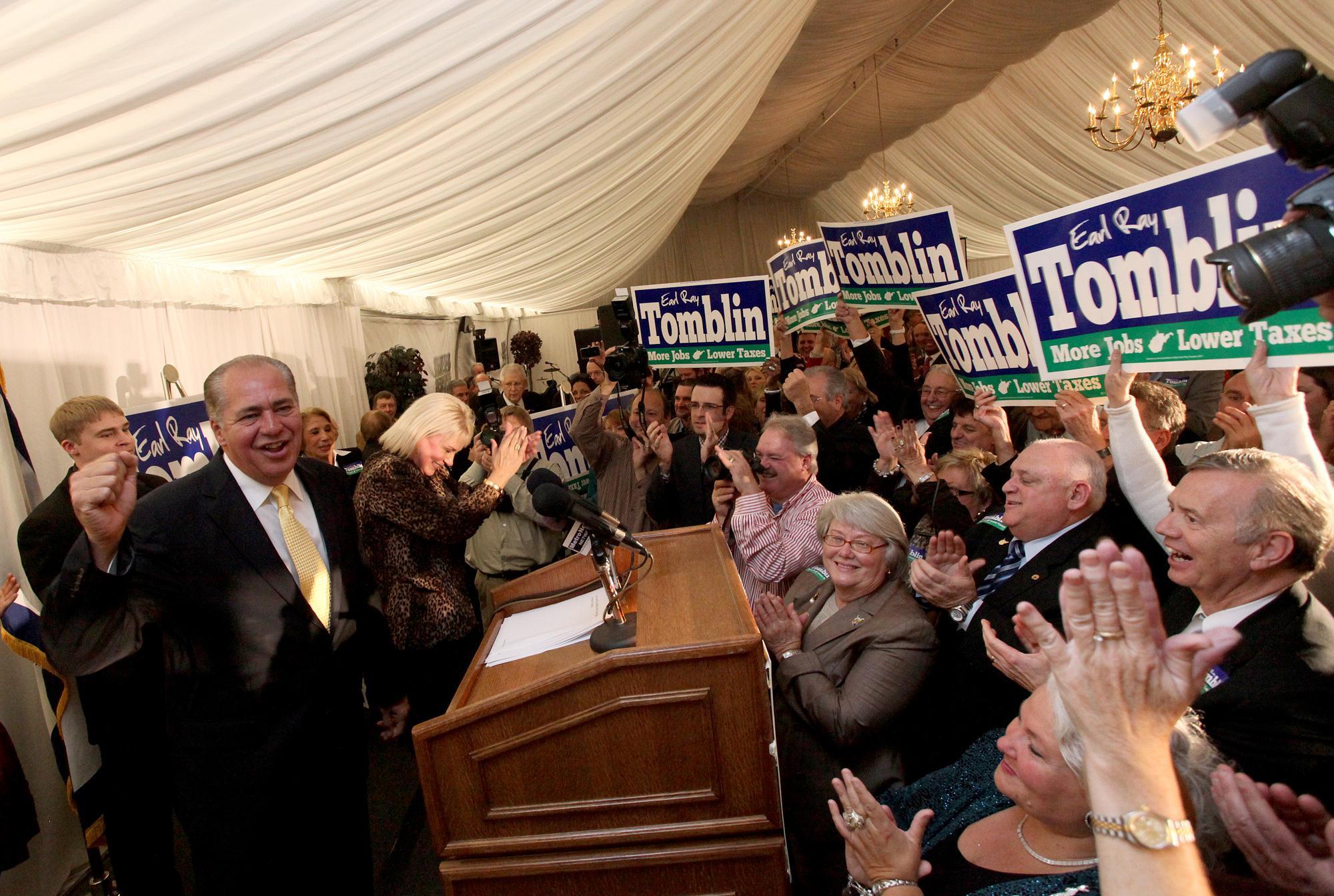
Last week in West Virginia, Democrats retained the governorship, but it was a lot closer than expected. Still, West Virginia is an odd state that holds few lessons for 2012 either way. Whether or not he is re-elected, Obama will almost certainly lose the state by double digits, just as he did in 2008.
There’s nothing obvious here if you’re looking for 2012 bellwethers. But that doesn’t mean the races tell us nothing. Indeed, we can learn quite a bit from what they don’t tell us.
In each case (perhaps less so in West Virginia), Democrats hoped to create a very specific narrative. Middle-class independent voters were supposed to be rising up against a radical Tea Party movement that had been given too much power.
The Tea Partiers had supposedly “hijacked” the Republican Party and were taking the meat cleaver to the heart and soul of the federal government. They were “taking hostages” in Washington and persecuting government workers, to the outrage of normal, everyday Americans.
For a brief time, it looked like this tack would actually work. Using the time-tested “Mediscare” tactic, Democrats won a special election for an open House seat in upstate New York back in May.
But ever since, this strategy has sputtered. In Wisconsin, in New York City, in West Virginia and in Nevada, Democrats failed to frighten independent voters.
We did not see a repeat of what happened after Hurricane Katrina in 2005, or after the financial crisis of 2008. We have seen that the middle class, crucial to Republicans’ chances in every election, is not appalled, restive or disturbed.
We have learned that, for the moment, there is no genuine grass-roots anger at Republicans, the unsanitary protests in New York City notwithstanding.
No one cares about the unions that Republicans are fighting in a few key states. Nor does anyone remotely care that Congress won’t move on the American Jobs Act, Obama’s new and particularly irrelevant pet cause.
These recent off-year elections have not necessarily demonstrated any Republican strength. We might still see that in next month’s Virginia elections, where the GOP stands a better-than even chance of retaking the state Senate. Or we might not.
Either way, there is no noteworthy Tea Party backlash, and certainly no reason for conservatives to back down now.
David Freddoso is The Examiner’s online opinion editor. He can be reached at [email protected].
