

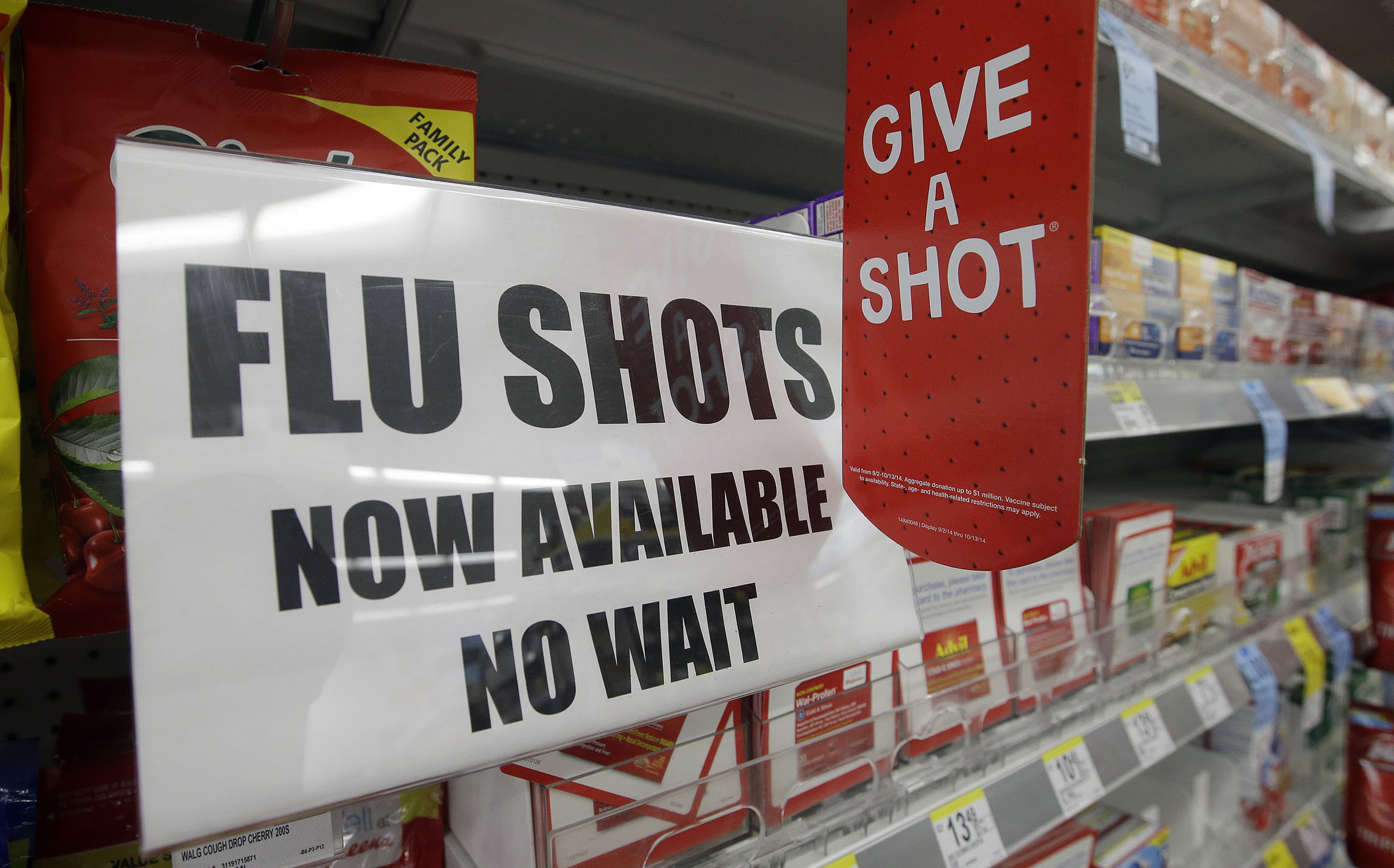
A private-sector study says decisions not to get flu shots and other preventive shots creates billions of dollars in healthcare costs and reduced productivity.
The study, published in the journal Health Affairs on Wednesday, said people’s failure to get shots and vaccines cost the economy about $7.1 billion in 2015. The finding was released just as federal data showed that just 42 percent of adults got the flu shot for the 2015-2016 season.
Recommended Stories


“Low vaccine uptake means that preventable diseases result in costs to individuals and society in terms of deaths, disabilities, and economic losses from doctor visits, hospitalizations, and lost income,” according to the study published in the journal Health Affairs on Wednesday.
The study looked at vaccine-preventable diseases related to ten vaccines that are recommended for adults 19 and older. The diseases included the flu shot, but also vaccines for measles, mumps and rubella, meningitis, pneumonia, chicken pox and tetanus, diphtheria and pertussis.
The study found that based on current vaccination rates, such diseases annual cost individuals $9 billion through direct healthcare costs and productivity losses, $7.1 billion of which occurs among the unvaccinated, the study said.
The study used an economic model to estimate the direct healthcare costs and productivity losses per patient and then multiplied it by the number of cases that could have been preventable by a vaccine.
It used data on the immunization rate to examine how many adults didn’t get the disease-specific vaccine in 2015.
It comes at a time of growing skepticism from some parents about vaccines, including an unfounded and unscientific theory that vaccines for their children cause autism. A measles outbreak in 2014 at Disneyland in California was linked to unvaccinated children.
But the study found that some kids aren’t the only ones not getting needed vaccines.
“These results not only indicate the potential economic benefit of increasing adult immunization uptake but also highlight the value of vaccines,” it said.
