

Only three months into her tenure as chairwoman of the Republican National Committee, Ronna Romney McDaniel has her eyes trained squarely on 2018 with the goal of maintaining and even expanding Republican majorities in the House and the Senate.
The former Michigan GOP chairwoman, who has a name oozing of Republicanism, McDaniel is trying to piggyback off unprecedented success the party saw over the past seven years under Reince Priebus, the former chairman-turned-White House chief of staff under President Trump, and parlay that success into an extended period of power for the GOP.
In a wide-ranging interview at GOP headquarters, the new RNC chief talked about 2018, the need for the party to govern on Capitol Hill and enact the Trump agenda, what she wants to see improve within the party organization and how she grades the first 100 days of the administration. The conversation has been edited for clarity and length.
Washington Examiner: What role does the party need to play in 2018 and beyond?
McDaniel: Well, we have to continue the momentum that we built from the party in 2014 to win the Senate and then 2016 to win the White House and carry that through 2018 and the Senate races, where we have a real opportunity to expand our majority and maintain our majority in the House.
Washington Examiner: Talk about the map a little bit. What are you guys envisioning right now? Many people look at the 10 seats in states where Trump won and the five where Trump won by double-digit margins.
McDaniel: There’s a lot of opportunity on the Senate side, and I think the 10 where President Trump won and you have Democratic incumbents are a real opportunity where we could see some pickups. My home state of Michigan, you have Debbie Stabenow. I think she’s vulnerable. You have Claire McCaskill, you’ve got Joe Donnelly, you’ve got Tammy Baldwin, Heidi Heitkamp, Joe Manchin, Jon Tester. There’s a lot of opportunities. But what’s interesting about that map specifically is that five of those states are in the Rust Belt area where President Trump created a new coalition and brought out Democrats and independents and people who really were focused on jobs, wages and fair trade, and there was this specific message that resonated with them and we need to keep those voters engaged and carry them into these Senate elections in Ohio, Michigan, Wisconsin, Indiana and Pennsylvania.
Washington Examiner: You mention the Manchins and the Donnellys and those types of people. In the Morning Consult poll the other day, they all had pretty high favorability ratings in those states. Does that make it a tougher task for you to try to flip those seats?
McDaniel: Yeah, there will be different dynamics in every state. Some of them will have higher favorability ratings. But remember the president won those states. And in some of those states by — Manchin’s state specifically — very large margins … We want to capitalize on that and flip those states. It’s going to be a combination of recruiting good candidates, having a message to run on, and from the RNC’s perspective, we need to get into these states early and start building out our ground game. Reince [Priebus] recognized that you can’t get into a state a month or two months in advance and think you’re going to mobilize and turn out your base. In the midterms when you have a lower voter turnout, traditionally, what the RNC does in terms of putting together our get-out-the-vote (GOTV), and that ground game is going to be critical to pushing our voters to get out to the polls and winning on Election Day.

“We’re not the legislative body. So we’re here to help elect Republicans, so the president and the House and the Senate will work that out, and we’re going to continue to push electing and supporting Republicans through the midterms,” McDaniel said. (AP Photo)
Washington Examiner: What about the data program? Reince was a big proponent of that. Are you maintaining that? Are you trying to further that along at all or scaling back at all?
McDaniel: We are growing our data program. Traditionally after an election, you see operations kind of shrink down and then rebuilt. In our data program, we are actually continuing to invest in it. We haven’t shrunk down at all on that front because we recognize how critical the data was to our victories in 2016 and we have to carry that through to 2018. And one of the unique things at the RNC is because President Trump signed the data-sharing agreement, we have all of our data including the Trump data that we gathered this election.
Washington Examiner: A couple of Republicans who are up for re-election, Jeff Flake and Dean Heller, they’re the two talked most about as targets for Democrats in 2018. For the RNC, are you guys prepared to break with Trump and back GOP incumbents if he does not end up supporting them? Flake in particular. You look at the House side, he’s made some threats at the Freedom Caucus. What about that?
McDaniel: The RNC, per our bylaws, cannot engage in primaries. That is not our role. We actually have a rule that prohibits us from picking a candidate in the primaries. The president has a different role. He has every right to look at candidates at the primary stage and determine who is best to help him further his agenda. From an RNC perspective, it would be unlikely for us to engage in any primaries unless they meet the qualifications that would allow us to engage.
Washington Examiner: Do you worry more generally speaking about more fractions within the party? Obviously, the RNC cannot get involved, but say Trump goes out and says, ‘I like guy against Jeff Flake’ or someone against members of the Freedom Caucus because they were against the healthcare bill. Does that concern you at all?
McDaniel: It doesn’t. We just had this huge primary for president with this huge field of candidates — 17 candidates — and a lot of people said this was going to damage your party. ‘You’re going to be fractured.’ As long as you come together and coalesce around a nominee. And I think that’s why the RNC plays such a pivotal role. We’re part of the healing process. We’re part of the process in helping those voters engage and rally around the eventual nominee. And by not taking a role in the primaries and staying neutral, we’re well-suited to help bring voters together in the end to support the eventual nominee.
Washington Examiner: What does the president expect of the party?
McDaniel: The president’s working hand-in-glove with the committee and the party. He recognizes the role that we played in 2016 and values that we put the ground game together, so he’s supporting us with our fundraising efforts, and certainly we support him in his agenda and what he’s trying to accomplish for the American people.
Washington Examiner: What about your discussions with the president? How often do you speak with him?
McDaniel: If we ever need to get on the phone, we talk … Obviously we’ve been talking about issues that are coming up. We’ve got some special elections, so we’ve been on the phone about some of those. He’s engaged. He’s paying attention, and he cares about what the RNC does.
Washington Examiner: Is Reince Priebus involved at all? Obviously, he had a hand in a lot of this stuff. He probably has something at stake …
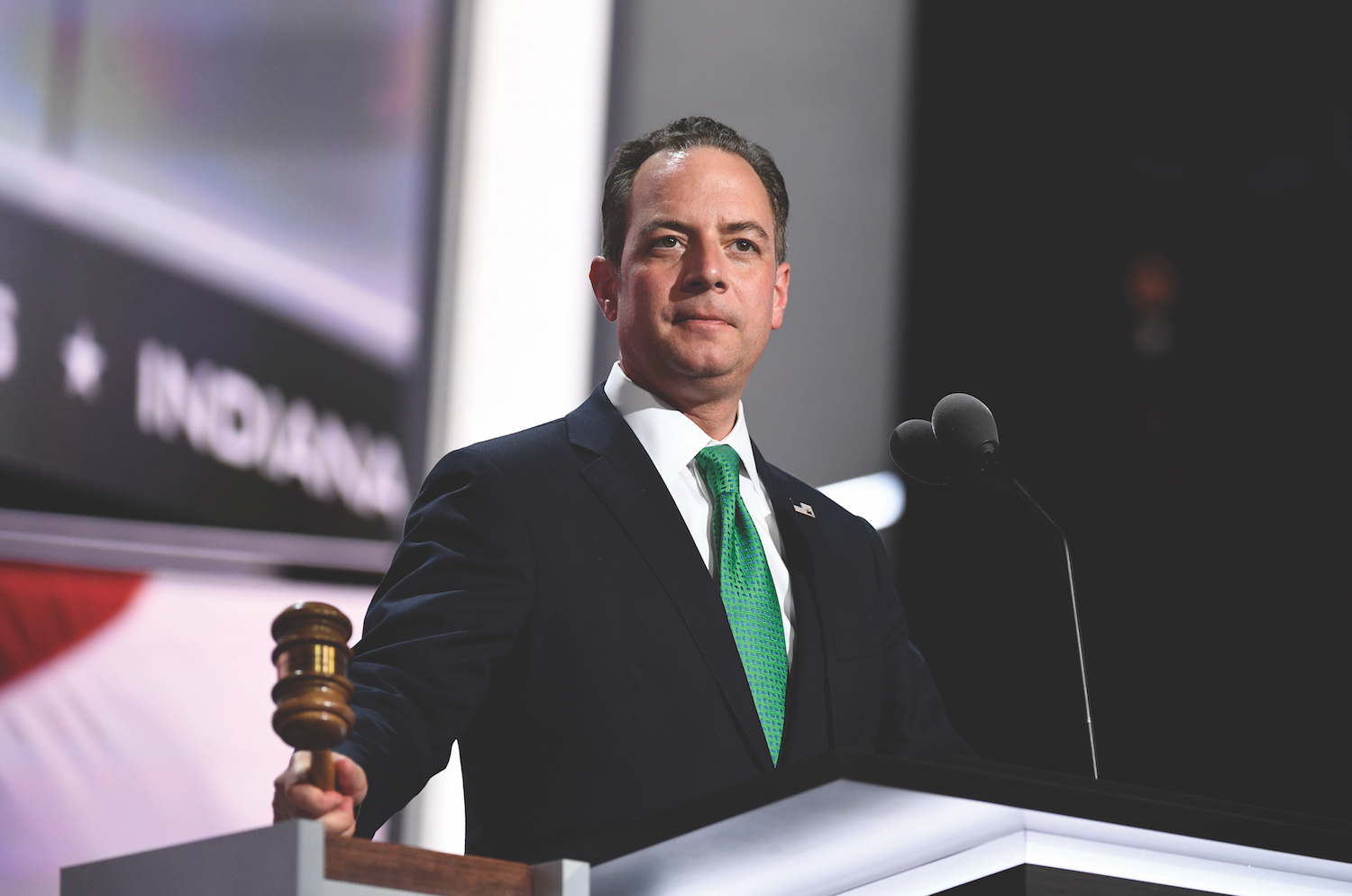
McDaniel is trying to piggyback off unprecedented success the party saw over the past seven years under Reince Priebus, the former chairman-turned-White House chief of staff under President Trump, and parlay that success into an extended period of power for the GOP. (AP Photo)
McDaniel: I’m always going to utilize Reince for advice. That’s great to have him down the street as the former RNC chair and now chief of staff to pick up the phone and run things by him and ask for advice, like I would with any of our former RNC chairs. But Reince is absolutely always invested in the RNC and what we’re doing in this building.
Washington Examiner: Talk a little bit about the first 100 days … So far, what’s your grade as it nears the end?
McDaniel: I don’t think you can grade two months into the semester. You’ve got to get the whole year done. I’m a mom. I wouldn’t want my kids being graded right now. But I think in terms of what the president’s done even post-election. Immediately he was engaging in keeping jobs in states like Indiana, talking to business leaders about investing in our country. And then his Cabinet is superior. I’ve heard some say it’s the best national security team they’ve ever seen. And then to put forward a justice like Neil Gorsuch that, I think, many feel like was such a phenomenal pick and the way he comported himself in the Senate hearings, and then his judicial background. And then things like the Keystone XL pipeline or deregulation. He’s done a great job in those first 84 days. We have more to do. He knows that. We have to continue keeping those promises that were made on the campaign trail.
Washington Examiner: What about on the legislative front? There’s the healthcare example. Does the inability to get that through worry you since it’s kind of the catalyst for everything else, including tax reform?
McDaniel: It’s concerning that people are really suffering because of the collapse of healthcare right now. Knoxville, Tenn., is about to be the first city that has no coverage at all if Humana pulls out in 2018, 40,000 people. That is concerning. It’s concerning to see people’s premiums go up and their deductibles so high that they’re suffering, and I think that’s the motivator behind what the president is doing, what our legislature’s doing and recognizing we have to fix this, we have to put something in place because people are going to be suffering.
It’s very unfortunate to see the amount of obstruction the Democrats have put forward. There has not been a point since the beginning of President Trump’s term that they have said, “Let’s come to the table. Let’s work with you.” Even when they see their own constituents suffering because of their failing healthcare. They’re not willing to come to the table, even when they see a Supreme Court justice earn bipartisan support, that was given the highest rating by the ABA, they’re not willing to come to the table. They’ve definitely taken a stance of, “we’re going to be the party of obstruction. We’re going to resist. We’re going to be party of no,” and it makes it hard to get things done for the American people, and our party is going to continue to focus on governing because we know people need it. That’s what they said to Donald Trump. They said, ‘We’re hurting. We need somebody to go to Washington and be a champion for us. We don’t want the status quo. We need change. Can you go fight for us?” And Republicans are going to continue to do that, and the Democrats are nowhere to be seen.
Washington Examiner: But on the healthcare issue specifically, Democrats weren’t needed for the [American Health Care Act] because of the Republican numbers in the House and Senate. He hasn’t needed Democratic support for some of his items, but he hasn’t been able to get it through with Republican support yet …
McDaniel: He’s still working on it. He’s said it. There’s a recognition that it’s collapsing — the healthcare system is collapsing, and we have to get something done. And of course, the president has reached out his hand to Democrats and said please come and be part of this fix and part of the solution. They haven’t. Republicans are going to continue to work together. We know we have to get this done.
Washington Examiner: One of the big reasons why you guys have won the past seven years was the promise to repeal and replace Obamacare. Why is there a hesitancy to go forward with the full repeal and replace?
McDaniel: You’d have to talk to the speaker as to why …
Washington Examiner: More as a party in general. Obviously, the RNC will play a limited role in that sense. But what about as a party?
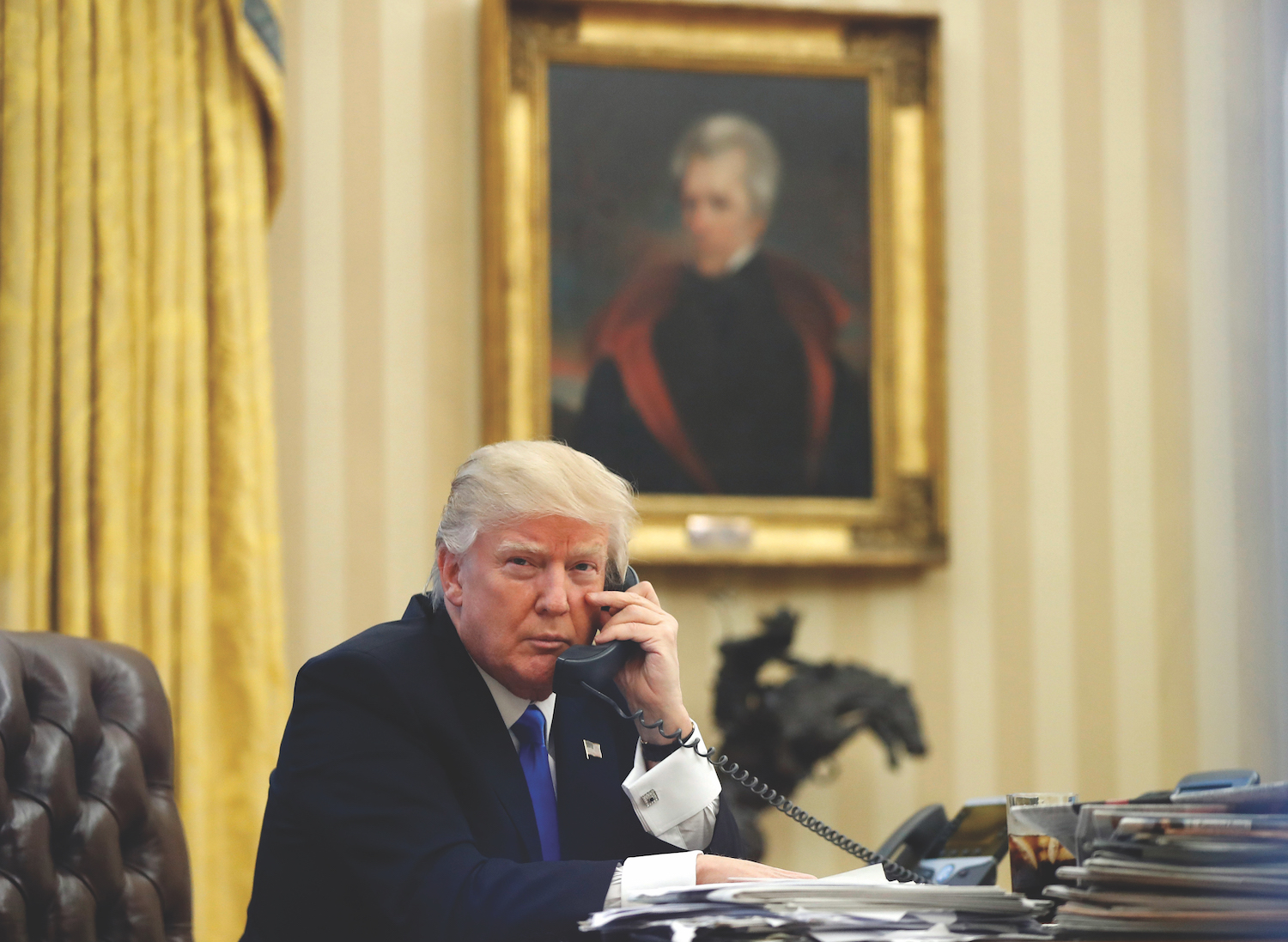
“It’s very unfortunate to see the amount of obstruction the Democrats have put forward. There has not been a point since the beginning of President Trump’s term that they have said, ‘Let’s come to the table. Let’s work with you,'” McDaniel said. (AP Photo)
McDaniel: Well, we’re supportive of the repeal and replace of Obamacare. We recognize that people wanted to see that happen. Speaker [Paul] Ryan put forward a plan that he felt was the right way to do it with the three phases that actually accomplish everything that needed to get done, and they’re going to continue to tweak that and make sure they can get that done. In the end, we have to do something to fix this failing healthcare system that the Democrats put in place and have showed no interest in helping to find solutions.
Washington Examiner: Do you anticipate issues with the base if nothing does end up getting done?
McDaniel: It’s hard to win if you don’t govern. If you make these promises, it’s going to be hard for us to win in the midterms. I think it’s early. I think the president’s working hard on those issues ,and we’ve already seen some very strong governance from the White House with deregulation, with Gorsuch, with Keystone XL, with jobs coming back. But we have to continue that, and we have to keep promises that we made on the campaign trail.
Washington Examiner: On the issue of governing, Speaker Ryan made that point known after the AHCA vote was pulled. How much of a worry is it that you have some in the party who haven’t gotten the message and haven’t gotten to the point where they’re able to govern?
McDaniel: I actually think it’s a strength of our party that we have a robust dialogue, that you bring different viewpoints to the discussion. The Democrats are always in lockstep with each other, and that is exactly why we have the disaster of Obamacare. They didn’t have a discussion. They didn’t have people pointing out, “Hey, there’s a flaw here. Let’s talk about this. Let’s take it to our constituents. Let’s have a transparent process. Let’s maybe read it before we pass it.” Those types of things maybe would have made it a better bill, better legislation. So having this dialogue and hearing different viewpoints and representing your constituents is going to make the legislation stronger and more sustainable in the long run for the American people. I think that’s one of the benefits of our party, that we’re not in lockstep.
Washington Examiner: One of the things then-Chairman Priebus and I have talked about in the past was the need for the party move from being one that was good at the midterm level to one that was good at the presidential level. How much of a challenge is it to maintain that kind of success and not dip back to where you were and even have problems with the midterms?
McDaniel: It’s very easy to unite a party around opposition or wanting to get the White House back. That’s a unifying message, and you’re seeing the Democrats uniting around being the party of ‘no’ and the party of ‘resist.’ It is harder when you govern because you have things you have to run on and sometimes your constituents may not agree on certain things that you’re doing. But there’s a recognition that we have to maintain majorities if we’re going to accomplish the agenda put forth by President Trump on the campaign trail. As chair, I recognize that in the midterms, the party that typically holds the White House, historically, has lost a majority in the House. That is a trend I want to buck. We’re going to keep the momentum we had in 2016, carry that into the midterms. We have to build the best get-out-the-vote ground game possible and find a way to mobilize our voters in the midterms, and that’s something our party, especially the RNC, does very well.
Washington Examiner: There was a story that came out recently that some within the party hierarchy are worried that the RNC is focusing too exclusively on Trump and the White House and worry that the RNC could fall into the trappings of the DNC over the past eight years. How they became focused on Obama and didn’t worry about down-ballot races. How valid are those concerns?
McDaniel: The RNC is completely focused on the entire ticket and maintaining and expanding majorities in the Senate and the House going into 2018. When you are doing what we do, which is build the ground game, you don’t just lift the top of the ticket; you help the whole ticket. So when I was Michigan party chair and we won the presidency, we didn’t just win that. We won [Michigan] Supreme Court races. We won our state house, 63 out of 110 seats, and we won our congressional races, and we won five education seats, and that’s because when you are in the states early and you are collecting the data and you are determining your data universe, and then you create a game plan as to how you’re going to turn them out. You lift the whole ticket, and that is our focus. We recognize that we are supporting the ticket from the top to the bottom.
Washington Examiner: As a party, how do you plan to deal with the Trump agenda when it breaks from party orthodoxy? Especially on infrastructure and childcare, how do you deal with that?
“It’s very easy to unite a party around opposition or wanting to get the White House back,” McDaniel said. “That’s a unifying message, and you’re seeing the Democrats uniting around being the party of ‘no’ and the party of ‘resist.’ It is harder when you govern because you have things you have to run on and sometimes your constituents may not agree on certain things that you’re doing.” (AP Photo)
McDaniel: We’re not the legislative body. So we’re here to help elect Republicans, so the president and the House and the Senate will work that out, and we’re going to continue to push electing and supporting Republicans through the midterms.
Washington Examiner: Does the inability for America First Policies, the outside group supporting President Trump, to get off the ground put more responsibility on your shoulders?
McDaniel: We are always going to be focused on supporting our president and making sure we are putting the ground game in place to make sure he has majorities so that he can govern in his final two years. I’m not part of the [501]c4. I don’t know how that’s being organized, but any group that’s helping to support our president and Republican policies is a good thing.
Washington Examiner: I don’t expect you to criticize Reince Priebus in any way, but what is one area you want to see improved upon at the RNC to make those gains you talk about in 2018?
McDaniel: Well, I do want to continue investing in outreach and being in communities that haven’t traditionally been Republican and bringing our message and our values to those communities. That’s something I was very invested in in Michigan when we had our Detroit office and being engaged there and having a long-term conversation that isn’t revolving around every election cycle but that is an investment in a long-term relationship and how we communicate with voters and share, “Hey, there’s things we have in common,” and “Maybe you haven’t looked at the Republican Party in a while, but these are things that we share, and common values that we have.” If we have that dialogue and we show up and we have that conversation, I think we’ll make gains in communities that haven’t looked at us in a long time.
Washington Examiner: Is the key just getting in there and talking more? Or do you have to speak more to their issues that they’re looking toward?
McDaniel: What I found is by showing up, by being there year-round. By not pulling up states based by elections, but being part of the community, and doing events and listening, and hearing concerns and they saying, “Hey, let’s talk about that. Let’s be open.” Those are the types of relationships we need to build in communities that haven’t voted Republican in a long time. So, between 2012 and 2016, Donald Trump earned 14,000 more votes than Mitt Romney did in Detroit. It was wonderful to have a candidate in our party come to Detroit and campaign and actually show up and invest time there even though he probably didn’t think he was going to win Detroit. But he said he was going to be a president for everyone, and that’s the type of message we have to have. When did we get to a place where both parties aren’t fighting for every vote? And when did we get to a place where people weren’t better served having representation in both parties? That’s something I believe in as the Republican chair — that we have to continue outreach to every American because I firmly believe our policies and our principles and the way we govern is better for every American.
Washington Examiner: There have been some reports that Mitt Romney may look at running for Senate if Orrin Hatch ends up not running for re-election. What are your thoughts on that? Have you talked to him about that at all?
McDaniel: I haven’t. It’s up to Orrin Hatch. I mean, I love my uncle. My husband’s first job was with Orrin Hatch. I met him in D.C. when he was working for Orrin Hatch. I think it’s hard to have those discussions until Sen. Hatch makes his decision. So out of respect for him, I want him to make his decision, and then we can talk about other candidates.
