

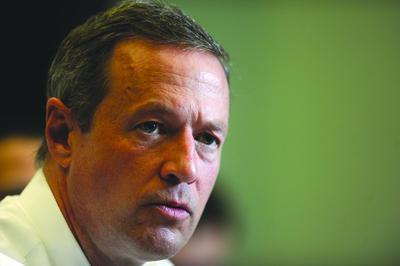
The Maryland General Assembly will reconvene for its 2012 session Wednesday, a 90-day stretch expected to produce higher taxes, spirited debates on social issues and a clear benchmark on which to assess Gov. Martin O’Malley’s national political ambitions. State officials are bracing for a busier legislative haul than last year, when a debate over gay marriage largely overshadowed the entire session. Still facing a down economy — and with O’Malley eager to build his name brand — the second year of the political term is ripe for a flurry of activity, as it’s still distant enough from election season to grant politicians cover for unpopular decisions.
Here’s what is on tap: O’Malley will push lawmakers to kickstart transportation and school construction projects, and is expected to propose paying for the surge in infrastructure by raising the state’s 23.5-cents-per-gallon tax on gasoline. In Annapolis on Tuesday, O’Malley will propose more than $350 million in school construction projects next fiscal year — nearly the most in state history for such funding.
Plans are in the works to triple the state’s so-called “flush tax” from $30 annually to help pay for sewage upgrades capable of meeting federal environmental standards for the Chesapeake Bay.
O’Malley also is weighing tax increases on millionaires and corporations. And Internet sales and cigars, among other consumer products, could get pricier under the governor’s proposed budget.
The governor will renew his bid for offshore-wind power, which was his largest legislative defeat last year when lawmakers became skittish about passing the cost on to ratepayers.
Like last year, pocketbook issues will make way for debates on cultural causes.
The governor has vowed to spearhead legalization of same-sex marriage after the measure was tabled last year by Republicans and a coalition of religious lawmakers from Prince George’s County.
| Examiner Coverage |
|
|
And Senate President Thomas V. Mike Miller Jr. called recently for an expansion in Maryland gambling revenue, reigniting a dispute about the role of casinos in plugging chronic budget gaps. Miller would like to bring table games to the state’s current five casinos and add an additional gambling site on his home turf — Prince George’s County.
Penn National Gaming, which bought the bankrupt Rosecroft Raceway, has been pushing hard for slot machines at the harness-racing track. But Miller has suggested that National Harbor would be a good venue for the slot machines.
As a change to the state constitution, however, voters would ultimately decide by referendum whether to approve another casino location.
