

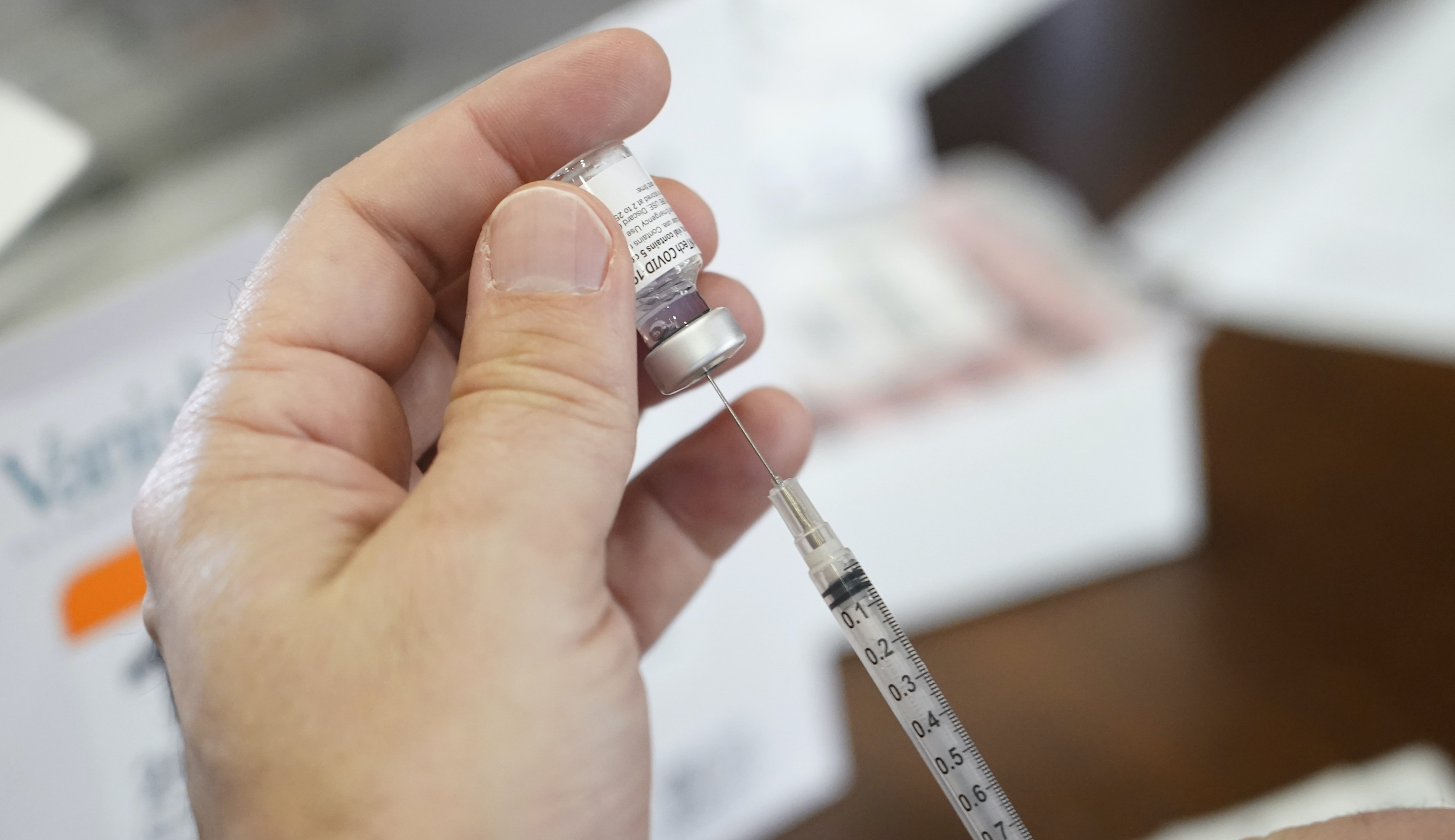
Federal health officials announced Wednesday that the public will have access to an extra dose of a Pfizer or Moderna COVID-19 vaccine as soon as mid-September, citing evidence that protection against the virus wanes over time.
“Based on our latest assessment, the current protection against severe disease, hospitalization, and death could diminish in the months ahead, especially among those who are at higher risk or were vaccinated during the earlier phases of the vaccination rollout,” said Biden administration officials including Dr. Rochelle Walensky, director of the Centers for Disease Control and Prevention, and Dr. Anthony Fauci, chief medical adviser to President Joe Biden.
Recommended Stories


Federal health experts concluded that “a booster shot will be needed to maximize vaccine-induced protection and prolong its durability” starting eight months after receiving the second of the two-dose Pfizer or Moderna vaccines. The Food and Drug Administration will still have to conduct a scientific evaluation of the safety and effectiveness of a third dose, and the CDC’s panel of vaccine experts will be responsible for reviewing clinical trial data before making its recommendation. Even without the automatic approval of booster doses from federal regulators, though, the administration is prepared to begin distributing the boosters beginning the week of Sept. 20.
TEXAS TO BRING OUT-OF-STATE HEALTHCARE PROVIDERS TO HELP OVERWHELMED HOSPITALS
“The available data make very clear that protection against SARS-CoV-2 infection begins to decrease over time following the initial doses of vaccination, and in association with the dominance of the Delta variant, we are starting to see evidence of reduced protection against mild and moderate disease,” Biden officials said in a statement.
People who were prioritized in the first round of vaccinations, such as long-term care facility residents, seniors, and healthcare workers, will be prioritized for the booster shots, as their protection against COVID-19 will have faded the most. Adults who received the single-shot Johnson & Johnson vaccine starting in March, meanwhile, will also likely need an extra dose to bolster their immunity at a certain point, but regulators are waiting on that company’s trial data.
“Our top priority remains staying ahead of the virus and protecting the American people from COVID-19 with safe, effective, and long-lasting vaccines, especially in the context of a constantly changing virus and epidemiologic landscape,” the officials said, adding that they are prepared to modify the booster rollout plan “should new data emerge that requires it.”
Recent reporting out of Israel pointed to waning immunity in people who received the second dose of the vaccine between January and April. Israel successfully squashed new outbreaks by the beginning of the summer by fully vaccinating nearly 69% of its population, but new cases cropped up. National Institutes of Health Director Francis Collins said Tuesday that the Israeli health officials’ findings made a strong case for booster shots in the United States, which at least a million people have procured without federal approval.
CLICK HERE TO READ MORE FROM THE WASHINGTON EXAMINER
“The people who got immunized in January are the ones that are now having more breakthrough cases,” Collins said, adding that the administration does not want to wait “until it’s like, ‘Oh, too late.’ So that’s why we’re looking at the data.”
The CDC also cited evidence from a Mayo Clinic study as well as a study conducted in New York supporting the call for boosters. The Mayo Clinic found that vaccine effectiveness against the delta variant declined for the Pfizer and Moderna vaccines — 76% to 42% and 86% to 76%, respectively. The two-dose vaccination regimen was still effective at preventing hospitalization over time, CDC Director Rochelle Walensky said.
The delta variant took over as the dominant strain in the U.S. fairly quickly this spring, proving to be far more contagious than the previously dominant alpha variant.
Medical ethicists made the case against booster shots in rich countries last week, arguing that that unmitigated COVID-19 spread in poorer countries where vaccines are scarce increases the likelihood that more virulent, vaccine-resistant strains will crop up, potentially endangering even vaccinated people.
The World Health Organization has also argued that relatively healthy Americans should not get third doses while most of the world’s population has yet to receive one. Biden administration officials have called this a false choice, saying on Wednesday that the U.S. has already donated more vaccines abroad than any other country.
“I do not accept the idea that we have to choose between America and the world. We clearly see … that we’ve got to do everything we can to protect people here at home while recognizing that tamping down the epidemic pandemic across the world and getting people vaccinated is going to be key to preventing the rise of future variants,” said Surgeon General Vivek Murthy.
Murthy pledged Wednesday that the administration will “also continue to accelerate our efforts to vaccinate the rest of the world we take that responsibility very seriously.”
People who have received both doses of an mRNA vaccine are still considered fully vaccinated and maintain the “highest degree of protection” against severe infection and hospitalization due to COVID-19, Murthy said, adding, “We believe that that third dose will ultimately be needed to provide the fullest and continually extended protection that we think people need for the virus.”
