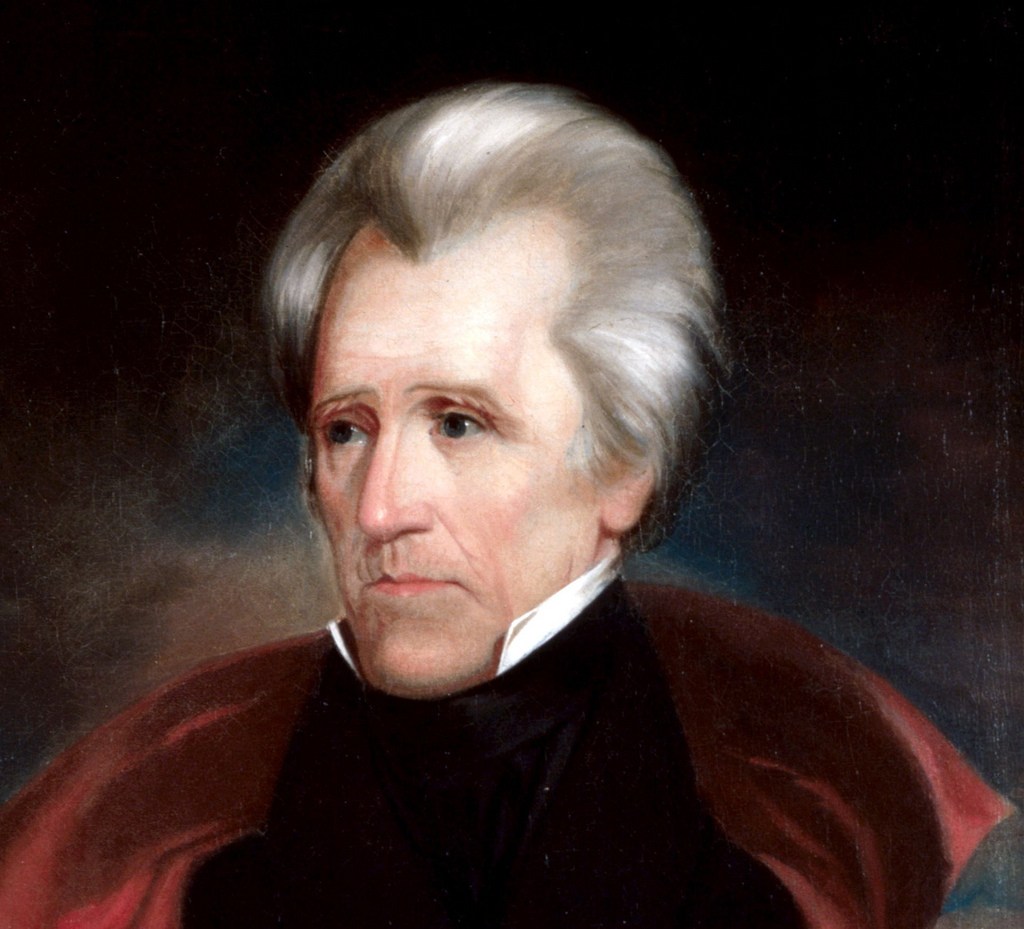
It was the summer of 1832, and the two great Whig senators, Henry Clay and Daniel Webster, had come across a brilliant plan to embarrass and damage the Democratic president, Andrew Jackson, just before the election. The Second Bank of the United States, hated by agrarians and Jacksonians, but much prized by industrialists and National Republicans, was to be rechartered in four years. Nicholas Biddle, the president of the bank, was considering an early recharter. If Congress passed legislation rechartering the Bank before the election, Clay and Webster figured, Jackson would be faced with a fait accompli and would be forced to renege on one of his major campaign promises.
To everyone’s shock, Jackson vetoed the bill. Accompanying the veto was a signing statement, which stated boldly that Jackson was not merely vetoing the bill because he believed it to be unconstitutional, but also because he believed it to be bad policy. This was a sea change: For forty years, the American presidency had treated the veto as a judgment on the constitutionality of pending legislation and nothing more. Now Jackson had transformed the presidential office into an institution with the capacity to ratify the policy agendas of Congress. There was outrage in Congress; Webster was apoplectic; cartoons were passed around of “King Andrew I.” And Jackson won reelection against Clay by an enormous margin.