

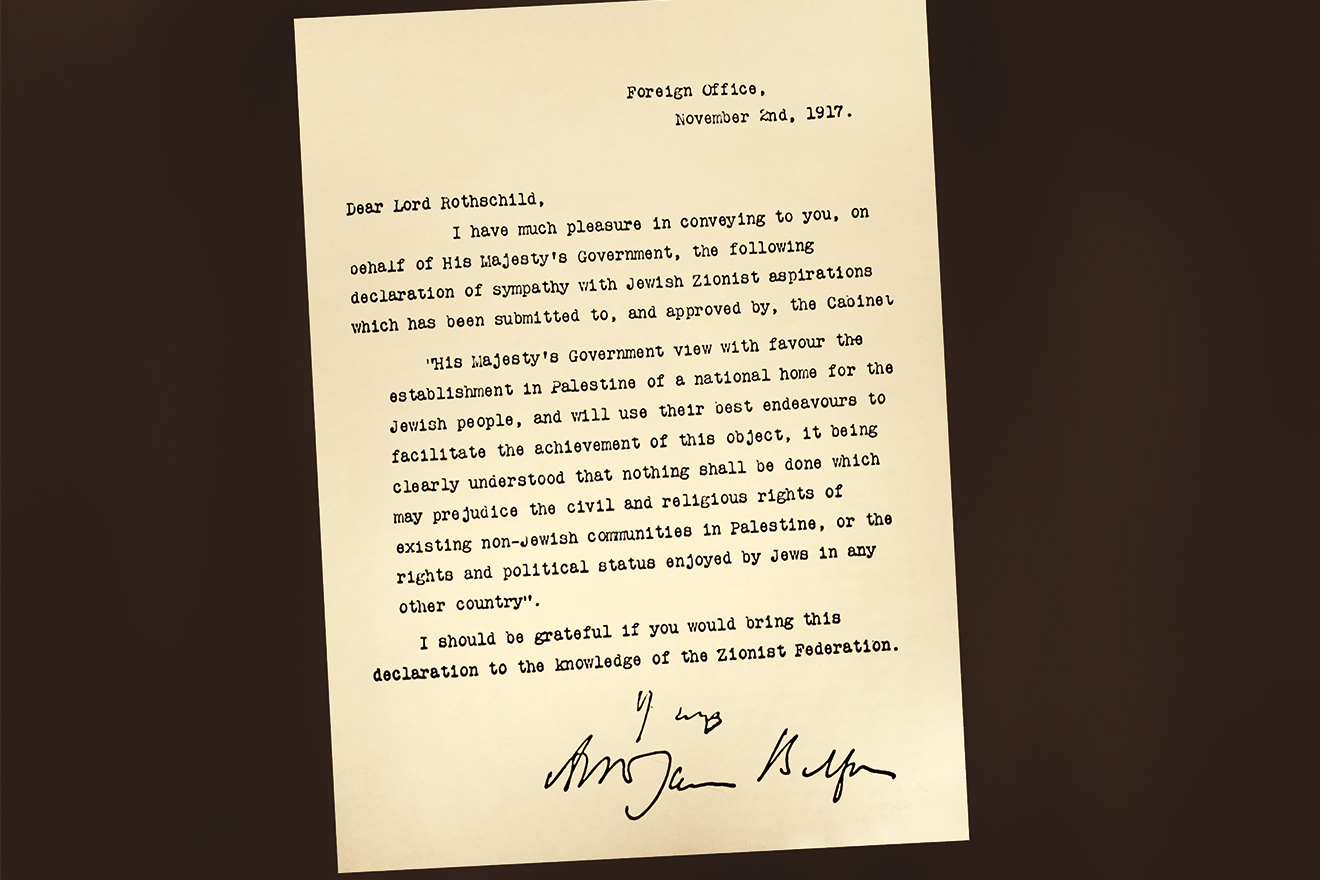
On November 2, 1917—a hundred years ago this week—the British government sent a letter to Lord Walter Rothschild, declaring its “sympathy with Jewish Zionist aspirations” and promising Britain’s support in “the establishment in Palestine of a national home for the Jewish people.”
The letter, popularly named for its signatory, foreign secretary Arthur Balfour, is one of a quartet of controversial communications from that lost age when people wrote sentences on paper instead of abbreviations by text. The others are the Zimmermann Telegram of January 1917, the German offer of a military alliance with Mexico, which accelerated America’s entry into World War One; the Zinoviev Letter of 1924, which suggested Russian meddling in Britain’s general election; and the Anglo-German “understanding” of 1938, which Neville Chamberlain made the mistake of waving upon his return from Munich.
Stay informed.Stay ahead.
Join Washington Examiner for unlimited access to the news, analysis, and commentary that matter most.
Already a member? Log in
