

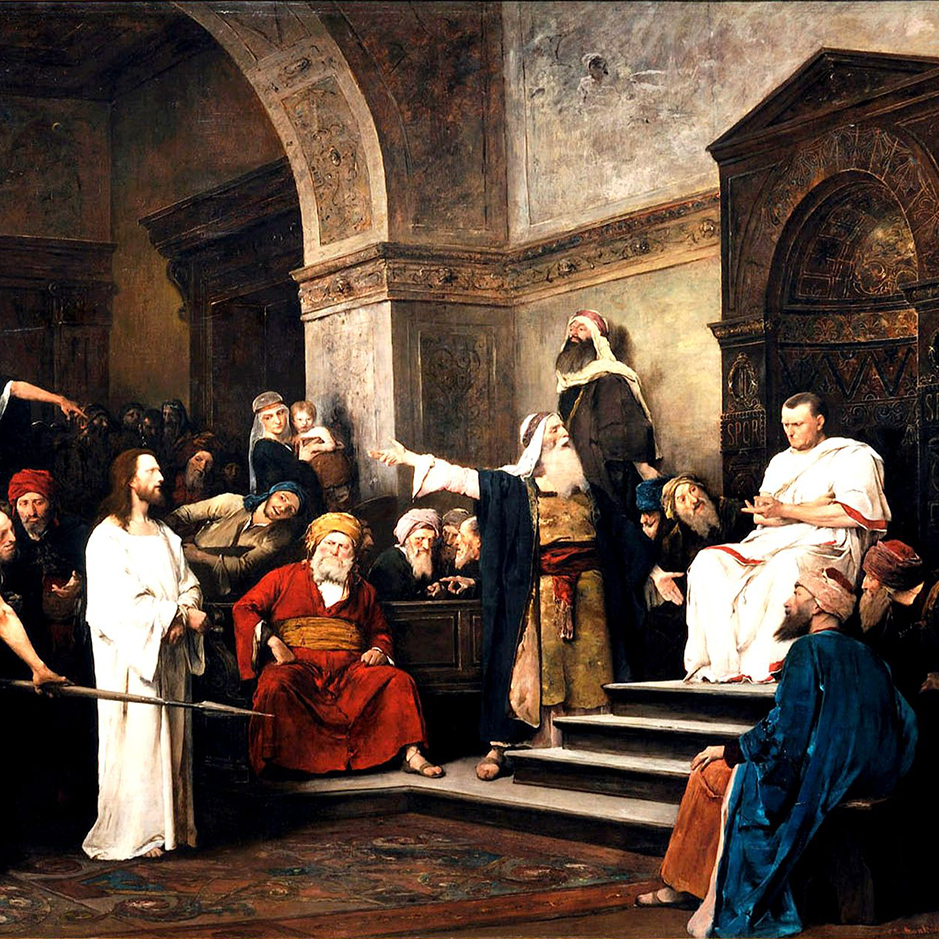
Dante puts Pontius Pilate in the outermost circle of Hell, among the indolent—scant punishment, you might think, for the man who executed Jesus Christ. By letting Pilate off easy, Dante was situating himself firmly on one side of a centuries-old debate: Who was more responsible for killing Christ, the Roman government or the Sanhedrin? It should be obvious, then, why any author trying to write a sympathetic biography of Pilate needs to tread carefully. Every particle of guilt taken off Pilate inevitably winds up added in the scales against the Jews.
The Italian classicist Aldo Schiavone does his best to avoid this fraught dilemma by confining himself to the facts that we know about Pilate the historical figure. And we do know a great deal about him, compared with other figures mentioned in the Gospels. His name was added to the creed—not at the Council of Nicaea but at Constantinople, 50 years later—precisely in order to emphasize that the crucifixion was a matter not of legend but of historical fact. Tacitus, Josephus, and Philo all mention him by name, and in 1961 archaeologists uncovered a fragmentary stone inscription in Caesarea reading in part, unmistakably: [PO]NTIUS PILATUS / [PRAEF]ECTUS IUDA[EAE].
Real journalism.Trusted by millions.
Unlimited access to in-depth reporting, expert analysis, and the stories that shape our country.
Already a member? Log in
