

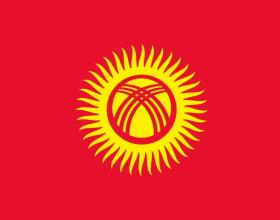
James Kirchick in the Wall Street Journal:
Also benefiting from the unrest are the region’s dictators, who can point to the inability of Kyrgyzstan’s government to maintain order as proof that the region is unsuitable for democracy. Compared to its neighbors, Kyrgyzstan has a relatively open political system with a vocal opposition, independent media and active civil society. Its 2005 “Tulip Revolution” brought Mr. Bakiev, who then held some promise as a liberal reformer, to power. It was an important democratic opening in one of the world’s most illiberal regions.
Whereas its neighbors are consistently ranked “Not Free” by the human-rights watchdog group Freedom House, Kyrgyzstan has occasionally received a ranking of “Partly Free.” Kyrgyzstan’s tumultuous and mostly unsuccessful experiment with democracy—it has been preparing for a June 27 constitutional referendum, which is unlikely to proceed in light of the current chaos—has always been a threat to its authoritarian neighbors, who are no doubt celebrating the country’s disorder.
