
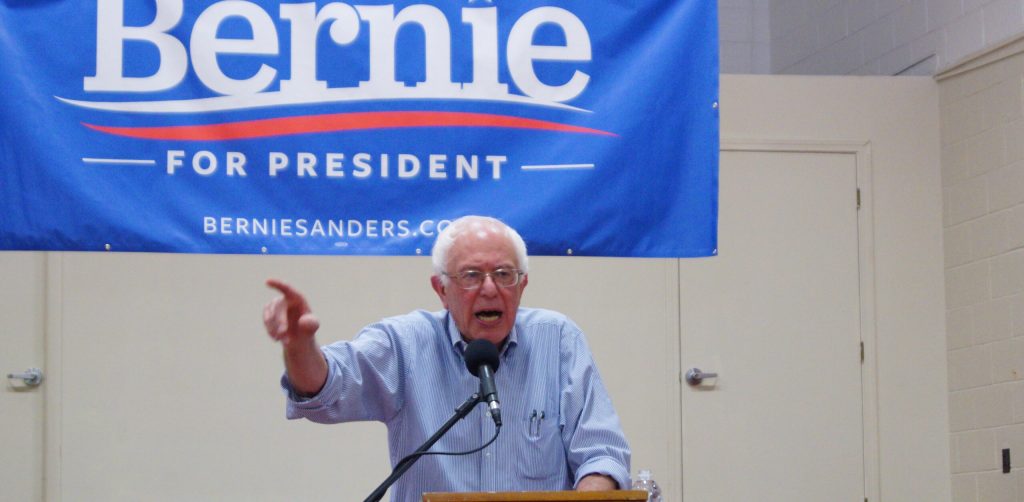
Bernie Sanders held a rally in Washington, D.C. on June 9. On the same day, Sanders visited the White House for a “friendly conversation” with the president, and President Obama endorsed Hillary Clinton shortly thereafter. Tuesday June 7 Sanders lost the California primary, and on Monday the Associated Press announced Clinton had secured the delegates to win the nomination. You wouldn’t know it, though, among the crowds in the Lot 3 skatepark outside the D.C. Armory on Thursday afternoon. (The Armory’s RFK stadium is a venue the size of those Sanders rallies roared through this time last year.) The campaign may have all but ended, but, the Sandernistas will tell you, the movement never dies.
Echoey editorials liken his loyal infrastructure—volunteers dreaming of a three-pronged revolution: fifteen-dollar minimum wage, free college, a ban on fracking—to a Tea Party of the left. And it’s true some of the movement flocked to the candidate from moldy Occupy Wall Street holdouts. For some, the Sanders movement is basically “an institutionalized Occupy Wall Street” or so Sebastian, a rising junior at George Mason University, told me at the rally while we waited for the candidate: “Occupy didn’t really have, like, a head, and so they kind of find a head in Bernie.” Sebastian would have been too young to camp out in Zuccotti Park. Many more than came over from Occupy had never thought twice about progressive activism—or, as first time voters, about any political activity. Voters in their late teens and twenties overwhelmingly choose him over Hillary Clinton.
Real journalism.Trusted by millions.
Unlimited access to in-depth reporting, expert analysis, and the stories that shape our country.
Already a member? Log in