

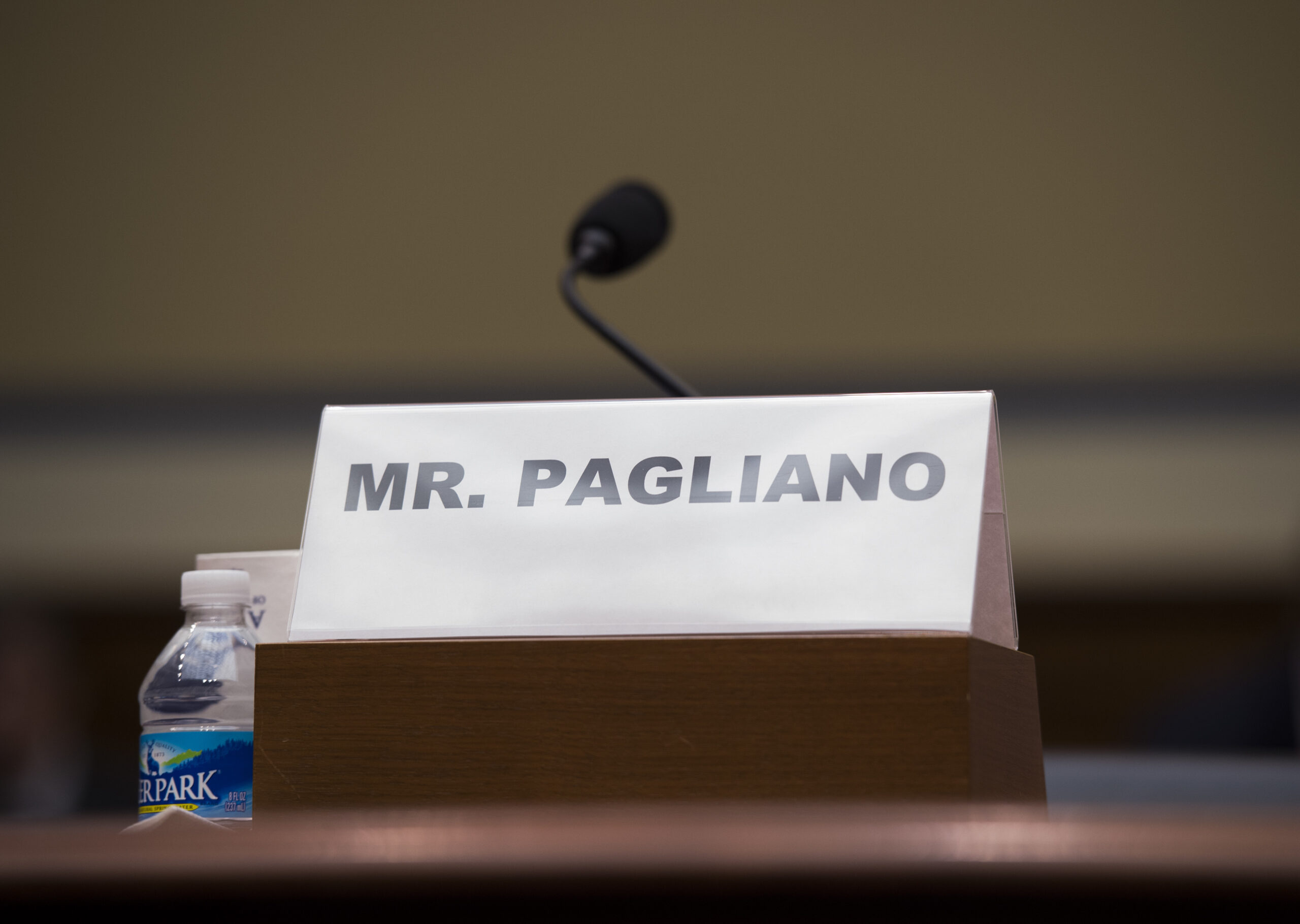
Donald Trump’s campaign pushed the State Department on Wednesday to explain its refusal to hand over emails from the inbox of Bryan Pagliano, Hillary Clinton’s former IT aide and the architect of her private server.
Jason Miller, a Trump campaign spokesman, described the agency’s “stonewalling” as a “deeply distressing” move that “makes one wonder exactly what they are trying to keep secret.”
Recommended Stories


“The State Department must release these documents immediately as the American people have a right to know what is contained within those documents before election day,” Miller said.
His call came on the heels of a report that suggested the State Department has ignored a request from the National Archives to explain the absence of Pagliano’s records. That request, which was obtained by ABC News, was sent to the State Department in July with a 30-day deadline. Agency officials have yet to respond to the National Archives.
The State Department first admitted in May that it had not located emails belonging to Pagliano when preparing documents for release to the Republican National Committee through the Freedom of Information Act. Officials argued the missing emails were not necessarily deleted, but may have simply slipped through the cracks due to the limitations of automatic archiving at the time of Pagliano’s tenure.
However, at least one of Pagliano’s emails surfaced in the roughly 30,000 Clinton emails provided to the State Department in December 2014 by the former secretary’s legal team. Because his address was redacted, it is unclear whether he used a “state.gov” account or a personal address.
Pagliano received an expansive immunity deal from the Justice Department during the FBI’s year-long investigation of Clinton’s treatment of classified material. During one of his interviews with FBI agents, he admitted that Clinton’s team ignored his attempts to sound the alarm about the possible violations of federal record-keeping laws that arose from Clinton’s private email use.
