

Remember the days in 2009 and 2010 when President Obama planned to “pivot” to the issue of jobs and the economy? Preoccupied with passing his sprawling national health care plan, but faced with a public deeply worried about 10 percent unemployment, Obama found himself under increasing pressure to devote more attention to job creation. So on a number of occasions the president and his aides promised the long-awaited “pivot” was on the way — just as soon as health care was done.
Now, the Obama and Romney campaigns are arguing about whether any of that ever happened.
There’s no doubt Obama and his party pushed other issues aside to focus on health care. In a March 2010 profile of then-White House chief of staff Rahm Emanuel, the Washington Post reported: “As health-care negotiations inched along at the end of [2009], Emanuel grew impatient about addressing national joblessness concerns. One Democratic senator who wanted to pivot to unemployment said Emanuel shared his thinking. ‘I understand, I understand. We have to get to jobs,’ the senator … recalled Emanuel commiserating. In a meeting with the president and chief of staff, the senator stated his case, but Obama decided the priority was seeing health-care reform through.”
Dozens of other contemporary accounts told the same story. After the initial passage of the stimulus in February 2009, jobs had to wait until after health care.
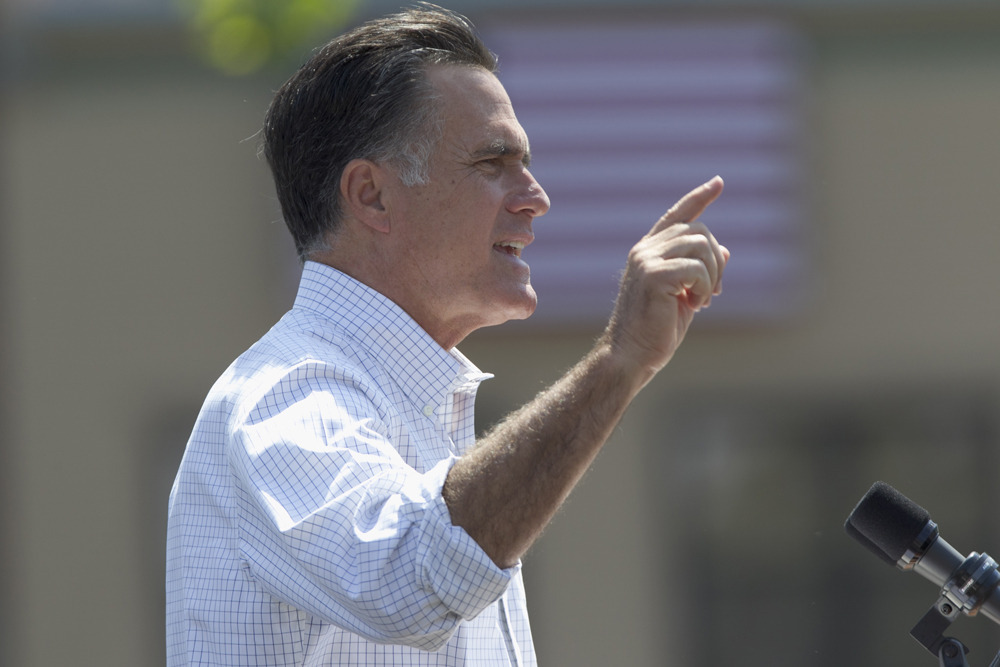
Now, Mitt Romney has decided to remind voters of those days. In a campaign appearance in Texas last week, Romney said Obama “knowingly slowed down the recovery in this country … in order to put in place Obamacare.” The president’s decision, Romney continued, “deserves a lot of explaining.”
Romney cited the work of liberal journalist Noam Scheiber, who wrote a book called “The Escape Artists: How Obama’s Team Fumbled the Recovery.” Scheiber maintained that there is a “messianism” in Obama that propels him to pursue big goals like national health care.
“I argue that Obama really was more focused on long-term, historically significant accomplishments than marginal near-term differences in the pace of recovery,” Scheiber explained recently. “On some level, Obama was prepared to accept (and I’m making up these numbers for argument’s sake) three years of painfully high unemployment with health care reform rather than 30 months of painfully high unemployment without it. … Health care was simply more historically important than avoiding those extra six months of pain.”
Scheiber approves of Obama’s decision — he calls it “a reasonable tradeoff” — but concedes that “for the average voter who’s upset that unemployment has been so high for so long, it’s something they need to consider when evaluating Obama’s record.”
Team Obama doesn’t see it that way. After Romney charged that the president put off recovery in favor of health care, the Obama campaign reacted angrily, accusing him of making a “dishonest claim.”
There are two parts to the argument between Romney and Obama. The first is whether Obamacare, if implemented, will slow economic recovery. That’s an unknown, although one can make a persuasive case that it will. The second is whether Obama put other priorities ahead of recovery, and there is simply no question that he did.
And it wasn’t just jobs that had to get in line. Health care also squeezed out other top Obama campaign promises. For example, in a recent New York Times article outlining Obama’s use of anti-terror drone attacks, the newspaper also recounted the president’s failed effort to close the detention center at Guantanamo Bay. Secretary of State Hillary Clinton and Attorney General Eric Holder warned Obama the plan was in trouble on Capitol Hill, the paper reported, and both volunteered to help press the case. “But with Mr. Obama’s backing, his chief of staff, Rahm Emanuel, blocked them,” the Times reported, “saying health care reform had to go first.”
Of course, Obama won the health care battle, signing Obamacare into law on March 23, 2010. By that time, it had become unpopular; the more voters learned about Obamacare, the less they liked it.
That’s still the case. A new Rasmussen poll, released Monday, found that 53 percent of those surveyed favor repeal of Obamacare, while last month a New York Times/CBS poll found that 68 percent would like to see the Supreme Court overturn the law, in whole or in part.
Obamacare is the president’s signature achievement. He put aside other things, including economic recovery, to pursue it. He made a choice. And now, Mitt Romney and the voters are perfectly entitled to hold him accountable.
Byron York, The Examiner’s chief political correspondent, can be contacted at [email protected]. His column appears on Tuesday and Friday, and his stories and blog posts appear on washingtonexaminer.com.
