

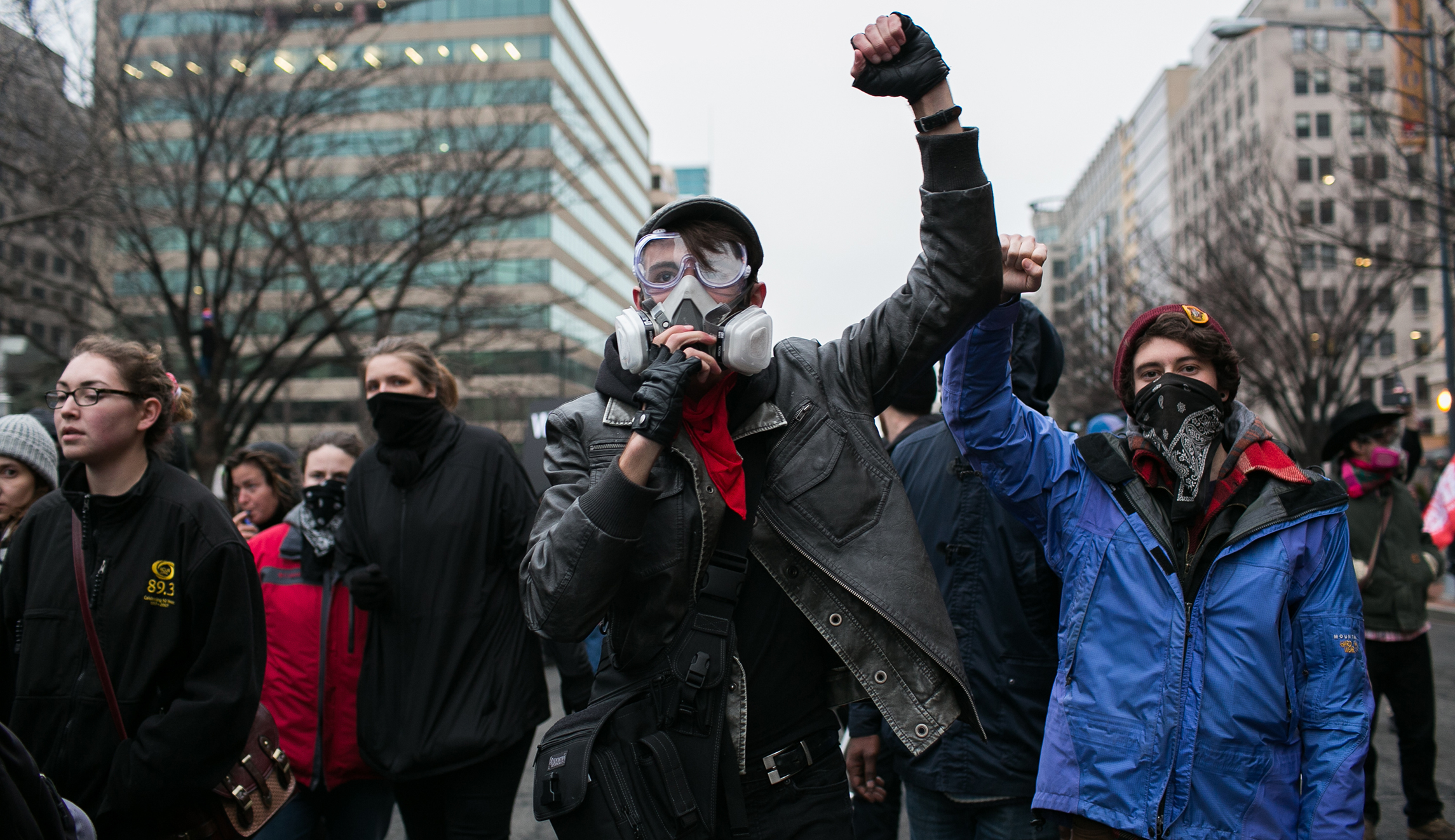
A jury acquitted accused Trump inauguration rioter Casey Webber on all charges Monday, dealing another blow to federal prosecutors struggling to convict participants of a window-smashing anti-capitalism march.
Webber was accused of knowing about plans for mayhem before joining the march on Jan. 20, 2017, but prosecutors offered no evidence that he personally destroyed property. The chaotic march ended in heavy use of pepper spray and batons by police, who mass-arrested more than 230 people.
Recommended Stories


Jurors acquitted Webber of five felony counts of property destruction, which each carry a statutory maximum of 10 years in prison, as well as charges for engaging in a riot and conspiracy to riot.
Webber stood trial alongside three other men accused of vandalism, though their defense attorneys claim mistaken identity. Jurors continue to deliberate about charges against Michael Basillas, Anthony Felice, and Seth Cadman.
Jurors acquitted Webber after one full business day of deliberations, and shortly after the U.S. Attorney’s Office for the District of Columbia agreed to drop charges Monday against three other rioting defendants who were set to go to trial this month. The three had felony charges reduced to misdemeanors last week, after Judge Robert Morin dismissed seven other cases, finding prosecutors improperly concealed Project Veritas undercover videos.
Although the march occurred 16 months ago, the four-person trial involving Webber was only the second to take place. The first trial resulted in six acquittals last year after prosecutors alleged only that defendants attended the march and thereby were guilty accomplices akin to a getaway car. Prosecutors dropped charges against 129 people after the first trial, leaving just 59 defendants.
Now, just 48 people have outstanding charges, including journalist Aaron Cantu, whose prosecution is believed to be premised on his appearance in a Project Veritas video.
Webber’s attorney April Downs said during closing arguments Thursday that there was no reason for him to face charges, and suggested possible political motivations by the Trump administration.
Downs read from a Facebook group message, saying the supposedly key piece of evidence, featuring talk of arrest ahead of a meeting, did not constitute conspiracy to riot, as many forms of protest, such as blocking roads, could result in a crime, but not necessarily rioting.
“Why is he here?” Downs asked repeatedly. “Is it the nature of this left-wing group meeting at the solidarity and love collective?”
“We don’t know if he opened it. If he did, isn’t he just being a good citizen?” she added.
Downs said Webber fell to the ground twice after police used concussion grenades on surrounded protesters, after dozens of the most aggressive activists charged through a police line.
In an email to the Washington Examiner, Downs said Monday: “Mr. Webber and I are gratified that the jury returned a quick and fair verdict. It is concerning that Mr. Webber faced serious felony charges merely because he is an activist with progressive politics. He is a pacifist, a Quaker, and a member of the Industrial Workers of the World (IWW). Mr. Webber never promoted or encouraged any property destruction or violence. The U.S. government should not bring criminal charges based on individuals associations or political beliefs.”
The U.S. attorney’s office declined to comment on Webber’s acquittal. Following the use of tough felony charges, 21 defendants pleaded guilty last year to a single misdemeanor charge of rioting in exchange for short periods of time on probation.
Attorneys for some of Webber’s co-defendants alleged brutality and sought to impeach the credibility of police. The lead detective on the case billed overtime for appearing at his own DUI proceedings, said Seth Schrager, an attorney for Cadman.
One officer who testified at the trial roamed the D.C. courthouse last week, wearing a T-shirt that read, “Police Brutality… or doing what their parents should have?” said attorney Matthew Rist, who is representing Felice.
