

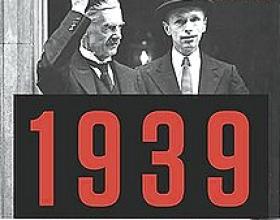
Among Barbara Tuchman’s many sins as an historian was the notion, propagated in her popular volume The Guns of August (1962), that the Great Powers had more or less blundered into conflict in 1914, and that smarter diplomacy might well have prevented the Great War. So pervasive is the Tuchman thesis that it is now a recurring parlor game to guess which combination of dangerous facts and blind statesmen–this was most popular during the 1980s–would push the world into needless nuclear conflict.
It is interesting to note that the Churchill government, mindful of the diplomatic path to war a quarter-century earlier, undertook to prove, in the midst of World War II, that the 1939-45 conflict with Germany was not a consequence of missed opportunities or obtuse politicians. Indeed, Britain had come close to disaster precisely because the Chamberlain government believed that Britain was unprepared for immediate war and that Germany, two decades after Versailles, had legitimate grievances to be addressed. Once appeasement was exhausted, and Hitler’s nature was all too evident, the French and British guarantee to Poland was necessary, and conflict was inevitable.
Stay informed.Stay ahead.
Join Washington Examiner for unlimited access to the news, analysis, and commentary that matter most.
Already a member? Log in
