

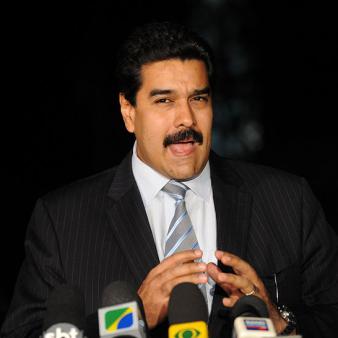
During the 14-year reign of Hugo Chávez, Venezuelans became drearily accustomed to hearing so-called cadenas interrupt the regular programming on their radios and television sets. These are “chained” broadcasts (the word cadena means “chain”) that all stations must carry. They originated long before Chávez took power, mainly to help the Venezuelan government disseminate urgent information about a matter of national importance, such as a natural disaster. Under the so-called Bolivarian revolution, they were transformed into shameless propaganda vehicles.
Chávez passed away on March 5, but the cadena is alive and well. His designated successor, 50-year-old Nicolás Maduro, who took over as interim president when Chávez died, used cadenas throughout the month-long election campaign that ended with a day of voting on April 14. Unfortunately for Maduro, his attempts to mimic the successful demagoguery of his mentor failed to secure him a Chávez-sized victory, even after he flagrantly violated Venezuelan election rules. In the end, the official results showed Maduro receiving about 615,000 fewer votes than Chávez did in the October 2012 presidential election, while opposition candidate Henrique Capriles, 40, increased his vote total from roughly 6.6 million in October to 7.3 million in April.
Stay informed.Stay ahead.
Join Washington Examiner for unlimited access to the news, analysis, and commentary that matter most.
Already a member? Log in
