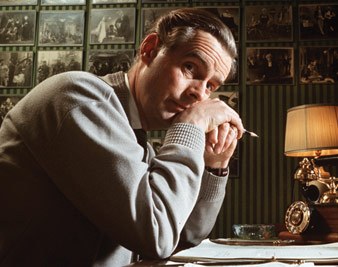
Comedians, beautiful women, and the writers of popular fiction all suffer from the same affliction: a yearning to be taken seriously. Sir Arthur Conan Doyle, who was born in 1859, wanted above all to be considered a serious writer, and it was no consolation that he had created the most enduring character of modern literature. Sherlock Holmes is the winning child whom everyone loves except his father. “I believe,” Conan Doyle once sadly wrote, “that if I had never touched Holmes, who has tended to obscure my higher work, my position in literature would at the present moment be a more commanding one.”
Serious writers — the ones who actually occupied the commanding position Doyle envied — recognized that Holmes was extraordinary, though their wonder was tinged with condescension toward his creator. In Ulysses, James Joyce transmogrified the detective’s name into a loopy verb: “He had been meantime taking stock of the individual in front of him and Sherlockholmesing him up.” George Bernard Shaw numbered Holmes among the three most famous men who ever lived (along with Jesus Christ and Houdini). T. S. Eliot remarked, “Perhaps the greatest of the Sherlock Holmes mysteries is this: that when we talk of him we invariably fall into the fancy of his existence” — and as for Arthur Conan Doyle, “what has he to do with Holmes?”