
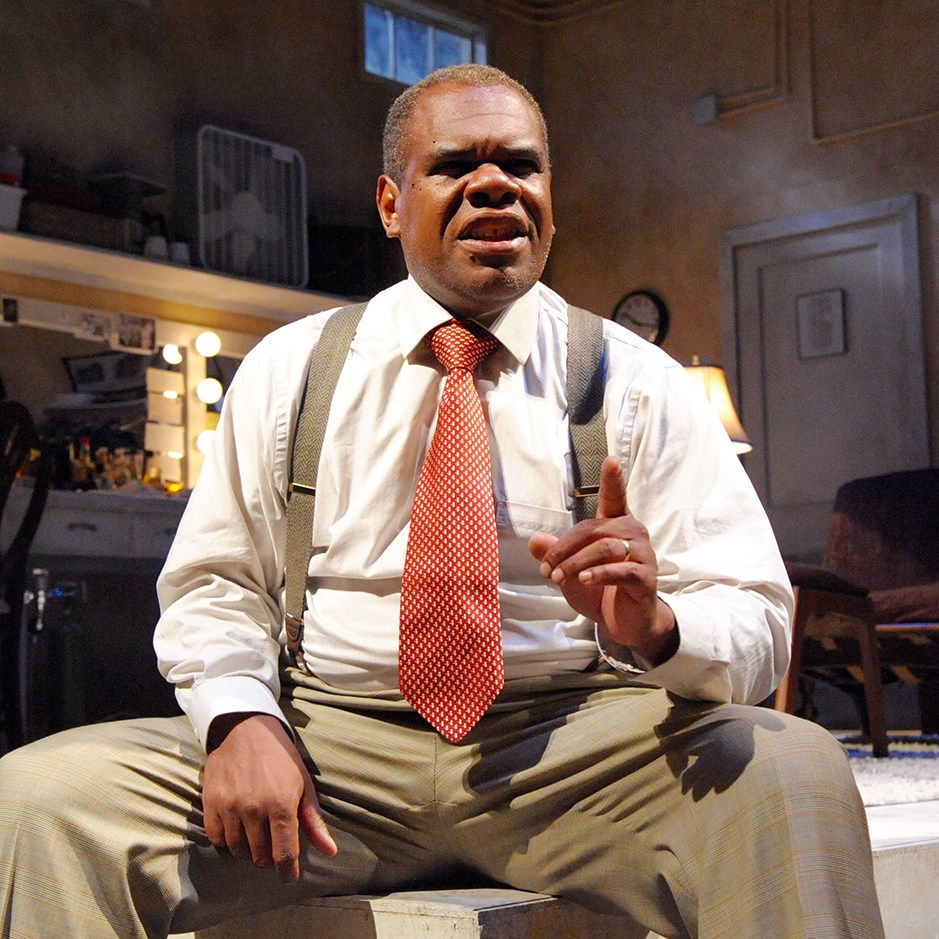
Having missed its celebrated off-Broadway run two years ago, I made the trip to a refurbished movie house turned socially conscious cutting-edge theater company to catch Wall Street Journal drama critic (and occasional WEEKLY STANDARD contributor) Terry Teachout’s Satchmo at the Waldorf. The play was as stunning as I’d heard. A soulful, nuanced snapshot of Louis “Satchmo” Armstrong’s late life beyond what any book-length biography could do alone, it’s biographical storytelling at its best and, as such, a justification for theater—as if we needed one. I had to wonder whether the impetus for the play had been an essential something the author’s earlier biography of Armstrong, and indeed the subject’s life, left unresolved.
The play lives at the strained heart of a terrible knot: It opens won Louis Armstrong in the Waldorf-Astoria in 1971, in his dressing room, changing out of his tux after what would be among his last shows, performed for an all white audience. He takes breaks to suck on an oxygen tank while unburdening his life story into a portable recording system recommended by Bing Crosby, his longtime not-quite friend. Crosby never had Satchmo to his home. And neither, more significantly, did Satchmo’s mob-connected manager and corrupt father figure Joe Glaser.
Real journalism.Trusted by millions.
Unlimited access to in-depth reporting, expert analysis, and the stories that shape our country.
Already a member? Log in