

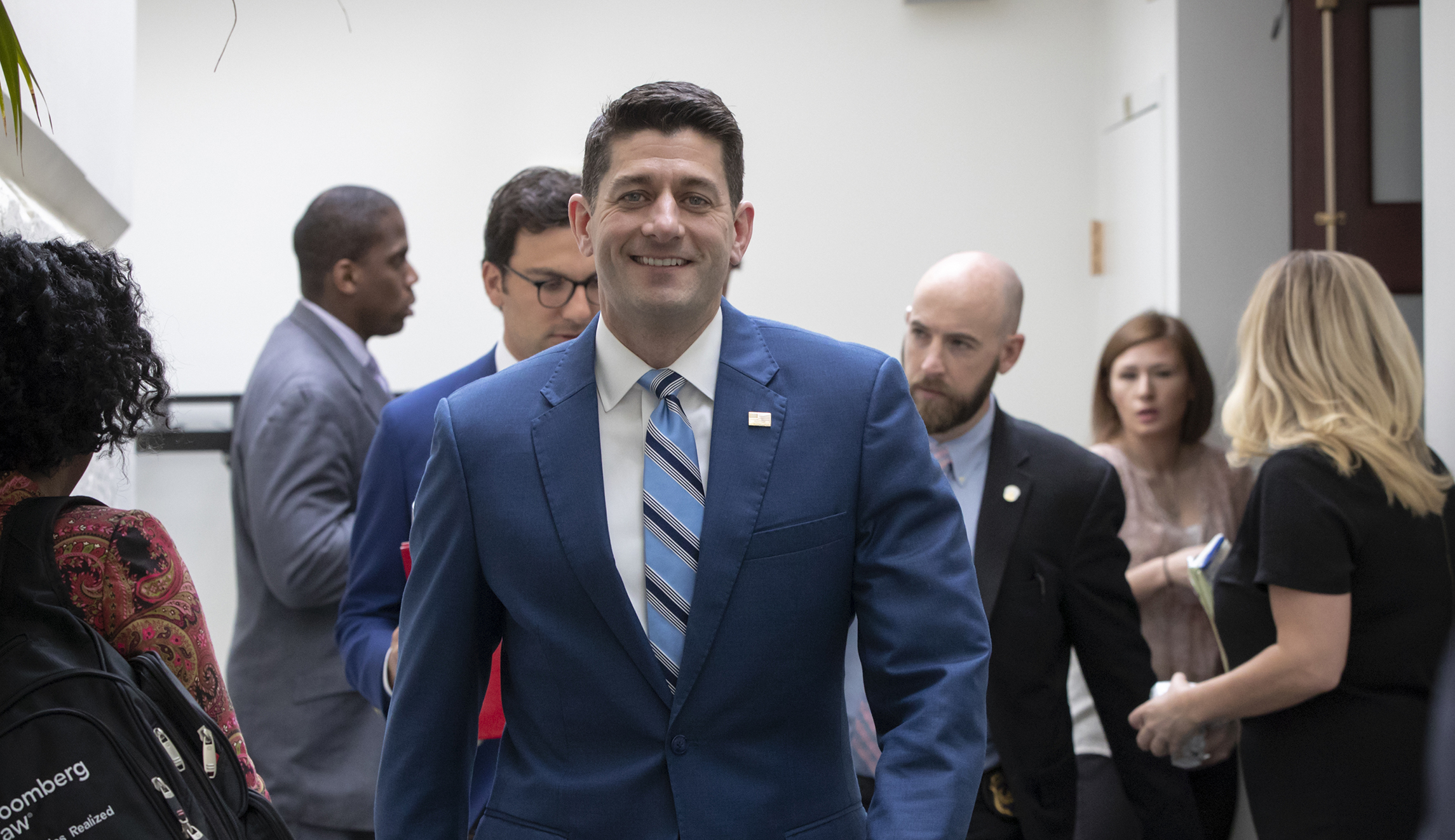
A leading Republican super PAC is deploying more ground troops to key districts as threats to the party’s House majority escalate.
Congressional Leadership Fund, affiliated with House Speaker Paul Ryan, R-Wis., is investing an extra $3 million in 15 vulnerable, Republican-held seats as the midterm elections approach, the group told the Washington Examiner on Monday. The funds are underwriting platoons of paid field staff, with the goal of doubling the voters CLF reaches every week as part of a multi-million dollar voter turnout operation in 40 targeted House districts.
Recommended Stories


“People should be looking to spend less money on TV ads and more on field — especially when we’re focused on turnout,” Corry Bliss, who runs CLF, said in a telephone interview from California, where House Republicans are defending about a half-dozen seats the Democrats are targeting.
The 15 congressional districts to receive additional, paid field staff, include: California’s 25th, 39th, 45th and 48th; Illinois’ 6th; Kansas 2nd; Kentucky’s 6th; New Jersey’s 3rd and 7th; New York’s 19th and 22nd; Maine’s 2nd; Ohio’s 1st; Pennsylvania’s 1st; and Washington’s 8th. This list could provide clues as to the GOP’s top concerns about holding serve in November.
House Republicans are clinging to a 23-seat majority. The battlefield, suburban districts from coast to coast that have historically supported Republicans, is tilting toward the Democrats as voters signal a desire to put a check on President Trump and the GOP-controlled Congress.
Congressional Leadership Fund, forecasting the political headwinds early in the election cycle, built an extensive voter turnout operation to pair with tens of millions in television advertising that hit the airwaves in August. The super PAC credits the early $10 million advertising blitz in 20 districts — launching before Labor Day, the unofficial start of the fall campaign — with keeping preserving the viability of the Republican majority.
To underscore the point, CLF shared internal polling data from four targeted districts to make the case that the group’s advertising is diminishing the Democrats’ prospects for capturing the House:
- In California’s open 39th Congressional District, Democratic nominee Gill Cisneros saw his image plummet from a plus 12 percentage points to a negative 9 points.
- In California’s 25th Congressional District, defended by Republican Rep. Steve Knight, Democratic nominee Katie Hill’s image ratings dropped from a plus 13 points to a plus 1 point.
- In Ohio’s First Congressional District, defended by Republican Rep. Steve Chabot, Democratic nominee Aftab Pureval’s image dropped from plus 9 points to minus 3 points.
- In New York’s 19th Congressional District, defended by Republican Rep. John Faso, Democratic nominee Antonio Delgado saw views of his image sink from plus 19 points to negative 1 point.
“In most of these districts we were the first on TV, setting the terms of engagement and forcing Democratic groups to spend money earlier than wanted and respond to us,” Bliss said.
Rep. Ben Ray Lujan of New Mexico, chairman of the Democratic Congressional Campaign Committee, is downplaying CLF’s effect on the campaign. He argues that the super PAC’s aggressive activities are proof of the trouble the GOP is in less than two months before Election Day.
“Republicans had to go up early to try to catch up because our candidates were doing so well connecting with people across the country. That’s why we’re seeing CLF attacking us,” Lujan told reporters last week during a press conference. “These Republican super PACs, namely CLF, are operating from a failed Republican playbook.”
Although Republican insiders credit CLF with keeping the party competitive in the fall campaign, Democratic operatives are skeptical of the group’s impact — especially those associated with the party’s effort to win the House gavel.
Lately, top Democrats have questioned CLF on ethical grounds, citing some of the super PAC’s hard-hitting ads and use of controversial opposition research. In particular, Democratic officials are criticizing CLF for using information from the personnel file of Abigail Spanberger, the Democrat challenging Republican Rep. Dave Brat in Virginia’s suburban Richmond Seventh Congressional District and a former Central Intelligence Agency clandestine officer.
The super PAC obtained the Spanberger file after the U.S. Postal Services mistakenly released it to Republican operatives who submitted a Freedom of Information Act request. The forms are privacy protected by law and Democrats say that GOP groups should have declined to utilize the information in the campaign regardless of the they were obtained.
“These desperate attack ads are once again blowing back on Republicans,” Lujan said. “It doesn’t appear that Republicans know how to run against our candidates.”
