

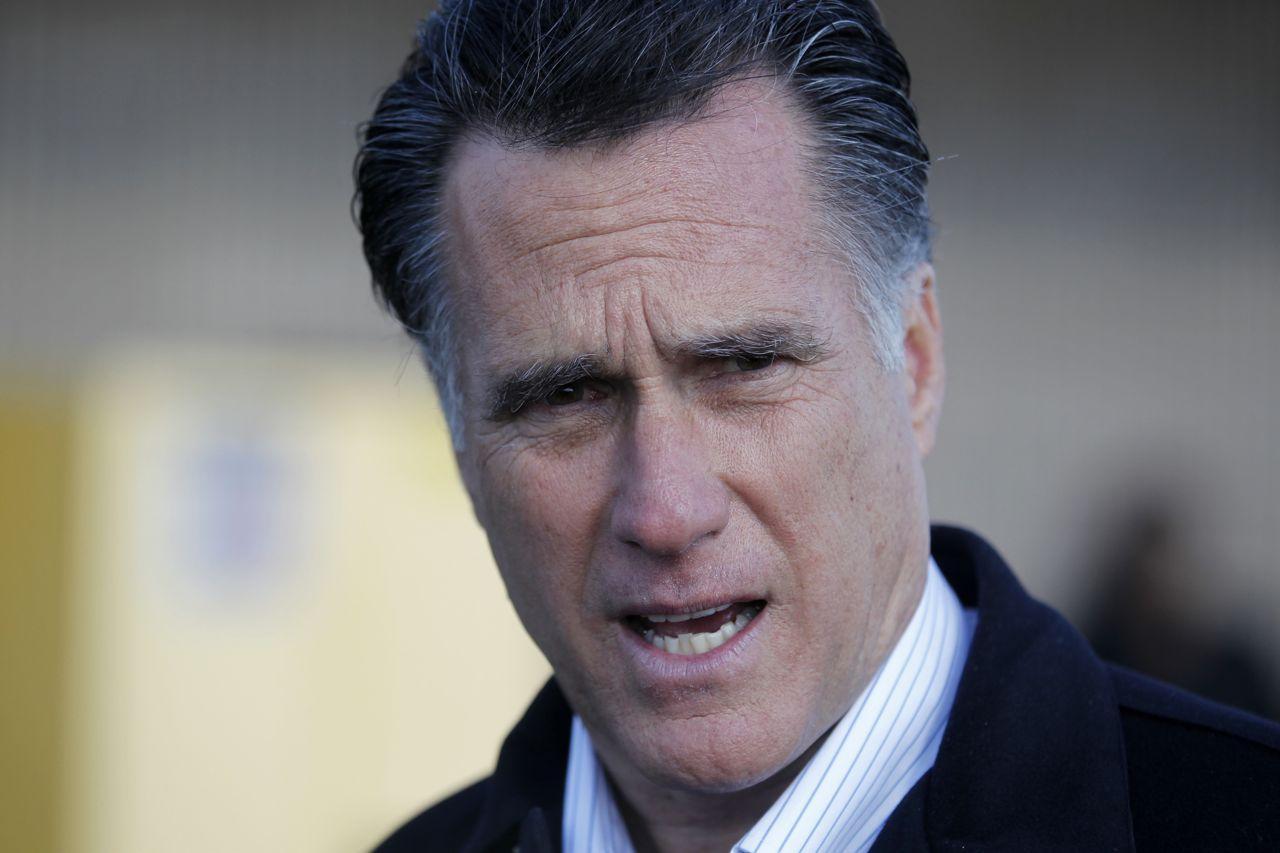
Four years ago this week, Mitt Romney came to the Conservative Political Action Conference after being routed on Super Tuesday. Many conservatives who had settled on him in a last ditch effort to block Sen. John McCain, R-Ariz., from the nomination were disappointed when he used his speech to drop out of the race and call for party unity.
As CPAC kicks off today, Romney finds himself coming off another election night defeat, this one having cracked the veneer of his inevitability. On Tuesday, Romney was embarrassed as Rick Santorum not only blew him away in Missouri and Minnesota, but bested him in Colorado — a state where Romney was expected to win, and where he had won 60 percent of the vote four years earlier.
Recommended Stories


All of this sets the stage for what is likely to be the most consequential CPAC ever in terms of influencing presidential politics. In the early days of CPAC, which began in 1973, the conference typically attracted a few hundred people and received a relatively small amount of media attention. Though it’s grown significantly since then, recent GOP presidential races have been more or less decided by the time the conference rolled around, as was the case in 2008.
But now the conference attracts more than 10,000 people. And earlier this week, the American Conservative Union, which runs it, announced it expected 1,200 members of the media — and that was before Santorum’s Tuesday victories. If any of the presidential candidates makes a big splash, it will not only influence thousands of activists at the conference, but it will also be amplified to conservatives in primary states throughout the nation.
Romney, Santorum and Newt Gingrich are all scheduled to speak at CPAC on Friday, and they’ll each face their own unique challenges and opportunities.
For Romney, CPAC provides him with a forum to reach out to conservatives and alleviate their suspicions about his liberal record as governor of Massachusetts. His past CPAC speeches, dating back to 2007, were exercises in insincere, “checklist conservatism” that really only reinforced doubts.
Conservatives already know that Romney is willing to tell them what they want to hear. He has yet to convince them that he’ll actually govern as a conservative once elected, rather than change his positions as he has done on abortion, guns, campaign finance reform, immigration, taxes and Ronald Reagan, among other areas.
Santorum is much better suited to address the CPAC audience. Long before he was seeking the presidency, he had spoken at the conference on many occasions. Look for him to build on a theme from his Tuesday victory speech — that he’s the only one who can run a credible campaign against President Obama precisely because he’s the most consistently conservative. Only he can offer a clear contrast.
A rousing speech to CPAC would not only fire up the crowd, but go viral on the right, with videos posted on YouTube, blogs, Twitter, Facebook and other social networking sites.
Gingrich, meanwhile, had a dismal night on Tuesday — finishing a distant third in Colorado and fourth in Minnesota. He wasn’t even on the ballot in Missouri. But he’s also an old pro at CPAC, and this is his best chance to reconnect with conservatives after a string of defeats. This will be his biggest forum before the Feb. 22 Republican debate. This is his chance to provide an ongoing rationale for his candidacy.
And for all his fans out there, no, I have not forgotten about Ron Paul. But he will not be speaking at CPAC this year. But his son Sen. Rand Paul, R-Ky., will be there, as will, no doubt, plenty of his supporters.
Philip Klein is senior editorial writer for The Examiner. He can be reached at [email protected].
