

Fifteen years ago, on the eve of the worst terrorist attacks in American history, defense budgeters weren’t thinking about roadside bombs, the security of American online networks or paying for drone strikes.
The biggest issue was “transformation,” a peacetime initiative to evolve how the Defense Department organizes itself and prepares to fight as-yet-unidentified future enemies.
Now, after two extended wars in the Middle East that are still going on, new realities have forced the Pentagon to change drastically what it spends money on. That includes budget categories that didn’t even exist 15 years ago on 9/11.
Almost $2 billion of the administration’s fiscal 2017 request is for those new categories, according to Mike Cadenazzi, solutions general manager of VisualDoD at McKinsey.
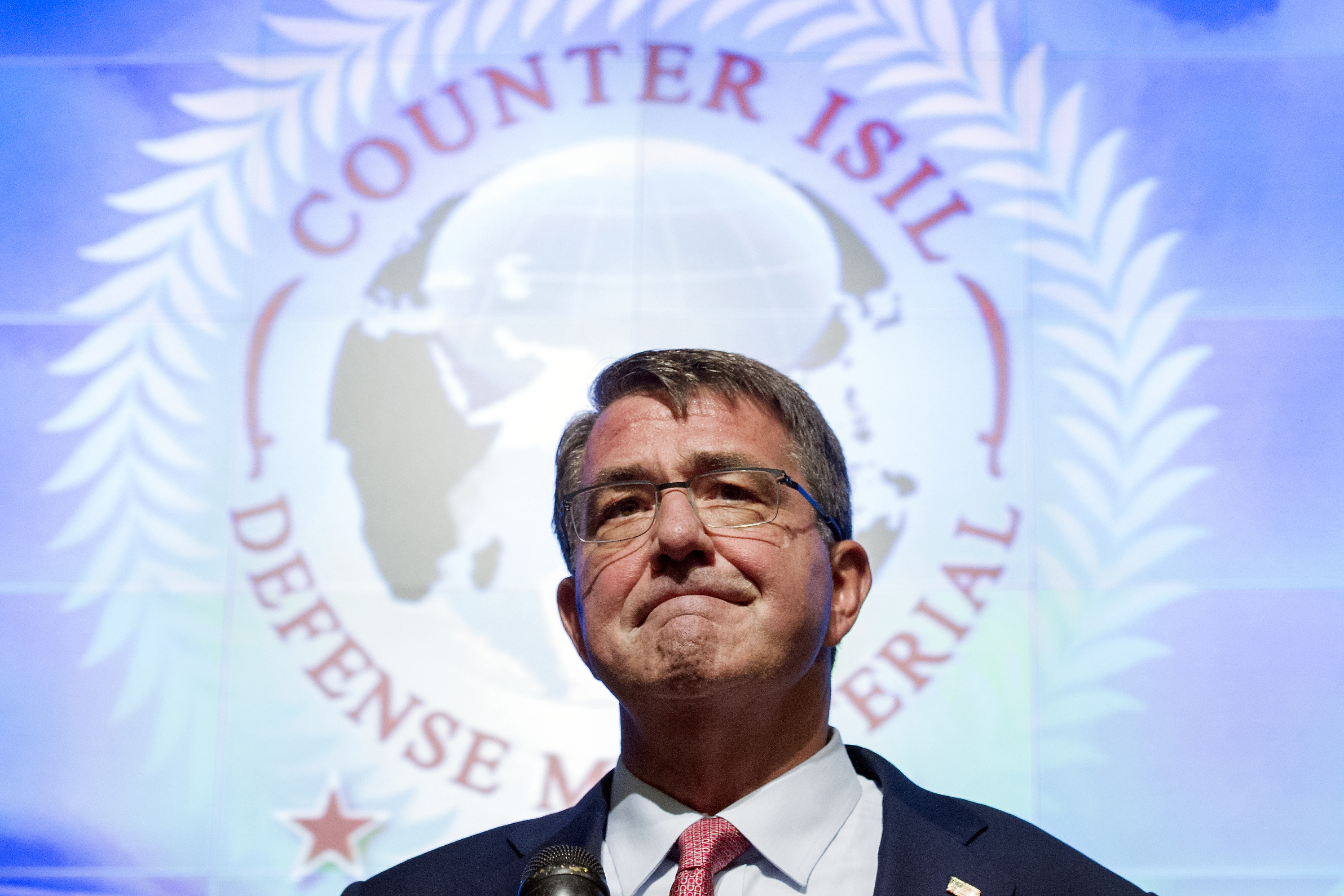
After two extended wars in the Middle East that are still going on, new realities have forced the Pentagon to change drastically what it spends money on. (AP Photo)
The money is for ballistic missile defense tests and operations, tactical systems and sensors, and rapid technology transition. Spending on ballistic missile defense terminals increased by more than 300 percent, more than all but seven other defense categories. While money was certainly spent on ballistic missile defense prior to fiscal 2001, and shows up in other pieces of the program, Cadenazzi said these changes represent new budget categories for pieces of that program that didn’t exist at the time of the terrorist attacks.
Justin Johnson, an analyst at the Heritage Foundation, said this reflects changes in the threats America now faces.
“I think again that matches the evolution of the threat,” he said. “We’re much more worried today about long-range missiles from Iran or North Korea than we were in 2001, and we’ve been investing against that threat over time.”
The largest rate of increase over the last 16 budgets comes in foreign government funding, up 1,710 percent from 2001 to 2017. In current dollars, that’s an increase of more than $5.6 billion.
Carter Price, an analyst at the Rand Corp., says that’s not surprising, given recent U.S. involvement overseas, including the building of local fighting forces in Iraq and Afghanistan.
Other categories have also seen big increases. Spending on drug interdiction is up more than 1,000 percent, and spending on unmanned aerial systems by more than 600 percent, according to Cadenazzi’s data.
Rounding out the top 10 areas with the greatest increases from 2001 to 2017 are naval aviation, up 532 percent, classified programs up more than 400 percent, electronic warfare and signals intelligence up 328 percent, air depot and maintenance up 324 percent, submarines up 284 percent and security systems up 281 percent.

Defense spending on cyber also saw an increase since the terrorist attacks on 9/11, growing by almost 130 percent. (iStock Photo)
Cyber also saw an increase since the terrorist attacks on 9/11, with spending growing by almost 130 percent.
“If you think back to the years around 9/11, we were starting to talk about cybersecurity but not in any coordinated way,” Johnson said. “The threats that we’re facing have dramatically changed, so I think that rightfully is represented in where we’re investing today.”
The changes in spending are as much about technology as about warfare tactics. Spending to meet the threat from improvised explosive devices and mines clibed almost 275 percent, $400 million in current dollars. That was a threat our forces didn’t face before the wars in Iraq and Afghanistan.
“DoD realized it had a problem and put a lot of resources behind figuring out how to handle [it], and were relatively successful,” Price said.
Still, Price says some things haven’t changed. The Pentagon is still buying traditional weapons to face any threat, such as fighter aircraft built by Boeing and Lockheed Martin, Navy destroyers built by Bath Iron Works and Ingalls Shipbuilding and aircraft carriers built by Huntington Ingalls Industries.
Investment in the DDG 51 program has remained steady since 2001 at $2-3 billion a year, but other programs have ramped up. The request for the F-35 fighter has risen from $682 million in 2001 to $10 billion for 2017.
Pay and allowances climbed most in raw dollars, $55 billion higher in the 2017 request than in 2001, despite the armed forces now being smaller, Johnson said.
“We are spending more, but we also have a smaller military today than we did 15 years ago,” he said.
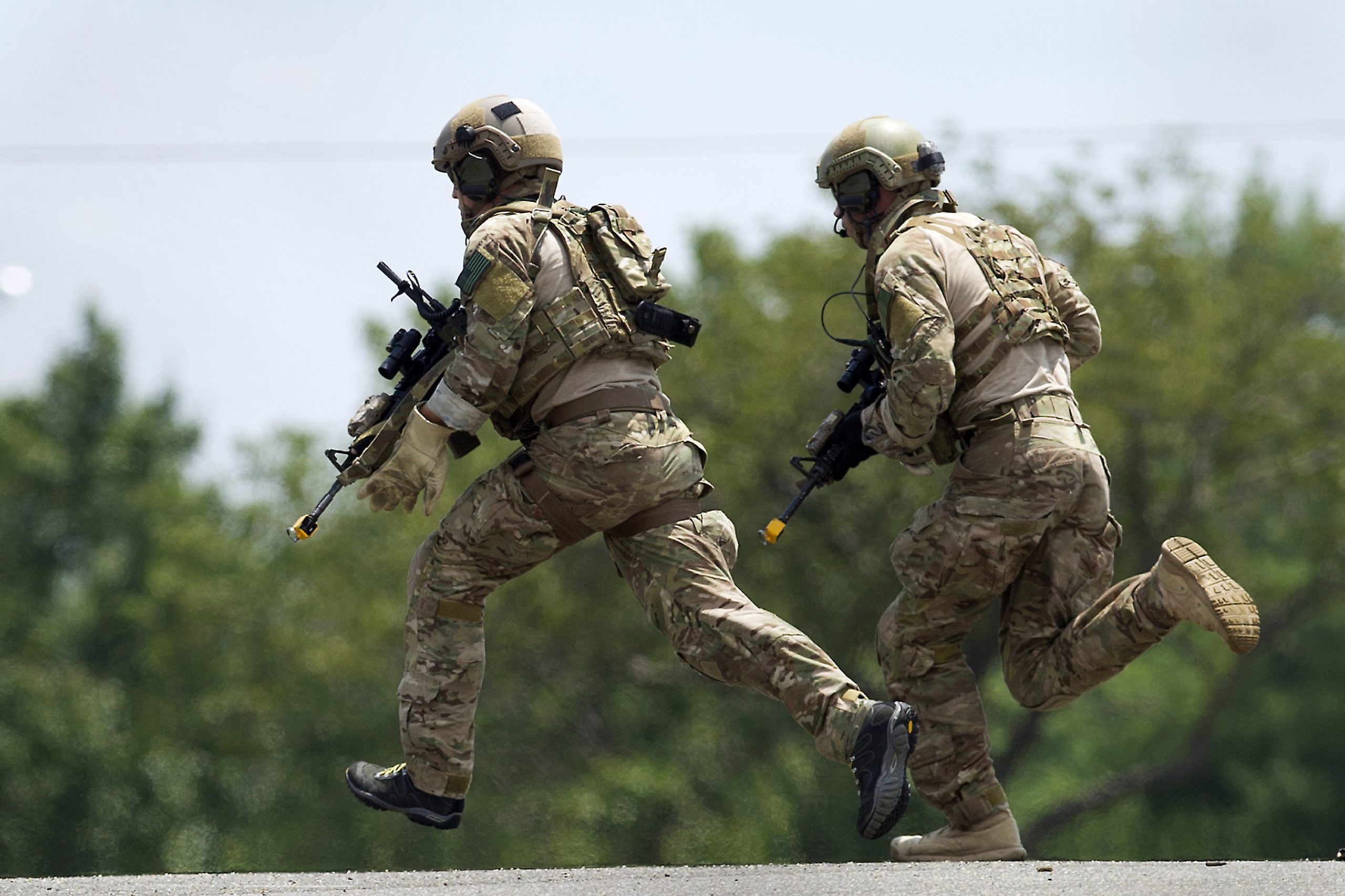
The 2017 request for ground operations is $21 billion more than in 2001, so it has risen less than half as fast as pay and allowances. (AP Photo)
The 2017 request for ground operations is $21 billion more than in 2001, so it has risen less than half as fast at pay and allowances.
Lawmakers and Pentagon officials says this is “unsustainable” and a 2013 Congressional Budget Office report found that the entire military budget would be consumed by them by 2039 if personnel costs keep rising at their current rate while the overall budget merely keeps up with inflation.
Speaker Paul Ryan tweaked the military’s retirement program because of this in the Bipartisan Budget Act of 2013.
In a statement announcing the deal he said, “Several top military leaders have argued we need compensation reform. The secretary of defense and chairman of the Joint Chiefs of Staff are aware of the need to address unsustainable legacy costs related to pension and healthcare benefits, which they state are impacting military readiness.”
Price says the personnel cost increases since 9/11 are due to retention bonuses needed to grow the force, and combat pay for those deployed. He says there is no evidence that costs are spiraling out of control.
The headline price of America’s military is up from fiscal 2001, but down significantly from near the end of the first decade of the century, when the Iraq and Afghanistan wars were at their height.
Some programs have been reduced or eliminated. Ten budget categories are getting fewer dollars in 2017 requests than in fiscal 2001, including space operations, support and logistics vehicles and the small business innovation research program.
Obama’s plans call for defense spending to increase by $23 billion in 2018, then plateau through fiscal 2026, according to a report from the Center for Strategic and Budgetary Analysis.
Hillary Clinton has said she’d like to end sequestration, which would boost defense and nondefense spending. Donald Trump has criticized the military as being “very weak and ineffective,” but has not provided concrete numbers for what he’d spend to fix that.
Threats are also changing. The war on terrorism was fifth on the list of threats idenitified by military leaders. Gen. Joe Dunford, chairman of the Joint Chiefs, said at his confirmation hearing last year that Russia is now the top threat — Mitt Romney was mocked by Obama for saying this in 2012 — and the sentiment is echoed by other military brass.
“My assessment today is that Russia poses the greatest threat to our national security,” Dunford told members of the Senate Armed Services Committee at the hearing. “If you look at their behavior, it’s nothing short of alarming.”
As a result, the military is preparing for conflicts with near-peer competitors China or Russia, as well as countering the nuclear threat posed by Iran and North Korea. Cyberattacks also pose a more real threat than they did a decade ago, a trend that’s likely to continue, as the military beefs up its cyberdefenses and seeks to recruit more cyberwarriors.
