

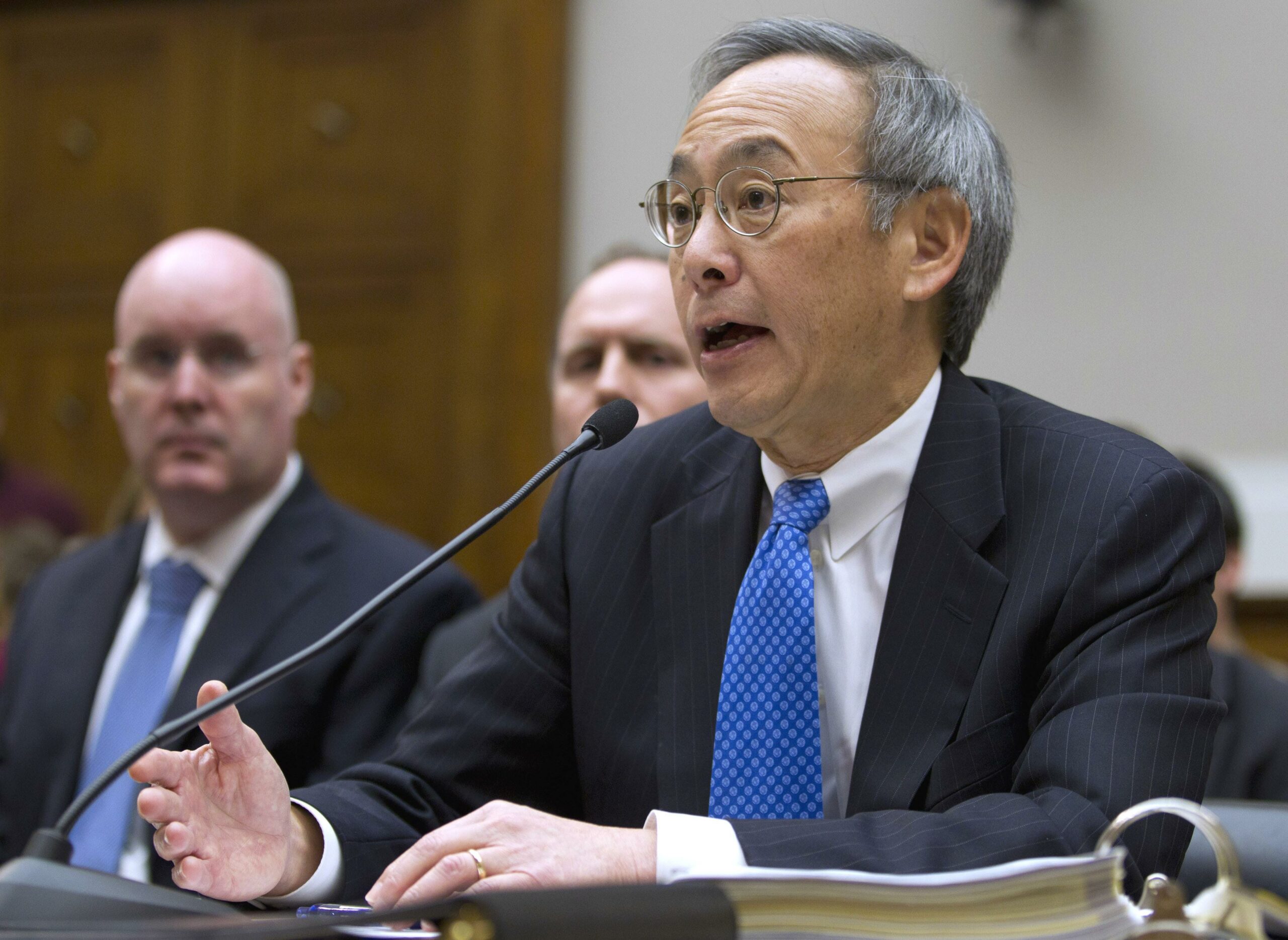
Energy Secretary Steven Chu on Thursday defended the Obama administration’s decision to award solar-energy firm Solyndra a $535 million government loan, saying the move was based not on political considerations but on the now-bankrupt company’s potential for success.
“The loan guarantee to Solyndra was subject to proper, rigorous scrutiny and healthy debate during every phase of the process,” Chu told the House Energy and Commerce panel. “As the secretary of energy, the final decisions on Solyndra were mine and I made them with the best interest of the taxpayer in mind.”
Chu made his case before a panel of skeptical Republicans who cited a recently disclosed email dated last year from someone within the Energy Department asking Solyndra to delay the announcement that it was laying off workers until after the critical Nov. 2, 2010, congressional elections. The DOE then awarded Solyndra a $40 million installment of the loan, money the company was relying on to carry it through November. Solyndra went bankrupt and fired its employees in August.
“I don’t see any chain of emails looking out for the taxpayer money,” Rep. Steve Scalise, R-La., said in a tense exchange with Chu. “I see a whole lot of emails in the administration that are concerned about the politics. That’s what stinks the most about this.”
Chu denied that he asked Solyndra to delay the layoff announcement, prompting committee Chairman Cliff Stearns, R-Fla., to ask if Chu plans to look into who sent the email.
“You don’t know who in your department was involved with this and you have no idea in finding out?” Stearns asked.
Chu said the Energy Department’s general counsel “will look into who is doing these things.”
Republicans subpoenaed the White House for all communications related to the awarding of the loan to Solyndra despite evidence the company was a financial risk. The GOP also wants information on the Energy Department’s decision to restructure the loan so that investors would recoup their money before the government is repaid, a move the GOP believes was illegal.
While the White House has turned over hundreds of documents, Republicans believe the administration may be withholding emails and other documents that could show how politics influenced the Solyndra loan process and perhaps benefited Obama’s campaign contributors.
Chu said he believed it was legal to restructure the loan “when the loan became stressed and in trouble” to help the company attract the additional investors it needed to survive, which Chu hoped would ultimately allow taxpayers to recoup their investment.
He admitted, though, that “not very much” of the $535 million will ever be returned.
Committee Democrats defended Chu. The panel’s top Democrat, Rep. Henry Waxman of California, said the Republican inquiry into Solyndra is fueled by their opposition to green energy and their belief that global warning is a hoax.
“They are trying to manufacture a scandal where there is none,” Waxman told Chu. “If anything, I think you are trying to do exactly the right thing and I commend you for it.”
Waxman called the GOP’s treatment of Chu “abusive” and tried to adjourn the hearing.
Stearns, at the conclusion of the hearing, said the Solyndra loan showed “a high degree of mismanagement and ineptitude” and was “poorly managed” by Chu.
