

Tuesday’s high-stakes Wisconsin Supreme Court election has turned into an expensive battle that will decide the political tilt of the bench and could change the state’s judicial landscape for good.
The April 4 contest between Judge Janet Protasiewicz (D) and former Justice Daniel Kelly (R) has shattered spending records and will likely determine the ideological makeup of the court and could even play a role in the 2024 presidential election.
SOROS, SPIELBERG, AND PRITZKER AMONG DEMOCRATIC MEGADONORS IN WISCONSIN SUPREME COURT RACE
Officials in both parties say the outcome of the contest could lead to big changes in how state Supreme Court races are run in 21 other states where justices are elected by voters.
Kelly and Protasiewicz are running to replace Justice Patience Roggensack (R), whose term expires in July.
The election, nonpartisan in name only, gives liberals a shot at a 4-3 majority in a state Republicans have dominated for 15 years.
Here’s a look at what’s driving the race:
Campaign finances
The election has shattered campaign finance records and is easily the most expensive state Supreme Court race in U.S. history. More than $31 million has been spent on advertising, with a large portion of it coming from special interest groups.
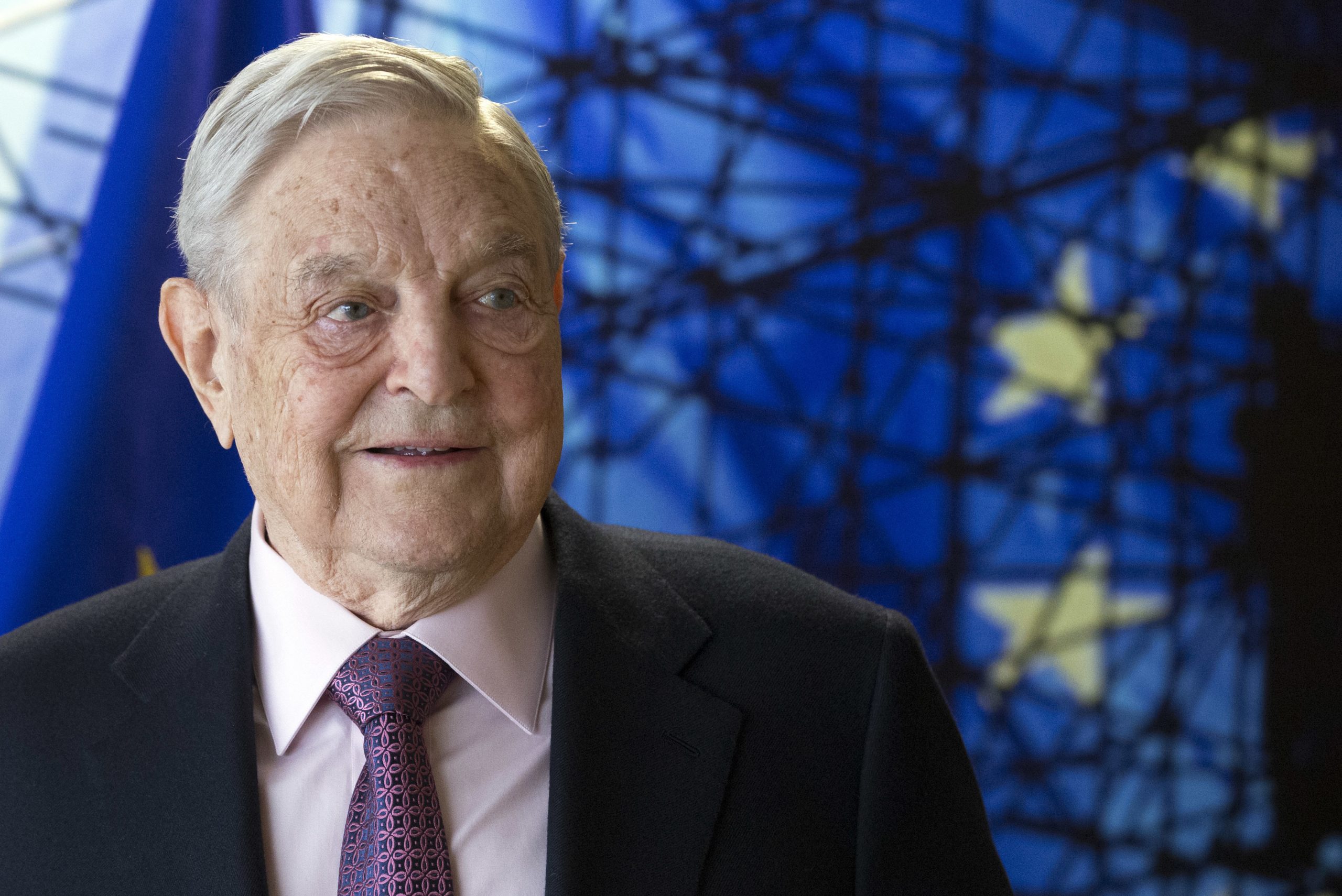
George Soros, Steven Spielberg, LinkedIn founder Reid Hoffman, and Gov. J.B. Pritzker (D-IL) are among the liberal megadonors who opened up their wallets and donated generously to the Democratic Party of Wisconsin.
Protasiewicz raised nearly $12.4 million to Kelly’s $2.2 million in the final campaign finance reporting between Feb. 7 and March 20, according to the latest disclosure forms.
In all, she has raised $14.5 million, with more than $8.8 million coming from the state Democratic Party.
On the Republican side, Kelly, who has raised more than $2.7 million, picked up nearly $500,000 from the Republican Party of Wisconsin and another $50,000 in donations from county GOP parties and the Republican Assembly Campaign Committee.
The state GOP has been quick to call out Protasiewicz, criticizing her for accepting such high sums from out-of-state moguls and said her vote on hot-button subjects such as abortion and partisan gerrymandering has little to do with Wisconsin voters.
“George Soros and J.B. Pritzker’s million-dollar contributions underscore that Protasiewicz will simply be a progressive rubber stamp,” Rachel Reisner, spokeswoman for the state Republican Party, said. “They’ll drop whatever cash needed to buy her a Wisconsin Supreme Court seat because her pro-criminal record aligns with their agenda.”
Abortion
Even though the election is technically nonpartisan, both candidates have been open about their position on abortion.
Millions of dollars from anti-abortion and pro-abortion rights groups have been funneled into the race, with both sides hoping their candidate will either uphold or strike down an 1849 Wisconsin law that bans the practice. A lawsuit that could change the tide in Wisconsin is expected to make its way to the state Supreme Court and could create a massive shift on the subject.
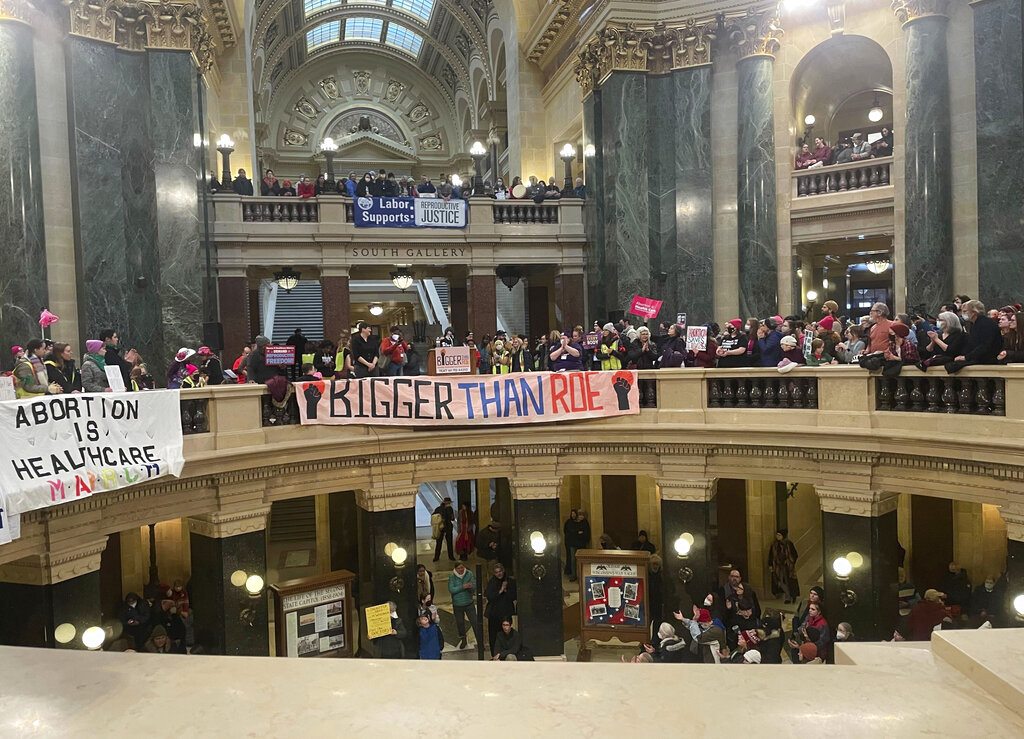
Protasiewicz has said her personal opinion is that it should be left up to the woman to make decisions about her own reproductive health. She has repeatedly claimed that if Kelly is elected, he will work to keep abortion illegal.
“If my opponent is elected, I can tell you with 100% certainty that [the] 1849 abortion ban will stay on the books,” she said.
Kelly, who has been endorsed by the three largest anti-abortion groups in the state, has pushed back on claims he made promises to the groups to uphold the ban in exchange for their support.
“You don’t know what I’m thinking about the abortion ban,” he said during a March debate. “You have no idea. I had no conversations with those organizations about how I would rule on any issue, including the abortion issue.”
Susan B. Anthony Pro-Life America announced in late March that it would give $2 million through its Women Speak Out PAC to Kelly, with about $1.2 million going to TV and digital ads.
“These races are more important than ever thanks to the Dobbs decision,” Kelsey Pritchard, the group’s director of state public affairs, told Politico. “If we have activist courts, we’re at risk of having mini Roe decisions across the country that would prevent the states from protecting unborn life.”
Protasiewicz has picked up endorsements from Planned Parenthood and NARAL Pro-Choice America.
“Across the country, we are seeing unprecedented judicial attacks on reproductive freedom, largely orchestrated by anti-choice extremist judges given power by politicians who want to attack our rights, freedoms, and even our democracy,” NARAL President Mini Timmaraju said. “Wisconsin voters have a powerful opportunity to fight back and vote for a champion for reproductive freedom.”
Crime
Republicans have tried to paint Protasiewicz as soft on crime, pointing to several cases where she has given violent offenders slaps on the wrist only to have them go on to commit more egregious acts.
Some have even dubbed her “No Jail Janet” and have drawn attention to three specific court cases that ended in tragedy.
In one, Protasiewicz suspended the prison sentence of Matthew Neumann, a convicted domestic abuser with a long criminal record who terrorized women and later went on to kill two of his cleaning company employees and burned their bodies on a hunting property.
In another, Protasiewicz sentenced a man who broke his wife’s face to six months in jail. Two years later, in a fit of rage, Lararick Spade showed up outside his estranged wife’s home and nearly shot her to death.
In the third, Protasiewicz suspended a nearly 6-year sentence for Qantrell Bounds, a man who assaulted and raped a 13-year-old girl, recorded it, and posted the incident online. Protasiewicz suspended the jail sentence, opting instead to give him probation.
Protasiewicz has given feeble excuses for her decisions and, in some cases, claimed she hadn’t been lenient, only to have transcripts and court records prove her wrong. She has also claimed that the cases were cherry-picked to make her look bad.
Gerrymandering
Another hot topic that could change the political landscape in Wisconsin is redistricting. The fight over current legislative maps has prompted outrage from Democrats who claim it unfairly gives Republicans an edge.
“Those maps are rigged,” Protasiewicz said.
In 2021, the state Supreme Court’s conservative majority announced they would not redraw district maps but would instead adopt one submitted by either the Democratic governor or the GOP-led legislature. The court decided on a map that employed the “least change” methodology, but critics complained the map only kept in place districts that already favored Republicans and was not fair.
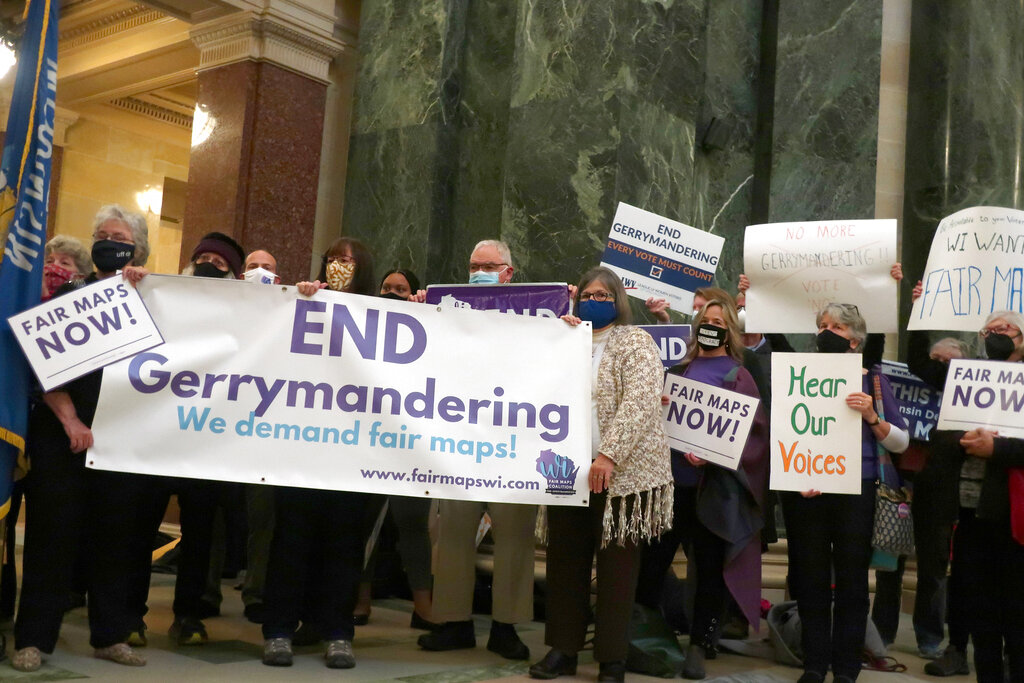
In 2022, conservative Justice Brian Hagedorn joined the three liberal justices and voted to use Gov. Tony Evers’s (D-WI) map, which created an additional legislative district that was made up of mostly black voters, something the court claimed was required under the Voting Rights Act. Republicans appealed the decision, and the case made its way to the U.S. Supreme Court, which struck down the ruling claiming there wasn’t enough evidence to support invoking the Voting Rights Act.
CLICK HERE TO READ MORE FROM THE WASHINGTON EXAMINER
Unlike Protasiewicz, Kelly believes the “fairness” of the maps is a political question, not a judicial one, and is, therefore, one that the court should avoid.
“The members of this court have not been entrusted with making political decisions, only legal decisions,” he said. “Their job is just to address those legal imperfections in that map. When they’re done addressing those, it is to step aside and then wait for the people of Wisconsin to work on their legislature and their governor to get to a map that is politically acceptable to the state.”
