

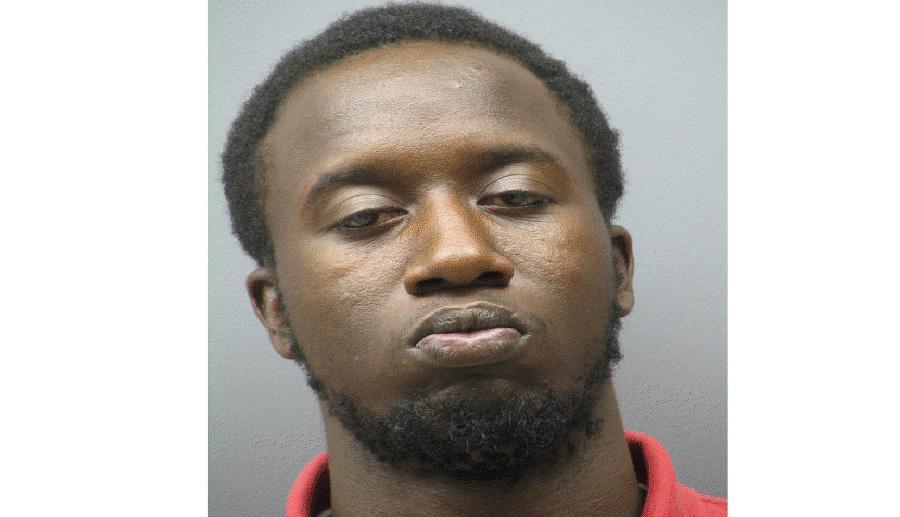
U.S. marshals are looking for a District man who disappeared before his trial on felony drug charges.
Rashid Gary Kirkland, 27, is wanted for violating his parole on a cocaine conviction and for failing to appear in D.C. Superior Court on a charge of unlawful distribution of heroin.
Recommended Stories


Kirkland has an arrest history dating back to 2003 that includes drug possession, possession with the intent to distribute, and assault with a gun, authorities said.
Marshals deputies are asking the public for information that could lead to Kirkland’s arrest.
“Rashid Kirkland is poisoning the community, he should be taken off the streets,” said U.S. Marshals Deputy Gerard Young, of the Capital Area Regional Fugitive Task Force.
According to charging documents, on Nov. 18, 2010, police officers observed Kirkland selling packages of heroin to several people in the 700 block of Kenilworth Avenue in Northeast Washington.
Police arrested Kirkland and two of his alleged customers, recovering 15 grams of raw heroin and $6,200 in cash from Kirkland.
After his release, Kirkland failed to show up for his hearings and warrants were issued for his arrest.
Kirkland is described as 5-feet-6 and 140 pounds. At the time of his arrest, he listed his address as 600 block of 46 Place SE.
Anyone with information regarding Kirkland’s whereabouts is urged to call Deputy Young or the U.S. Marshals Service at 301-489-1717 or 800-336-0102.
Since 2008, federal authorities have credited readers of The Washington Examiner for the capture of 40 fugitives, including murderers, kidnappers, child sex offenders, rapists and scam artists.
At least eight captured fugitives were convicted killers or wanted on a homicide charge.
Last month, a tip from a reader led directly to the capture of a convicted murderer who allegedly violated the terms of his parole.
The Capital Area Regional Fugitive Task Force, run by the U.S. Marshals Service, is composed of 30 federal, state and local agencies from Baltimore to Norfolk. The unit has captured more than 33,000 fugitives since its creation in 2004.
