SPLC president struggles to answer why left-wing groups missing from hate map

SPLC president struggles answering why antifa or anti-LGBT Islamic groups are missing from hate map

Published June 9, 2026 4:40pm ET | Updated June 9, 2026 4:40pm ET


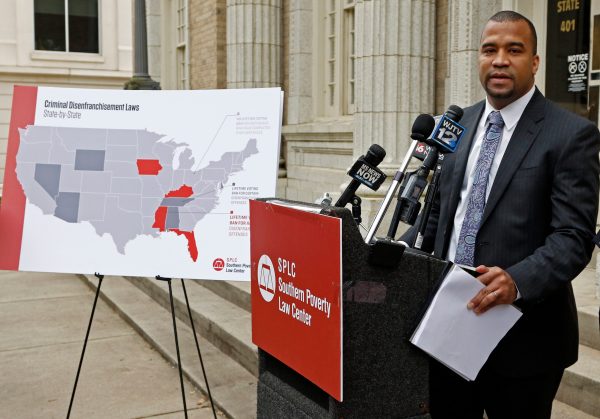
Southern Poverty Law Center President Bryan Fair faced sharp questioning from House Republicans on Tuesday over why the organization’s widely cited hate map does not appear to include violent antifa-affiliated groups, the left-wing pro-abortion-rights Jane’s Revenge, or Islamic organizations that oppose LGBT individuals.

“Under your criteria, Turning Point USA, Family Research Council, and other conservative Christian groups are considered hate groups, but Antifa and Jane’s Revenge aren’t,” Rep. Lance Gooden (R-TX) told Fair during the hearing. “I frankly think it’s disgusting.”

The exchanges came during a House judiciary committee hearing examining the SPLC’s hate group designation practices and broader allegations surrounding the group’s operations, including a recent federal indictment accusing the organization of funding extremist actors while presenting itself as an anti-hate watchdog.

Republicans repeatedly challenged Fair over what they described as ideological inconsistencies in the SPLC’s criteria for labeling organizations as hateful.

Rep. Chip Roy (R-TX) questioned Fair about the apparent absence of Islamic organizations from the SPLC’s hate map despite some of those groups’ opposition to the lifestyle of LGBT people.

“How many extremist Islamic groups do you have of the 1,500 or so organizations you have on your hate map?” Roy asked.

Fair declined to provide a number and instead said the SPLC does not target organizations based on religion.

“We don’t target any group because of its religion,” Fair said.

Roy pressed further, asking whether the SPLC’s position was that Islamic groups were generally supportive of LGBT rights. Fair again declined to answer the question directly.

Gooden later shifted the discussion to antifa and Jane’s Revenge, an extremist group that has claimed responsibility for attacks on pregnancy resource centers and churches following the Supreme Court’s 2022 abortion ruling, one of which involved guilty pleas and a criminal conviction of four individuals accused of the vandalisms in 2024.

When asked whether antifa appeared on the SPLC’s hate map, Fair said the organization does not maintain a domestic terrorism list and instead designates groups based on statements and activities that meet its criteria.

Asked whether Jane’s Revenge had been designated a hate group, Fair again pointed to the SPLC’s standards, which include groups that vilify protected classes or promote anti-government conspiracy theories.

Gooden argued there was a double standard behind SPLC’s classification of conservative organizations, such as Turning Point USA and the Family Research Council, as hate groups while excluding organizations linked to vandalism, violence, and attacks against churches and anti-abortion centers.

The hearing also revisited criticism of the SPLC’s past influence within federal agencies. Gooden referenced the FBI’s controversial Richmond memorandum that targeted traditionalist Catholics, which relied in part on SPLC materials before being withdrawn.

Fair defended the organization’s work, saying the SPLC has worked with administrations of both parties and identifies groups based on their rhetoric and conduct rather than their religious affiliation.

House Judiciary Committee Chairman Jim Jordan (R-OH) later questioned Fair about allegations contained in the federal indictment against the SPLC. Jordan cited accusations that paid informants associated with the organization’s former field-source program encouraged participation in extremist events while working undercover inside hate groups.

“If you’re trying to stop hate, why would you encourage people to attend a hate rally?” Jordan asked.

Fair declined to discuss the allegations in detail, citing the pending case. He said the SPLC ended its field-source program because extremist activity had increasingly migrated online and into government institutions.

Jordan appeared unconvinced.

“You said the program was successful and helpful, but now you’re stopping,” Jordan said before criticizing Fair’s explanation.

Fair replied, “We stopped the program because we believe hate and extremism has migrated significantly online and into government agencies.”

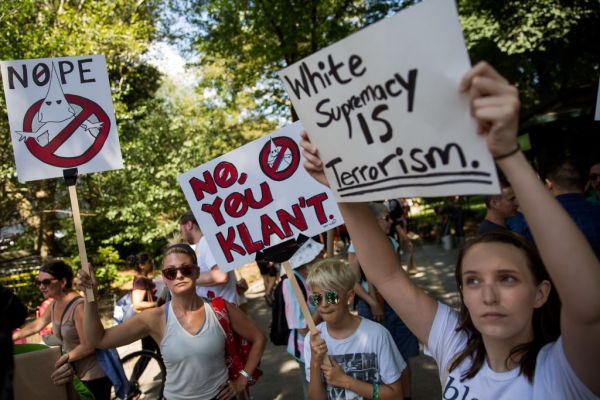
Jordan also noted that the SPLC “almost tripled their income” following the chaotic protests in Charlottesville in which one woman was killed by an extremist who drove his car into a crowd of counter-protesters at the August 2017 rally. Fair argued that the revenue of his organization increased due to President Donald Trump’s election victory less than one year before.

The hearing came the same day the SPLC released its annual “Year in Hate and Extremism” report, which identified 1,263 of what it called hate and anti-government groups operating in 2025 and argued that hard-right activists had expanded their influence throughout major institutions, including the federal government.

“The hard right is attempting to radicalize generations of young people, predominantly men, by building a more expansive culture and media ecosystem,” Fair said in a statement accompanying the report. He argued that high-ranking federal officials had helped advance policies that harmed immigrants, racial minorities, women, and LGBT communities.

Democrats on the panel largely defended the SPLC and questioned the Justice Department’s case against the organization. Rep. Jamie Raskin (D-MD) argued Republicans were unfairly targeting a longstanding civil rights group.

Georgetown Law professor Mary McCord, one of the hearing’s witnesses, also pushed back on Republican criticism of the SPLC’s former field-source program.

McCord, a former acting assistant attorney general at the Justice Department, noted that the use of confidential informants to gather intelligence on extremist groups mirrors investigative techniques routinely employed by federal law enforcement agencies, including the FBI.

However, the FBI under Director Kash Patel announced in October that the bureau had severed all ties with the SPLC, signaling that the government would no longer rely on the organization, months before the indictment against the law center was unsealed in April.

The DOJ has since secured a superseding indictment against the SPLC, alleging the group secretly funneled over $3 million in donor funds and used its informants to engage in conduct that artificially fueled hate, such as purchasing white Ku Klux Klan robes and materials for participating in cross-burnings.

PAXTON OPENS INVESTIGATION INTO SPLC AS JUDGE SETS TRIAL FOR FRAUD CASE

The SPLC has pleaded not guilty and has formally moved to dismiss the charges as a politically motivated retribution campaign, while also seeking sanctions against prosecutors.

Barring any further delays, the judge presiding over the case has set a trial date for October.