

Medicaid, one of the oldest forms of public assistance susceptible to scams, has long been a cash cow for Somali fraudsters seeking to profit from taxpayer-funded programming in Minnesota.
Heightened scrutiny surrounding Medicaid comes as other cases of Somali-connected fraud in Minnesota attract national attention, such as Somali-owned organizations caught fraudulently collecting child care subsidies and pandemic relief.
For years, scores of scammers, primarily from Minnesota’s Somali population, have perpetrated Medicaid fraud and built a sprawling infrastructure to facilitate these schemes statewide.
Members of the state’s Somali diaspora registered as medical providers have stolen millions from Medicaid through the Minnesota Health Care Programs by billing for services not actually performed, falsifying patient records, and offering illegal kickbacks, among other machinations.
A ‘culture’ of funneling funds
For instance, in 2023, three Somalis were criminally charged in what the Minnesota attorney general’s Medicaid Fraud Control Unit considered the office’s “largest-ever” Medicaid fraud prosecution.
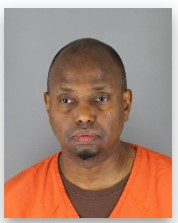
Suspected coconspirators Abdirashid Ismail Said, Ali Abdirizak Ahmed, and Said Awil Ibrahim, the operators of multiple Minneapolis-based home health agencies, allegedly billed Medicaid for sham services totaling nearly $11 million.
Said, who was previously convicted of Medicaid fraud and accordingly prohibited from working for companies that receive Medicaid reimbursements, claimed at a probation violation hearing that authorities simply do not understand the Somali community’s “culture” and often mistake such cultural differences as evidence of fraud.
“This is part of our culture, to help people,” Said insisted, arguing that the Somalis in Minneapolis tend to help each other out financially, sometimes without a paper trail.
At the time, Said was accused of accepting dozens of checks post-conviction from friends who owned other Medicaid-funded personal care companies. When a judge asked if he had a written payment agreement or terms and conditions of the purported loans given to him, Said said, “No, your honor. In our culture, we trust one another.”
Somali scammers in Minnesota are also known to establish phantom clinics serving as fronts for Medicaid fraud. Many of the Somali-run care centers are housed in dilapidated strip malls and have relatively scant digital footprints. Sometimes, con artists set up Medicaid-billing entities that exist on paper only; for example, listing non-physical offices that operate out of a P.O. box.
SOMALI COMMUNITY CARE PROVIDERS ARE VALUABLE SOURCE OF CAMPAIGN CASH FOR SOMALI POLITICIANS
In one case, Abdifatah Yusuf owned a supposed home and community-based services provider subsidized by Medicaid that, in reality, operated out of a mailbox with no real office building, yet he claimed to provide millions in HCBS to Medicaid recipients.
Yusuf was ultimately found guilty in August on a slew of theft and fraud charges for bilking more than $7.2 million from Medicaid. Yusuf and his wife, Lul Ahmed, used the stolen Medicaid funds to finance their lavish lifestyles, a bulk of which was spent at luxury car dealers and designer clothing stores, including Coach, Canada Goose, Michael Kors, and Nordstrom.
However, Judge Sarah S. West, who was appointed by former Gov. Mark Dayton (D-MN), overturned Yusuf’s conviction in November, finding that the case “relied heavily on circumstantial evidence” and could encompass “reasonable theories other than guilt.”
“It was not a difficult decision whatsoever,” jury foreperson Ben Walfoort said of Yusuf’s guilty verdict. Saying that he was shocked to see it overturned, Walfoort pointed to “all of the evidence that was presented to us and the obvious guilt that we saw.” Another juror told KARE 11, “We all came to an agreement pretty easily.”
Despite handing down the acquittal, West said she was “troubled by the manner in which fraud was able to be perpetuated.”
Kickbacks across the community
The scheming within Minnesota’s close-knit Somali community can also involve patients and their families who are incentivized to use a particular provider in exchange for payments known as kickbacks. The provider then bills Medicaid for services that appear legitimate but were driven by improper incentives.
For example, Asha Farhan Hassan was federally charged in September for defrauding the state’s Early Intensive Developmental and Behavioral Intervention benefit, a part of the MHCP that offers medically necessary intervention to patients under the age of 21 with autism spectrum disorders.
Hassan pleaded guilty to conspiring with others to carry out a $14 million Medicaid fraud scheme over a five-year period using her agency, Smart Therapy, by giving parents kickbacks to encourage them to enroll their children in therapy. Prosecutors say she then billed Medicaid for those EIDBI services, even when the therapy was unnecessary or not provided at all.
After initially setting up Smart Therapy as an MHCP provider, to justify the reimbursement claims, Hassan needed children who had an autism diagnosis and, admittedly, approached parents in the Somali community, offering them kickbacks to recruit their children.
As a recruitment and retention tactic, Hassan and her partners reportedly paid cash remittances, ranging from $300 to $1,500 a month, to the parents of children enrolled. Per prosecutors, the amount was contingent on what services were covered by Medicaid — the larger the authorization amount, the higher the kickback. Several families allegedly left Smart Therapy after being offered bigger kickbacks by other autism centers to take their children there.
Many of the children were dropped off and picked up by drivers on Smart Therapy’s payroll who additionally charged the Minnesota Department of Human Services for transporting them. According to authorities, Smart Therapy employed unqualified individuals as “behavioral technicians” who were usually teenage relatives with no education beyond high school who had never been trained or certified to treat autism.
Abdinajib Hassan Yussuf, the president and CEO of Star Autism Center, is facing federal charges for a similar Minneapolis-area kickback scheme that resulted in more than $6 million in Medicaid reimbursements. Yussuf allegedly shared the proceeds with other owners and investors in Star Autism.
Possible penalties
At least 150 Somali medical providers in Minnesota are currently banned from participating in Medicaid and Medicare programs for reasons including fraud, theft, abuse, human error, or regulatory noncompliance, according to the state’s list of banned entities and individual healthcare workers reviewed by the Washington Examiner.
Blacklisted providers, however, are not prohibited from charging private-pay clients, although they have had to pay back what they stole in Medicaid payments.
In 2022, an administrative law judge found that one of the now-banned providers, Godfrey Edaferierhi, the owner of Caring Home Health near Minneapolis, submitted nearly $400,000 in reimbursement claims to MHCP for services that were “not supported by care plans and timesheets.”
According to court records, Edaferierhi mentioned to investigators that Caring Home is a minority-owned business and argued that because he purportedly meant no ill intent, the company should not have to pay back what they improperly collected.
“Our Errors and Omissions are not an intentional act,” Edaferierhi said. “Thus, If we are been [sic] asked to pay back all services that we provided as a result of these errors, we will be out of business.”
“Caring home is a very small minority own [sic] business that is barely scratching the surface,” Edaferierhi continued. “We want to appeal to the Review community to pardon us and give us another opportunity to correct our unintentional wrong by waiving the stipulated fine.”
Nazneen Khatoon, who donated to the 2018 gubernatorial campaign of Gov. Tim Walz (D-MN), was ordered to pay a penalty of only 20% of the $2.23 million that her agency, Best Care Home Health Care, had improperly collected in Medicaid funds due to documentation errors.
WALZ RECEIVED $10,000 FROM DONORS TIED TO SOMALI-RUN DAY CARE CENTERS
Best Care was previously accused of fraudulently billing or overcharging the federal government in a case brought by whistleblower claims. The staff allegedly forged fraudulent nursing notes, which Best Care reportedly submitted as proof of care to collect Medicare and Medicaid payments. In 2014, Best Care reached a settlement agreement with the federal government.
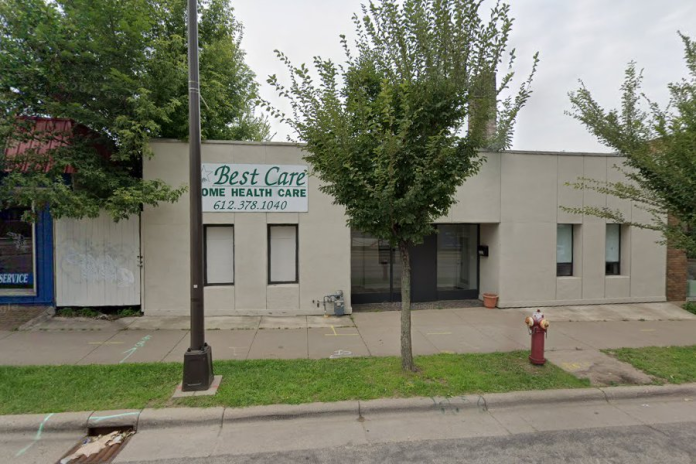
In a separate 2002 lawsuit, the U.S. government lodged civil proceedings against Best Care concerning other alleged illegal Medicare billing practices. According to the complaint, Best Care, “by and through Khatoon,” billed Medicare on behalf of two other healthcare organizations that were ineligible for reimbursements themselves because they were not certified as Medicare providers. The three companies allegedly agreed to split the profits if Best Care filled out the reimbursement paperwork.
