

Several coconspirators convicted in the first federal antifa terrorism case delivered tell-all testimony last week, lifting the curtains on the far-left movement’s operations during the trial of nine suspected antifa members.
The nine holdouts taking their chances at trial are accused of belonging to a Texas antifa cell that carried out a coordinated July 2025 attack on an immigration detention center near Dallas.
Authorities say that a heavily armed cell of antifa radicals opened fire that night on federal personnel. A local police officer was shot in the neck after he answered a call for help from the facility’s security guards.
Four of the defendants who have already confessed to their affiliation and are now cooperating with prosecutors testified last week against their alleged comrades as part of plea deals they had struck in exchange for reduced prison time.
Sharing antifa’s insider details
The admitted antifa associates, appearing as witnesses for the government, disclosed at trial first-hand knowledge about antifa’s organizing strategies and operational tactics.
FIRST ANTIFA TERRORISM TRIAL RESTARTS FOLLOWING MISTRIAL: WHAT YOU NEED TO KNOW
Lynette Sharp, the first coconspirator to take a plea deal, told jurors on Wednesday how she and some of the other antifa operatives had met Benjamin Song, the cell’s alleged ringleader.
Sharp previously admitted to aiding and abetting Song’s escape by providing him with a disguise while he was evading law enforcement for over a week in the aftermath of the attack. Song, then a fugitive from justice, was the subject of an FBI manhunt and made the Texas Top 10 Most Wanted Fugitives list.
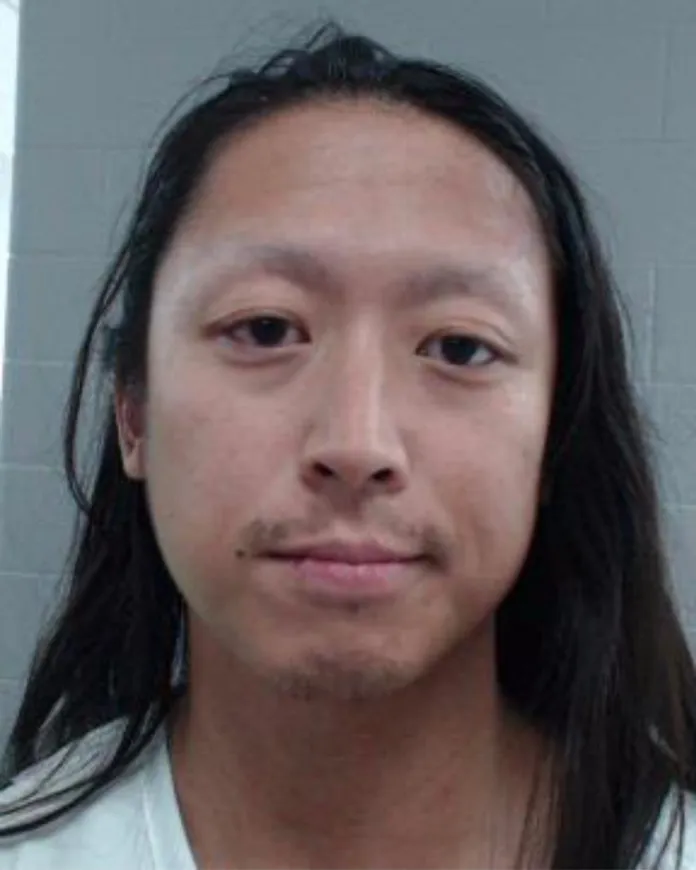
Sharp’s courtroom testimony connected the Dallas-area antifa cell through weapons training, various Signal chats, and reconnaissance conducted in preparation for the July 4 shooting plot, according to independent journalist Kelly Neidert.
On the witness stand, Sharp identified the defendants one by one, linking them through antifa groups such as the Socialist Rifle Association, a left-wing firearm club. In sworn admission statements, the convicted coconspirators attested that “many members” of the SRA consider themselves “antifascist.”
Sharp testified before the jury that Song, a former Marine Corps reservist, coached members of the area’s SRA chapter, including the codefendants, in tactical firearms training. According to Sharp, for instance, Song taught “dry fire drills” in which participants practiced maneuvering with rifles and clearing out a room.
Sharp said that members of the gun group regularly went shooting at gun ranges across the Dallas-Fort Worth region.
Seth Sikes, another admitted cell operative who was apprehended close to the crime scene on the night of the shooting, corroborated that they knew the antifa faction’s suspected mastermind from Finn’s Place, a community center in Fort Worth where Song taught a purported self-defense class.
Finn’s Place is advertised as “a safe space for the trans community to gather and access resources.” At least two members of the criminally charged antifa cell openly identify as transgender.
When he pled out in November, Sikes acknowledged that antifa organizes in “cells or ‘affinity groups’ around their beliefs.” Sikes told the court last week that the cohort standing trial is a group of leftist activists with overlapping ideologies, though their exact philosophies varied. According to NPR North Texas, Sikes said he is more of a socialist, while the others are communist or anarchist.
ANTIFA INC: HOW AN IDEOLOGY BECAME AN ORGANIZED CRIMINAL NETWORK
Sikes’s partner, Susan Kent, who accepted a plea bargain as well, testified that she is not “anti-fascist” but her fellow associates are and have pledged allegiance to the antifa cell.
Kent, like Sharp, admitted to joining a support network that mobilized to help Song abscond. The pair, however, maintain that they only assisted the cell and were not official members.
When the prosecution asked Kent which of the defendants in particular subscribed to an antifa ideology, the question reportedly caused an uproar from the defense attorneys.
Codenames, black bloc, and ‘gear checks’
Sikes and Sharp testified that those who descended on the Immigration and Customs Enforcement facility dressed in “black bloc,” all-black clothing known as the universal uniform of antifa. They explained that this was typical street attire worn to obscure identifying features.
The witnesses said that the cell communicated on Signal, an encrypted messaging app, and members of the group chats used codenames to protect their identities. For example, Song went by the moniker “Delete” while Sharp was “Candied Dynamite.” There, they discussed the location of nearby surveillance cameras and an exit route, among other logistics.
Kent testified that she, alongside others, attended an in-person “gear check” ahead of the planned attack. The assembled group reviewed photos of the ICE facility, Kent recalled, and Song allegedly pointed out an unarmed post at the facility, telling them, “It won’t get any easier than that.”
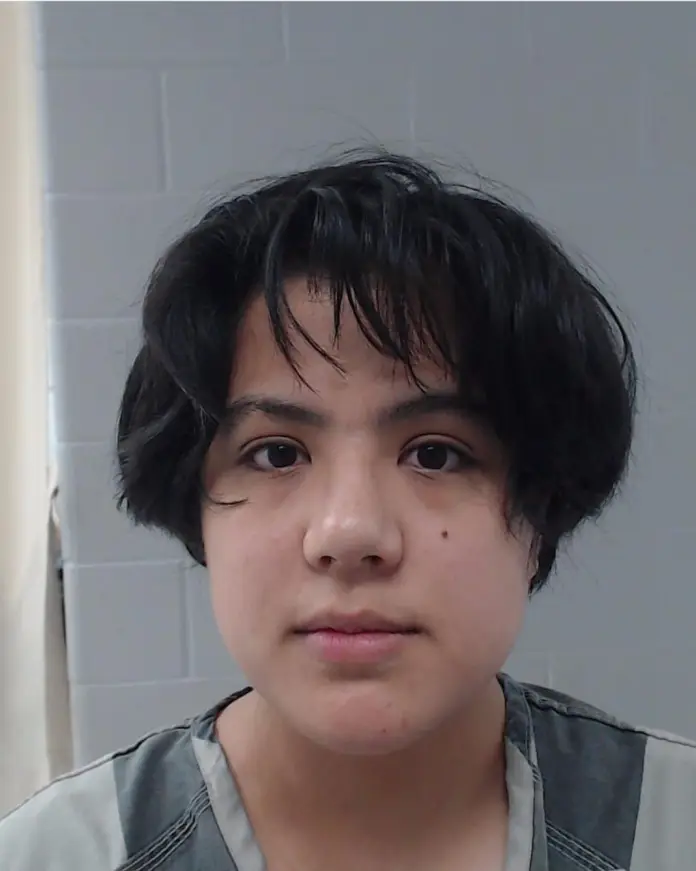
Song, according to Kent, suggested storming the facility and breaking the detainees out while the shooting served as cover fire. Everyone disagreed with that idea, Kent said, and the group abandoned Song’s plan.
Kent said they still decided to bring guns because Song was adamant about “not going to jail.”
Sikes recounted Song shouting “get to the rifles” when Lt. Thomas Gross, the injured police officer shot by black-clad assailants, arrived at the scene. At that moment, the gathering had “turned into something I very much did not want to be a part of,” Sikes said.
One of the defendants facing trial, Bradford Morris, alias “Meagan Elizabeth,” allegedly told police that the suspect who shot Gross set out to shoot someone and did so “in cold blood.”
According to a police report read aloud to the jury, Morris believed that the shooter invited people and provided guns, intending to implicate them. The alleged shooter’s name was redacted, but prosecutors have said that Song was the lone shooter.
“My suspicion is [redacted] wanted to do this the whole time — to shoot someone,” Morris was quoted as saying. “[Redacted] wanted us all to have our guns there as a distraction, to do his little [redacted] fantasy and run away. I don’t think it’s an accident that [redacted] set things up to have a bunch of people there for cover while he gets the [expletive] away.”
TEXAS ANTIFA TERRORISM CASE: CONFESSIONS MOUNT AS TRUMP DOJ CLINCHES MORE CONVICTIONS
In the police interview, which Morris allegedly requested days following his initial interrogation, the defendant expressed feeling “disgusted and betrayed” after learning what had happened. Police found parts of Morris’s confession truthful but believed the defendant was minimizing his role.
The trial, which restarted on Feb. 23, is seen as a test of the Trump administration’s efforts to target antifa as a terrorist organization after President Donald Trump designated the group as a domestic terrorism threat. Never before in U.S. history have suspected antifa operatives been tried together in federal court as an organized crime cell.
Jurors last Tuesday were given a closer look at antifa agitprop allegedly owned by the defendants on trial, including a pamphlet on “Organizing for Attack! INSURRECTIONARY ANARCHY” and handwriting that read, “I don’t bash back, I shoot first.” Antifa activists often deploy the phrase “bash the fash” as a rallying call for attacking their political enemies, who they see as “fascists.”
Prosecutors argued that the recruitment literature and revolutionary propaganda demonstrate that the defendants were united by their anti-government beliefs and thus motivated to harm law enforcement. In response, the defense said it is not explicitly illegal to own such material, even material suggestive of political violence.
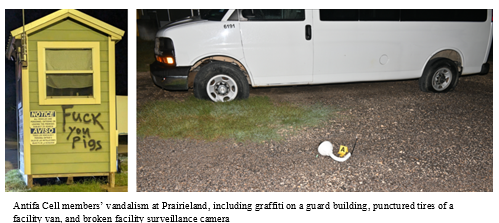
The widely watched trial entered its third week on Monday, with the prosecution expected to wrap up arguments soon and the defense preparing to present its case next.
Judge Mark Pittman, a Trump appointee, ruled on Tuesday that the defendants cannot claim self-defense.
Despite objections from five defense attorneys, Pittman found it legally invalid for the defendants to claim that they shot Gross to protect themselves.
Pittman accordingly granted the government’s motion to prohibit the defense from raising that theory during trial. Prosecutors had claimed that any arguments of self-defense or defense of a third party were “legally insupportable” because the defendants triggered a police response by shooting off fireworks and damaging federal property.
Gross told the jury that he walked into what he believed to be an ambush at the time of the disturbance call.
Attorneys for the defendants have, so far, framed the late-night event as a mostly “peaceful protest” that inadvertently turned violent.
‘PEACEFUL PROTEST’ NARRATIVE AT CENTER OF ANTIFA TERRORISM TRIAL
While prosecutors asserted that the defendants launched the fireworks as a trap to lure law enforcement officers outside and into the line of fire, the defense said the fireworks were simply a show of solidarity, the centerpiece of a so-called “noise demonstration” meant merely to communicate support to the illegal immigrants detained inside the facility.
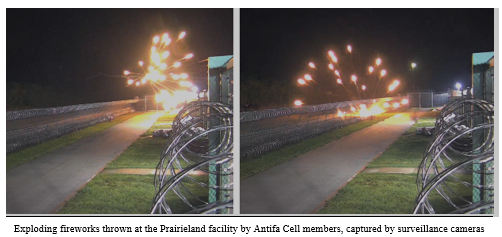
The defendants, in addition to claiming that the incident was not an act of terrorism, but rather constitutionally protected activity, have built their case around denying that antifa exists.
However, the seven total convicted coconspirators, who pleaded guilty to providing material support to terrorists, confessed that the antifa cell launched the anti-ICE attack “in line with [an] Antifa ideology.”
“Antifa is a militant enterprise that advocates insurrection and violence to affect the policy and conduct of the U.S. government by intimidation and coercion,” their affidavits said.
