

While acting as outside counsel for ActBlue, its then-law firm, Covington & Burling, wrote memos to the Democratic payment processor warning that it may have misled Congress regarding its efforts to block foreign donations, the New York Times reported on Thursday.
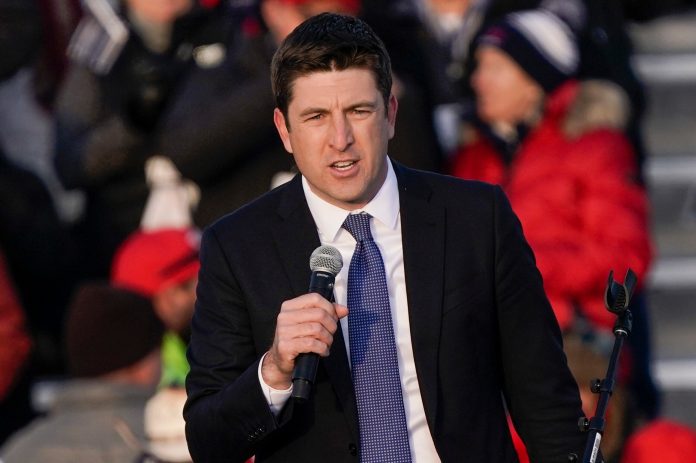
Back in 2023, Rep. Bryan Steil (R-WI) and then-Sen. Marco Rubio (R-FL) raised concerns that ActBlue was not collecting enough information from its customers to guard against fraud and illegal donations made by foreign nationals. Congressional Republicans alleged that ActBlue was not requiring donors to input credit verification values, the three numbers on the back of credit cards, which they claimed increased the risk of fraudulent contributions, and that the platform had insufficient safeguards against illegal foreign donations.
ActBlue, in response, wrote a letter to Congress stating that its approach to combating such improper contributions was “multilayered, with checks and confirmations occurring throughout the donation process to verify donors and donor information.”
ActBlue’s own lawyers, however, felt that characterization was inaccurate.
“This presents a substantial risk for ActBlue,” Covington & Burling wrote in a memo to the payment processor. The memo laid out how individuals who made contributions through third-party platforms such as Apple Pay, PayPal, and Venmo were, at the time of the letter, not required by ActBlue to submit documentation proving they could legally donate to U.S. political committees — potentially contradicting its letter to Congress.
Lying to Congress is illegal. Federal law also prohibits individuals who are not citizens or permanent residents from making donations to U.S. political committees.
Kimberly Peeler-Allen, a member of ActBlue’s board of directors, attempted to downplay the criticism by telling the New York Times that “less than 1%” of the transactions it processed during the 2024 election cycle had signs that they originated in foreign countries. ActBlue processed over $3.8 billion in contributions during the most recent presidential election, according to OpenSecrets, meaning that nearly $38 million in donations fit that description.
Originating in a foreign country isn’t itself an indication of foul play, as some Americans do live abroad. That said, one of Covington & Burling’s memos to ActBlue stated that its procedures created “a substantial risk that some of the funds received were impermissible contributions from foreign nationals.”
Another memo Covington produced for ActBlue explicitly outlined the “potential legal risks associated with statements to Congress that may be alleged to be false or misleading.”
Covington provided ActBlue with three options regarding its letter to Congress: explicitly correct the record, provide new information without correcting the record, or do nothing.
“An aggressive prosecutor may view the November 2023 letter not just as a false statement but as an effort to conceal the foreign contributions,” Covington said of the possibility of doing nothing, according to the New York Times. A lawyer working for Covington even warned ActBlue CEO Regina Wallace-Jones that she needed to retain a personal lawyer, as she could bear some legal liability for the organization’s activities.
ActBlue later tightened its vetting processes and informed Congress of those changes. Even after these changes, however, some Republican lawmakers remained convinced that ActBlue was not sufficiently screening donors to guard against the abuse of third-party platforms such as PayPal, Google Pay, and Venmo.
“We didn’t do it immediately, but as we understood the gap, then we remedied the situation and answered, continued to answer truthfully to the best of our knowledge at the time,” Peeler-Allen said of the change.
She has also insisted that the change in vetting did not contradict the original letter, which attested to ActBlue’s security as a platform. Peeler-Allen also said she recalled one ActBlue board member saying that they “felt like they were trying to cover their butts,” in reference to Covington’s memos.
“We have complete confidence in the legal advice our lawyers provided to ActBlue,” a Covington spokesperson told the Washington Examiner.
Trump Fires Attorney General Pam Bondi
The congressional drama over ActBlue shows no signs of slowing down.
“My investigation into ActBlue remains ongoing,” Steil posted to X shortly after the New York Times released its report. “I won’t stop until we have answers.”
