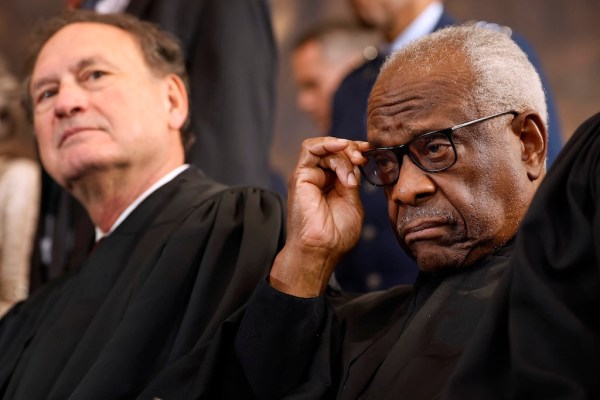
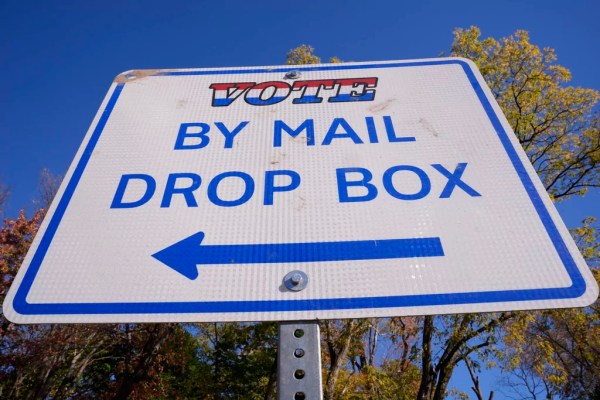
Justice Samuel Alito expressed concern over how the rise of state laws allowing mail ballots to be received after Election Day could undermine public confidence in the electoral process, as the Supreme Court grappled with the legality of Mississippi’s late-arriving mail ballot law Monday.
The Supreme Court heard arguments in Watson v. Republican National Committee, weighing whether federal law setting Election Day preempts Mississippi’s state law allowing ballots to be received up to five days after Election Day if they were postmarked by Election Day. One of the points opponents of Mississippi’s law, and similar laws in 13 other states, have made is how counting ballots that roll in after Election Day undermines public confidence in elections.
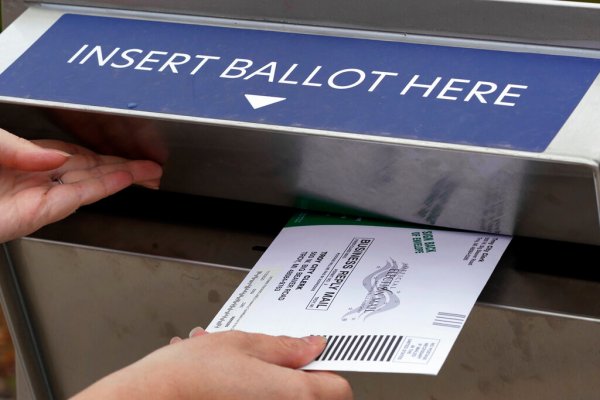
Alito was the first justice to raise concerns about fraud, asking if the justices could fairly consider Congress’ intention to combat fraud, or the appearance of fraud, in elections when making their decision in this case. He also noted various briefs supporting the RNC’s stance that all ballots must be received by Election Day, pointing to the RNC’s concerns about confidence in elections.
“Some of the briefs have argued that confidence in election outcomes can be seriously undermined if the apparent outcome of the election on the day after the polls close is radically flipped by the acceptance later of a big stash of ballots that flip the election,” Alito said. “You’ve got ballots that are delivered by somebody, by a neighbor, and they’re received a month after the election and they don’t have postmarks.”
Mississippi Solicitor General Scott Stewart pushed back on the argument that late-arriving mail ballots undermine public confidence, noting that his opponents had not “cited a single example of fraud from post-Election Day ballot receipt in this century.”
Justice Brett Kavanaugh also raised concerns over confidence in elections, asking Stewart whether the appearance of fraud should be factored into the high court’s decision in the case.
“Is that something we should be thinking about? Confidence in the election process? Just curious how we factor that in here,” Kavanaugh asked Stewart, to which the Mississippi solicitor general responded that concerns Congress had about fraud were related to double voting when it established a singular Election Day nationwide.
Several groups filed briefs mentioning concerns over public confidence being shaken by late-arriving mail ballot laws, including a brief from Honest Elections Project and other similar groups. Polling from the group released last week showed 78% of likely voters, including 90% of Republicans and 68% of Democrats, believe requiring ballots to be received by the end of Election Day makes elections more secure.
SUPREME COURT WORRIED THAT COUNTING LATE MAIL BALLOTS COULD UNDERMINE CONCEPT OF ‘ELECTION DAY’
During oral arguments, a majority of the justices appeared deeply skeptical of the Mississippi law’s legality and possible implications beyond late-arriving mail ballots.
The Supreme Court is expected to rule in the pivotal election case by the end of June, months ahead of the midterm elections in November. During the current term, the justices have heard several election-related cases, including on candidates’ ability to sue over election laws, campaign finance laws, and race-based congressional redistricting.