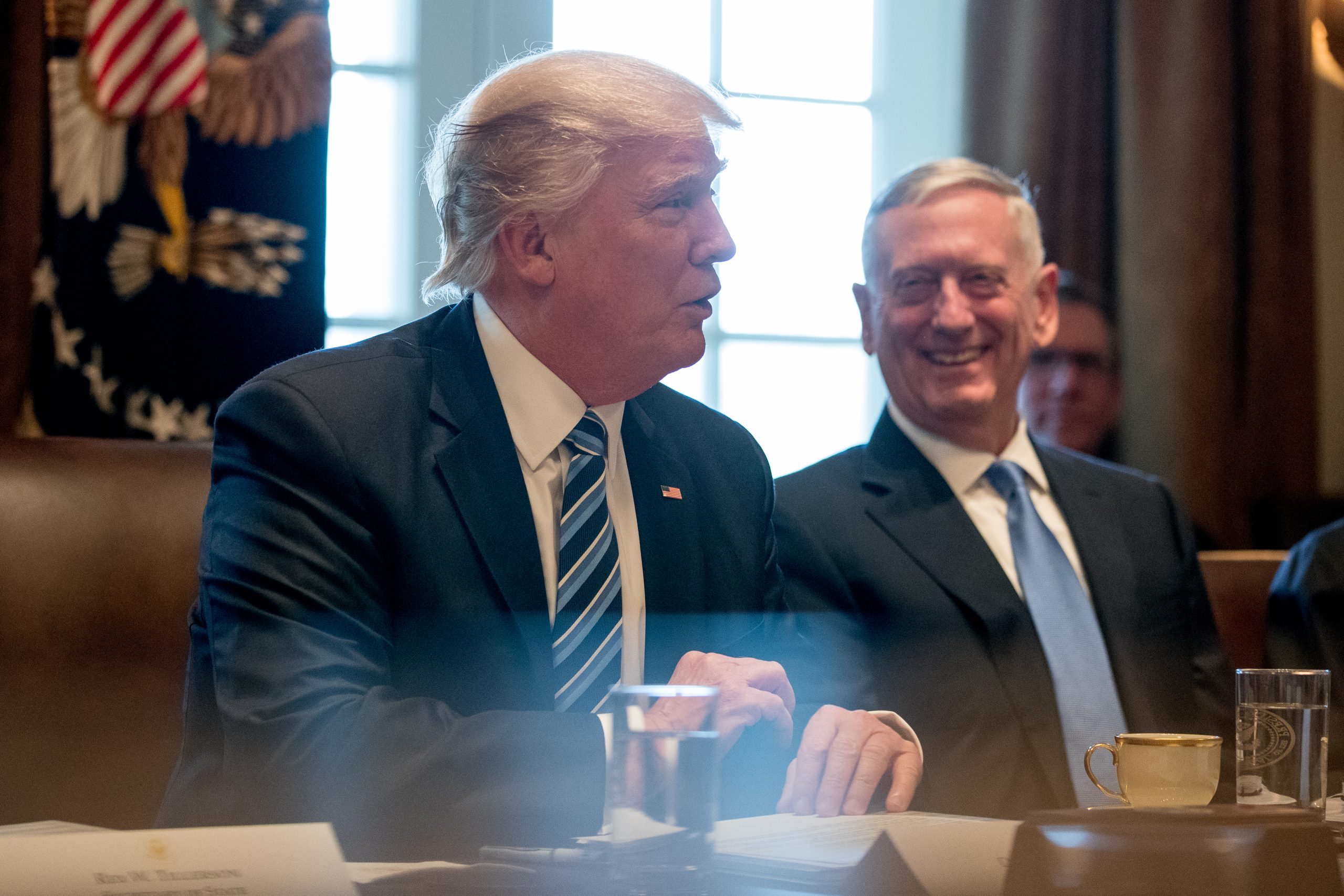
In a clash with President Trump’s environmental team, Defense Secretary Jim Mattis has declared that climate change is a threat to national security and one military planners must consider in drawing up strategies.
According to a report from ProPublica, Mattis told Democratic senators that climate change is real and “can be a driver of instability.”
Recommended Stories
His position, at odds with President Trump and his Environmental Protection Agency chief, came in answers to questions from senators following his confirmation hearing. They were released to ProPublica which reached out to the White House and Pentagon for comment without success.
#SecDef Mattis: “Climate change is impacting stability in areas of the world where our troops are operating today.” https://t.co/OcyoyuyAzh pic.twitter.com/DAIzPb7jTc
— Andy Revkin (@Revkin) March 14, 2017
The issue of global warming and climate change flashed in the past week when EPA Administrator Scott Pruitt questioned the impact of man on the environment.
When asked about the impact of carbon dioxide, he said, “I think that measuring with precision human activity on the climate is something very challenging to do and there’s tremendous disagreement about the degree of impact, so no, I would not agree that it’s a primary contributor to the global warming that we see.” He added, “We need to continue the debate and continue the review and the analysis.”
Mattis, on the other hand, accepts the science of global warming. The Pentagon has long raised concerns about the impact of climate change on security and even its facilities, especially naval stations like Norfolk, Va.
Below are some of the questions and answers in the Mattis “testimony” published by ProPublica’s environmental reporter Andrew Revkin:
New Hampshire Sen. Jeanne Shaheen: “I understand that while you were commander of U.S. Joint Forces Command you signed off on a document called the Joint Operating Environment, which listed climate change as one of the security threats the military will face in the next quarter-century. Do you believe climate change is a security threat?”
Mattis: “Climate change can be a driver of instability and the Department of Defense must pay attention to potential adverse impacts generated by this phenomenon.”
Shaheen: “General Mattis, how should the military prepare to address this threat?”
Mattis: “As I noted above, climate change is a challenge that requires a broader, whole-of government response. If confirmed, I will ensure that the Department of Defense plays its appropriate role within such a response by addressing national security aspects.”
In a reply to another question, Mattis said:
“I agree that the effects of a changing climate — such as increased maritime access to the Arctic, rising sea levels, desertification, among others — impact our security situation. I will ensure that the department continues to be prepared to conduct operations today and in the future, and that we are prepared to address the effects of a changing climate on our threat assessments, resources, and readiness.”
Paul Bedard, the Washington Examiner’s “Washington Secrets” columnist, can be contacted at [email protected]
