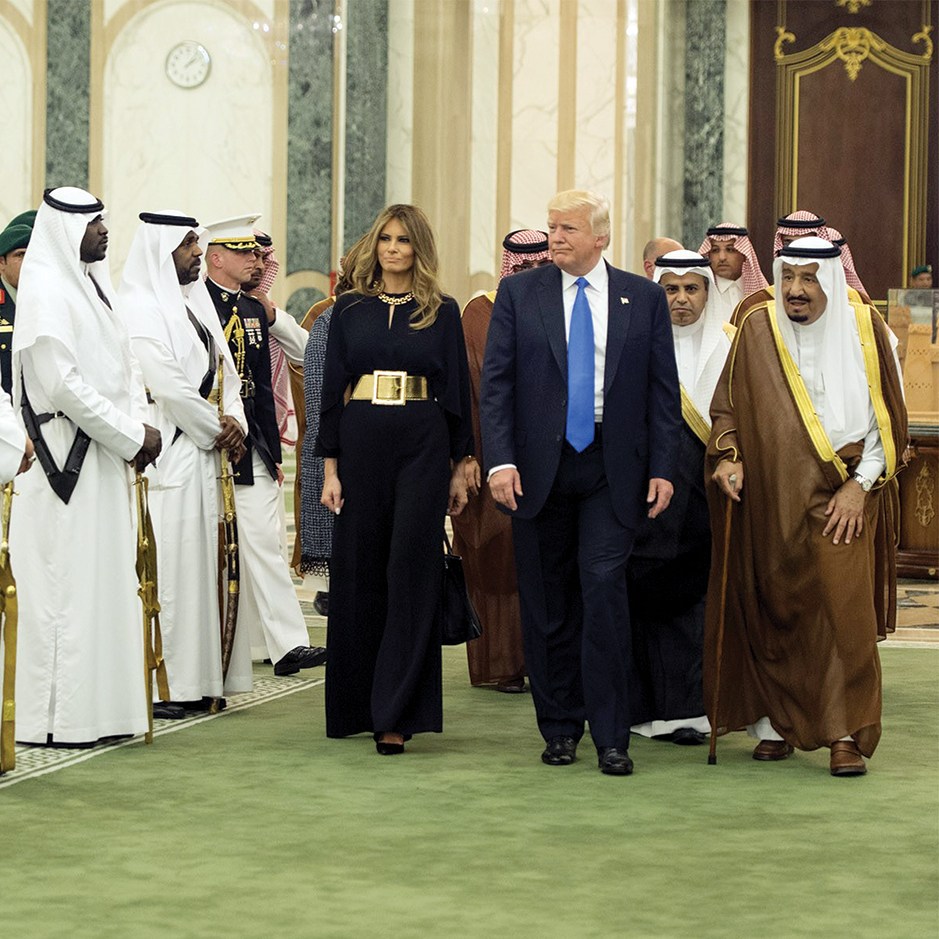
Donald Trump’s recent sojourn in the Middle East leaves the United States where it was before the president departed: His administration remains committed to containing Iran while philosophically adopting a pre-9/11 approach to combating Sunni Islamic militancy. Sunni Arab leaders have reason to be content. However much Candidate Trump wanted to avoid wars and costly alliances, President Trump clearly isn’t going to abandon the southern Middle East to Iranian aggression. His Riyadh “Islam speech,” which was more about the Islamic Republic than anything else, signaled that Trump wasn’t particularly moved by the reelection of the foreign-investment-loving Iranian president Hassan Rouhani.
Gulf Arabs, who have had no idea how to check a resurgent Iran that commands Shiite militias in the Levant and Iraq, were consumed with fear that Washington would again fall victim to back-channel messaging from “moderates” in Tehran. Trump’s oration, given two days after the Iranian election, quieted Arab anxiety about crafty Persians, an alluring Iranian marketplace, and whispering pro-Iranian Russians. Trump’s willingness to sell lots of American weaponry to Sunni Arabs (a longstanding bipartisan American reflex) and his disinterest in the human-rights abuses of those attending the Saudi king’s anti-Iranian conference also reassured Arab leaders that Trump won’t be, à la George W. Bush, a double-edged sword, cutting Arab authoritarians even more than Persian mullahs.