

President Donald Trump’s tearing down of the White House East Wing’s facade has faced criticism, but the renovation is only the latest of over a century of redesigns.
Several of these involved tearing down or gutting significant parts of the White House, to a greater extent than the most recent ballroom renovation. The White House itself was quick to respond to outrage over pictures of the East Wing facade being torn down by a backhoe, arguing it was the continuation of a “proud presidential legacy.”
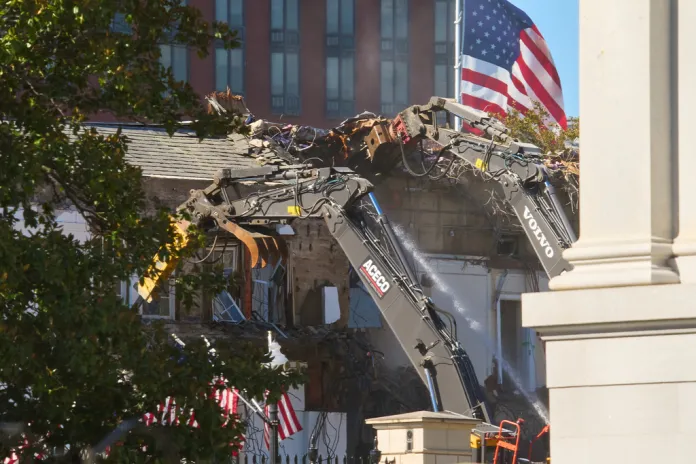
“In the latest instance of manufactured outrage, unhinged leftists and their Fake News allies are clutching their pearls over President Donald J. Trump’s visionary addition of a grand, privately funded ballroom to the White House — a bold, necessary addition that echoes the storied history of improvements and additions from commanders-in-chief to keep the executive residence as a beacon of American excellence,” the White House said in a statement.
The iconic external structure has remained largely the same since its reconstruction following its burning at the hands of British forces in 1814. It experienced a wave of modernization throughout the 19th century, such as the introduction of gas lighting, electricity, indoor plumbing, and heating. President Chester Arthur carried out one of its most extensive redesigns, auctioning off most furniture and installing a giant Louis Comfort Tiffany screen, Architectural Digest reported.
The first major reconstruction of the White House since 1814 was carried out by President Theodore Roosevelt, beginning in 1902. Acknowledging the residence was overcrowded, Roosevelt enlisted the assistance of the architectural firm McKim, Mead, and White to build additions to the residence. Greenhouses installed by President Thomas Jefferson were torn down, and in their place, the famous West Wing was constructed, today’s executive office wing. Roosevelt’s reconstruction was driven by his large family of six children, a familial size the White House couldn’t accommodate. The solution was to separate the diplomatic and executive offices from the residence itself in a building attached by a colonnade-flanked walkway.
Roosevelt also installed a colonial garden and built an East Terrace, which would eventually become the East Wing.
Roosevelt’s successor, President William Howard Taft, remodeled and expanded the West Wing in 1909, a reconstruction which included the creation of the first Oval Office.
In 1913, first lady Ellen Axson Wilson, wife of President Woodrow Wilson, demolished Roosevelt’s colonial garden to create a rose garden.
Buoyed by worries that the White House roof could collapse due to its overencumbered roof becoming a storage for records and old machinery, President Calvin Coolidge ordered reconstruction in 1927 to create a new roof, attic, and even an entire third floor. The main building’s new addition included a solarium with floor-to-ceiling windows.
President Franklin Delano Roosevelt carried out two major renovations, one in 1934 and one in 1942. In the first, he added a second floor, a swimming pool, and a larger basement to the West Wing. The latter renovation constructed the modern East Wing. The new structure was originally intended to cover an underground bunker meant to protect the president from enemy attacks during World War II.
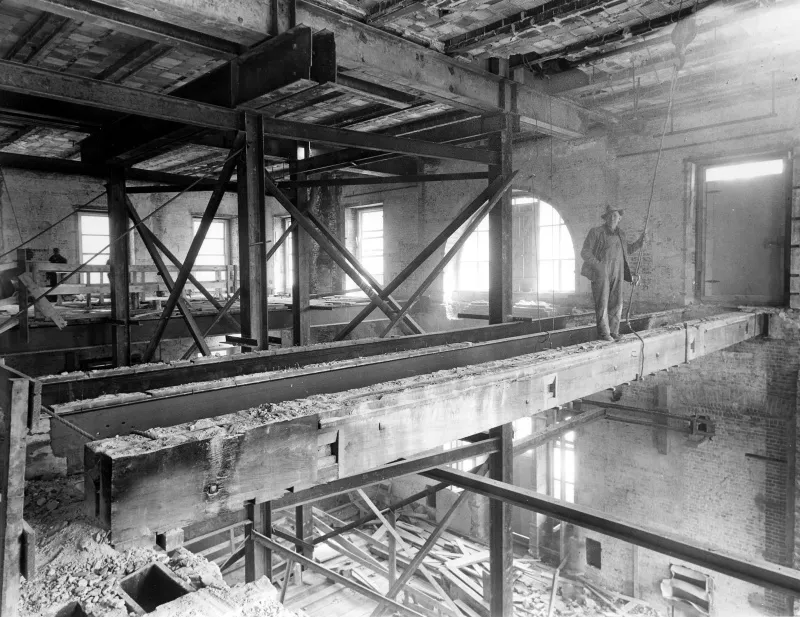
The most extensive redesign to the main White House building took place in 1948 under President Harry Truman. The president gutted the entire 150-year-old building, keeping only its exterior walls. The residence was given a new, 22-foot-deep foundation, steel frame walls, and concrete floors. It gained two sub-basements and expanded from 48 rooms to 54. The Trumans would spend 1948-1952 in the Blair House while construction was carried out.
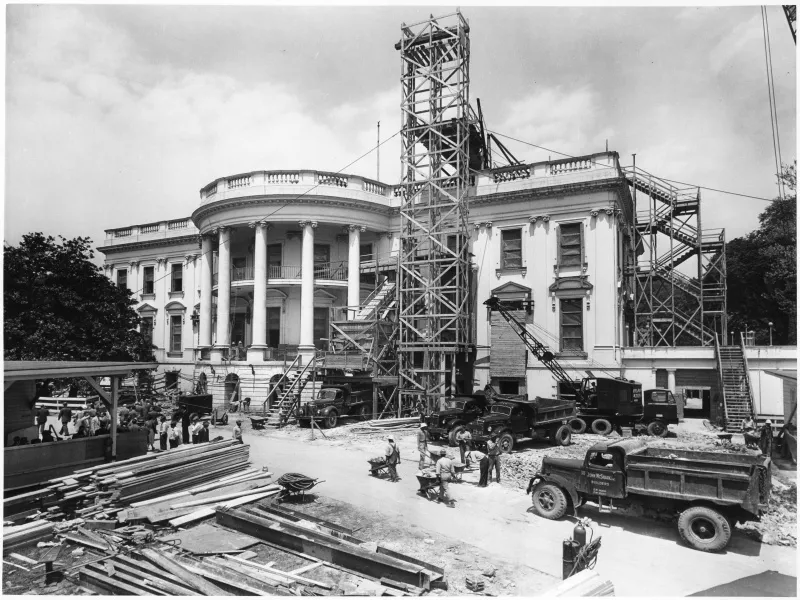
The White House has maintained largely the same outline and structure since Truman, minus some relatively small adjustments. The Rose Garden was constructed in 1962 under President John F. Kennedy. In 1970, President Richard Nixon converted the first swimming pool into the modern press briefing room — the first of its kind, spurred by the growing importance of broadcast media — and in 1973, he added an indoor bowling alley.
CONSTRUCTION CREWS DEMOLISH WALL OF WHITE HOUSE EAST WING FOR BALLROOM CONSTRUCTION
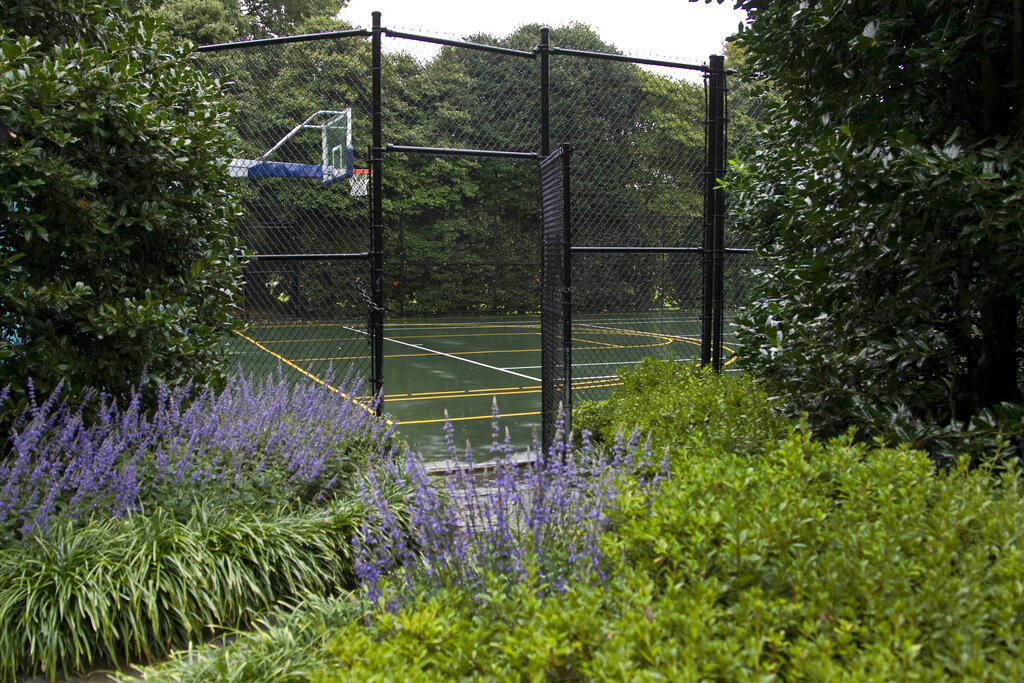
President Gerald Ford installed a swimming pool on the White House grounds in 1975, and President Bill Clinton renovated the main building in 1993. President Barack Obama added a basketball court in 2009.
The newest and biggest addition since Truman was announced in August — a 90,000-square-foot ballroom, slated to cost roughly $200 million.
