

Ukrainian President Volodymyr Zelensky is willing to honor the White House’s demands for a federal election, but the logistics of voting in wartime may prove difficult.
Zelensky told reporters Tuesday that he will pursue legislation that will allow Ukraine to hold elections during wartime, reversing his long-standing opposition to the idea less than 24 hours after President Donald Trump complained about the lack of “democracy” in the war-torn nation.
“Look, I am ready for the elections, and not only that, I am now asking — and I am stating this openly — for the United States of America to help me,” the Ukrainian president told the press, adding that he personally has “the will and readiness to do so.”
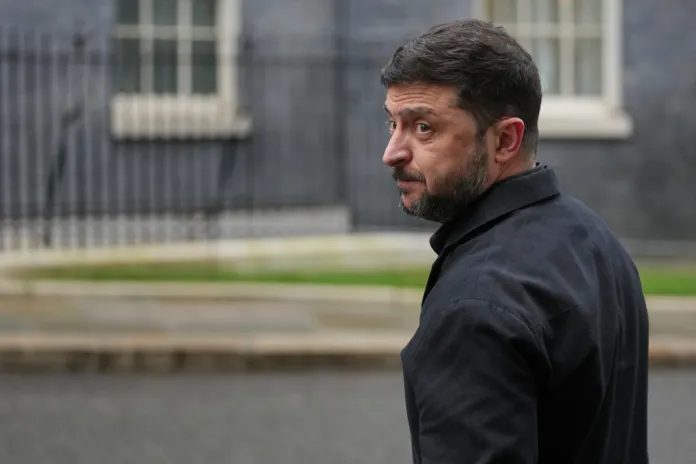
Under the current structure of the Ukrainian Constitution, elections are illegal during periods of martial law, which Zelensky instituted in 2022. A constitutional change will be required to allow citizens to vote on their next leader, with the Russian invasion ongoing.
“In the next 60 [to] 90 days, Ukraine will be ready to hold an election,” Zelensky predicted, explaining that he has tapped members of Parliament “to prepare legislative proposals on the possibility of changing the legislative framework and the law on elections during martial law.”
“I want and expect proposals from our partners and our MPs, and I am ready to go to the polls,” he added.
His term was due to expire last year, but that was delayed due to the war.
The drastic about-face on the issue seems to have been caused by Trump’s complaint during an interview with Politico published this week that Ukraine is “using war not to hold an election.”
“You know, they talk about a democracy, but it gets to a point where it’s not a democracy anymore,” the U.S. president said.
TRUMP SAYS HE WATCHED VENEZUELA BOAT STRIKE VIDEO AND FLOATS FURTHER ACTION
Organizing an election amid consistent bombings by the Kremlin, especially in the short time frame suggested by Zelensky, presents enormous hurdles.
Douglas Klain, deputy director for policy and strategy at advocacy group Razom for Ukraine, told the Washington Examiner that “safety and security” for would-be voters and ensuring “legitimacy” are the most significant complications for the proposed elections.
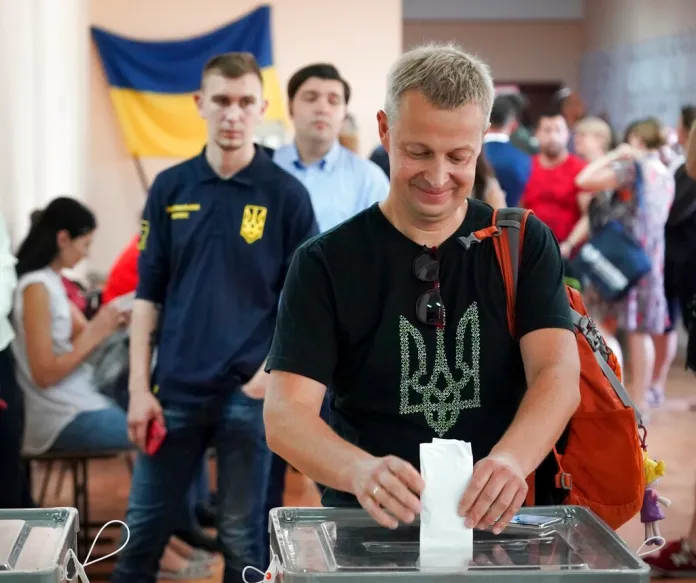
“There have been comparisons to the U.S. Civil War and how, here in the United States, we had elections during our Civil War,” Klain told the Washington Examiner. “The Confederates could not drone strike a polling place in Boston — that is the case in Ukraine. And so polling places will be major targets for the Russians, should there still be a hot war and no ceasefire.”
Additionally, Klain pointed out that there are close to 1 million active members of the Ukrainian military, the majority of whom are engaged in national defense operations that would make the ritual of casting a ballot a secondary priority.
“They are a very important voice in Ukraine’s political system right now and any election that isn’t able to integrate their voice in that process — it’s really going to suffer from a lack of legitimacy if they aren’t included,” Klain told the Washington Examiner.
Another threat to a proposed election’s legitimacy is the role of Ukrainian citizens who are now living under Russian occupation. Some of these people, scattered throughout disputed areas such as Donbas and Donetsk, have done their best to avoid absorption into Russian society, while others have accepted Russian passports and citizenship.
Digital elections, which would allow easier participation across the board, would open up the possibility of outside tampering by the Russian government.
Whether Zelensky will stand in the proposed election also remains to be clarified.
Zelensky has consistently said he does not intend to run for a second term, but with the understanding that the next vote would come after the conflict had concluded.
“My goal is to finish the war,” he said in September.
A poll from Info Sapiens, conducted between Nov. 13 and Nov. 28 and published on Tuesday, shows only 20.3% of Ukrainians say they would vote for Zelensky following his government’s corruption scandal. Still, he earned the most votes of any names included in the poll.
Other names included in the poll were Valerii Zaluzhnya, Ukraine’s ambassador to the United Kingdom, and Kyrylo Budanov, the head of Ukraine’s military intelligence.
Kremlin spokesman Dmitry Peskov declined to comment on Zelensky’s pivot to preparing for elections, saying officials “haven’t discussed it with anyone yet” since “the statement is quite recent.”
“This is something Putin has been talking about for a long time,” Peskov told reporters on Wednesday. “It’s something President Trump has mentioned recently, so we’ll see how events unfold.”
