

President Donald Trump may “feel badly” about the conviction of Jimmy Lai, but the Chinese Communist Party appears uninterested in adhering to his request to release the Hong Kong activist.
The Chinese Foreign Ministry, asked to comment on Trump’s appeal on Monday for Lai’s release, told foreign reporters on Tuesday that the central government “supports the Hong Kong [special administrative region] in safeguarding national security and punishing crimes that endanger national security in accordance with the law.”
Jonathan Franks is an American advocate who was involved in negotiations for the release of various U.S. citizens held abroad, including during the Russian detainment of Marine Trevor Reed in 2019. He talked to the Washington Examiner about what a path to freedom for Lai could look like.
“I do think that there is a sort of a solution to be had because there’s a solution to have be had in every case,” Franks told the Washington Examiner. “The process of getting your citizen back from somebody else’s detention is really like negotiating a drug deal. And so the question is sort of, ‘What does the Chinese government want, if anything, in exchange for Mr. Lai?'”
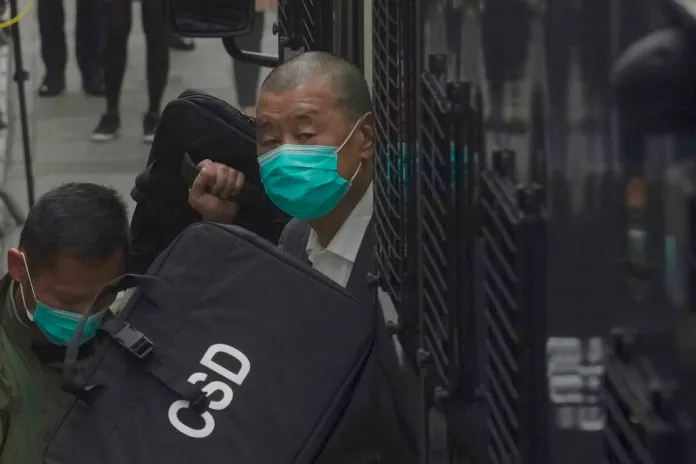
Lai holds dual citizenship in both the People’s Republic of China and the United Kingdom. The British government has been vocal in its demands for Lai to be turned over to its custody on human rights grounds.
“Jimmy Lai’s case has been a priority for this government and the prime minister, and, as the foreign Secretary has said, we condemn the politically motivated prosecution that has resulted in today’s guilty verdict,” said U.K. Prime Minister Keir Starmer. ”The UK has repeatedly called for Beijing’s national security law to be repealed and for an end to the prosecution of all individuals charged under it, and we will continue to call for his immediate release.“
The elderly media mogul was found guilty of sedition on Monday, with his role as publisher for anti-communist publications such as Apple Daily as the preeminent offense.
Judge Esther Toh, one of the three judges responsible for the over 800-page ruling issued on Monday, stated that Lai “harboured hatred” for the Chinese government and collaborated with foreign forces with “constant invitation to the US to help bring down the government of the [People’s Republic of China] with the excuse of helping the people of Hong Kong.”
The case is therefore tied intimately to geopolitics and the legitimacy of the Chinese government, making it unlikely that appeals on human rights grounds will do much to sway Beijing.
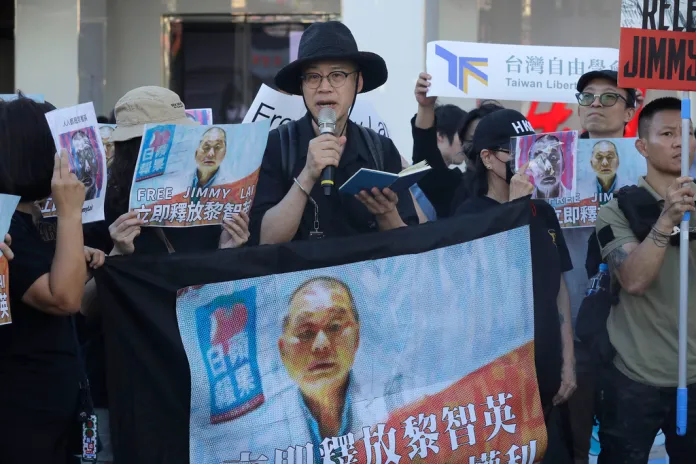
Franks said, “[What] I would start looking into is what high-profile prisoners does the U.K. government have? Or barring that, do any of the Commonwealth countries have high-end prisoners that the Chinese government is deeply concerned with — not unlike the Huawei executive [Meng Wanzhou] that was famously held in Canada for I think it was like two years.”
Franks speculated that the United States might be the country most capable of furnishing high-profile Chinese detainees that could sweeten the pot for Beijing: “I think the secret sauce is gonna be finding out from the Brits — who they’ve got? Or do we [the U.S.] have somebody else?”
Trump noted on Monday that he had spoken to Chinese paramount leader Xi Jinping about Lai and “put [the] request out” for his release, but offered a somewhat anti-climactic short-term plan to “see what happens.”
The State Department said the guilty verdict reflected Beijing’s efforts to “silence those who seek to protect freedom of speech and other fundamental rights.”
Neither acknowledged the possibility of a prisoner exchange.
“I’m not a huge fan of giving up people in American custody to retrieve non-Americans because, you know, who knows when we might need that,” Franks told the Washington Examiner. “Why are we giving them somebody that they want very badly and not getting a single one of our Americans in the process? Which is kind of a selfish way to look at the thing, but … I come to this issue as somebody that represents Americans.”
Lai, who is 78 years old, has already spent nearly five years in a maximum-security prison.
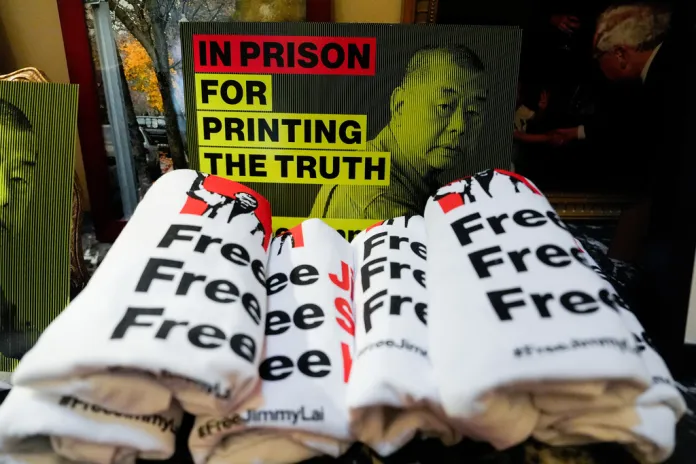
CHINA CONVICTS HONG KONG PRO-DEMOCRACY LEADER JIMMY LAI OF SEDITION
He converted to Catholicism in 1997, just before Hong Kong was handed over from the U.K. to mainland China. What little communications have been made public after his detention have frequently referenced his faith as a source of strength behind bars.
Letters from his prison cell have at times included drawings of Jesus Christ being crucified and appeals for prayers.
